Recipes: Bulgogi Sangchu-ssam - Bulgogi lettuce wrap
Bulgogi

Article by Gil "hannaone" © Copyright 2007-2026. All rights reserved.
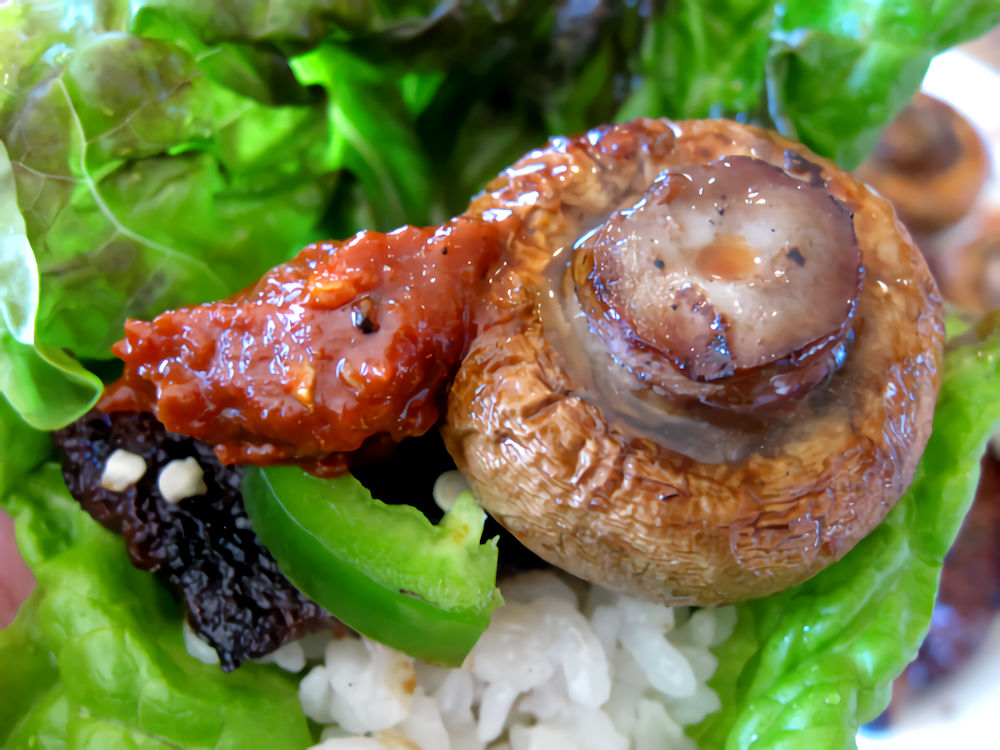
Image by hannaone: 
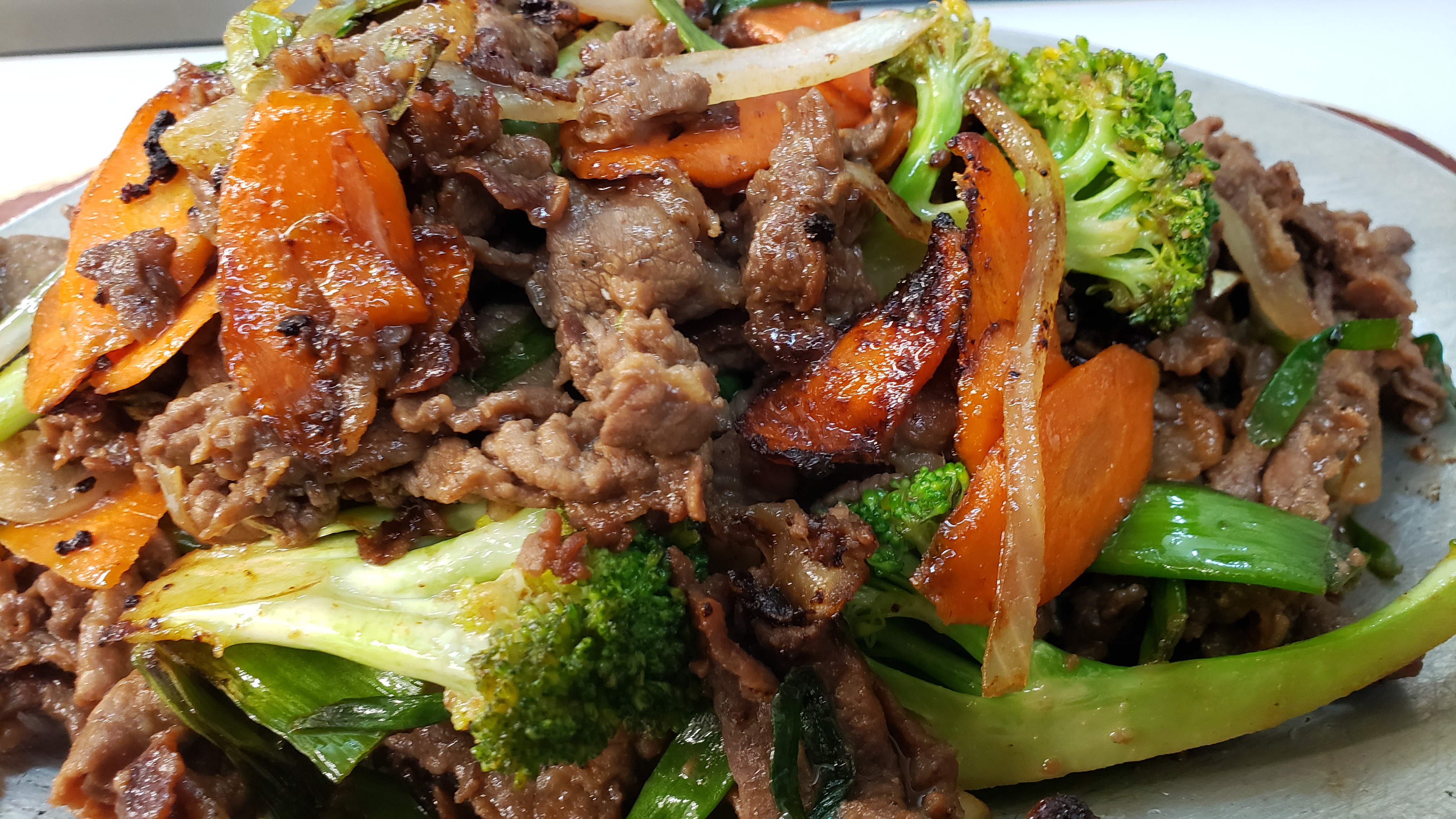
Bulgogi Sangchu-ssam

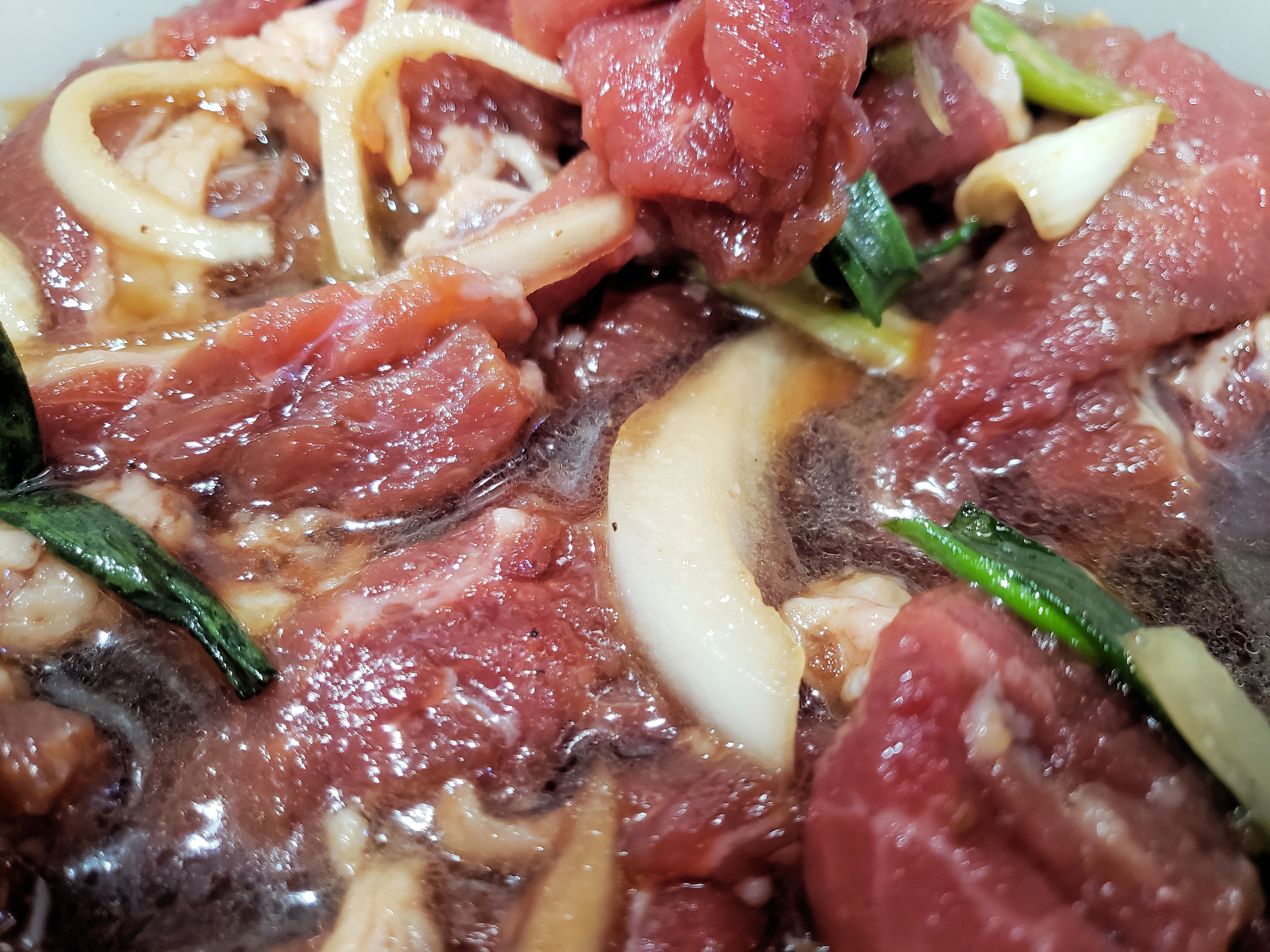
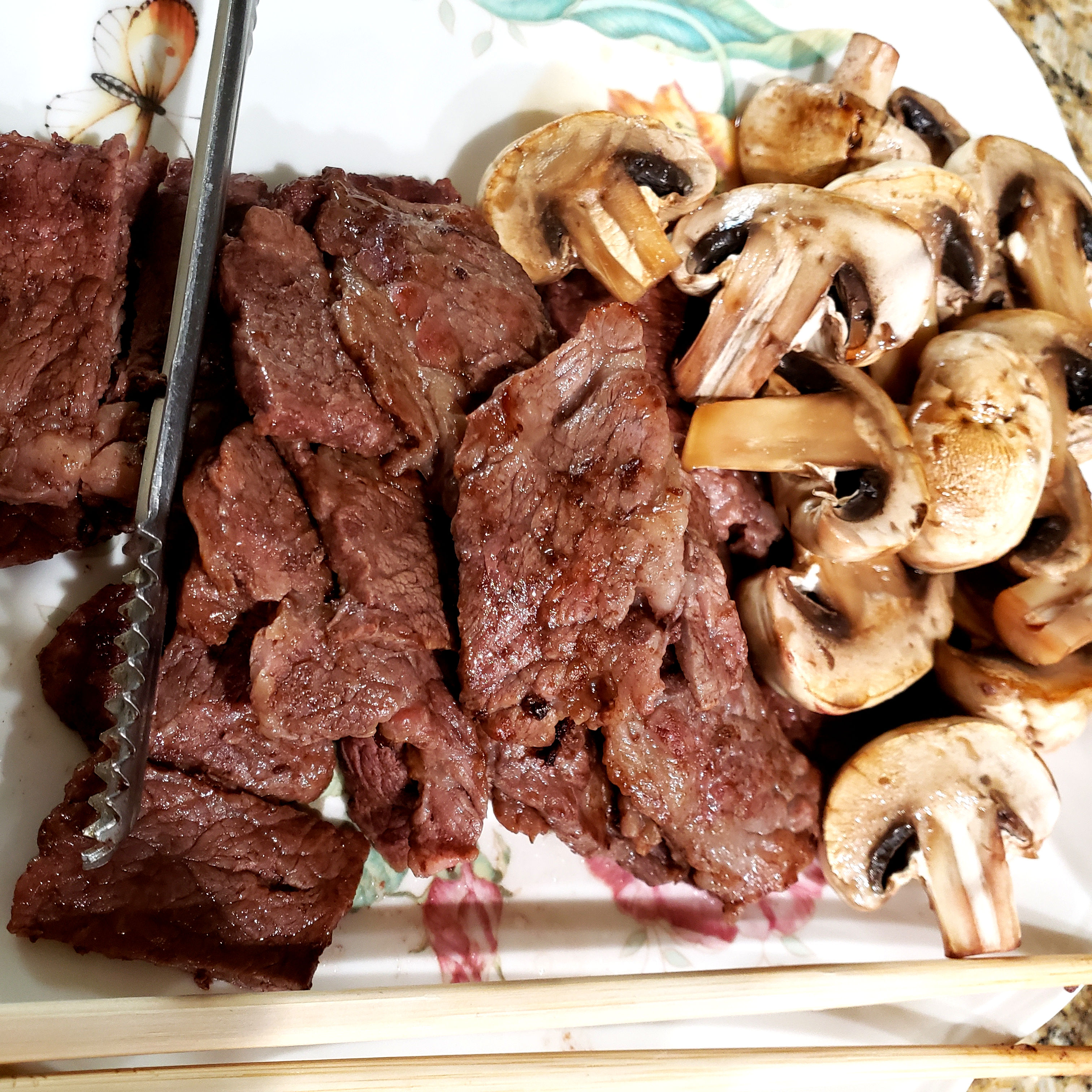
Bulgogi  Grilled or Stir Fried Marinated Beef


불고기상추쌈  bulgogi sangchu-ssam

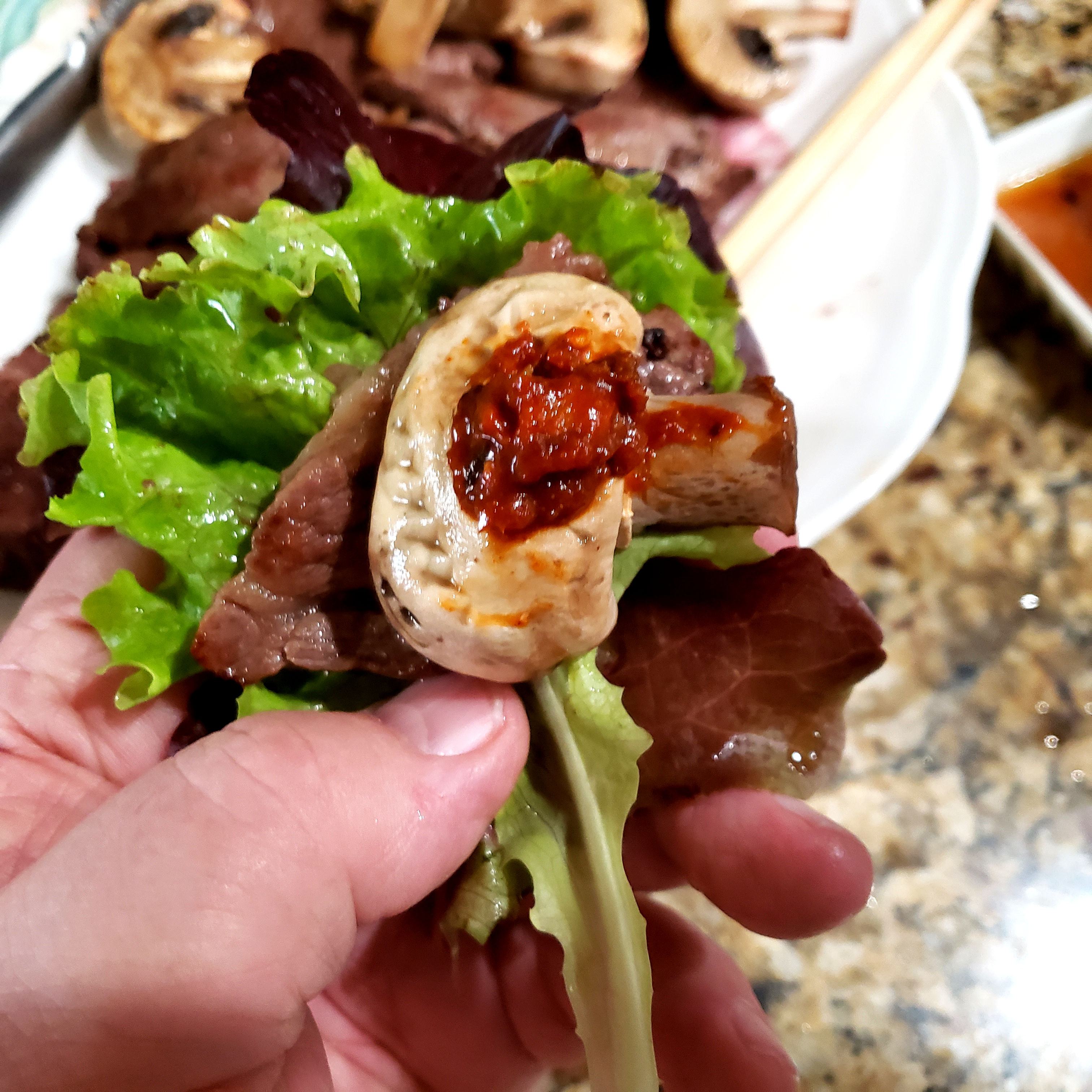
Adding Ssam style ingredients to Bulgogi elevates this delicious dish to a whole new level.
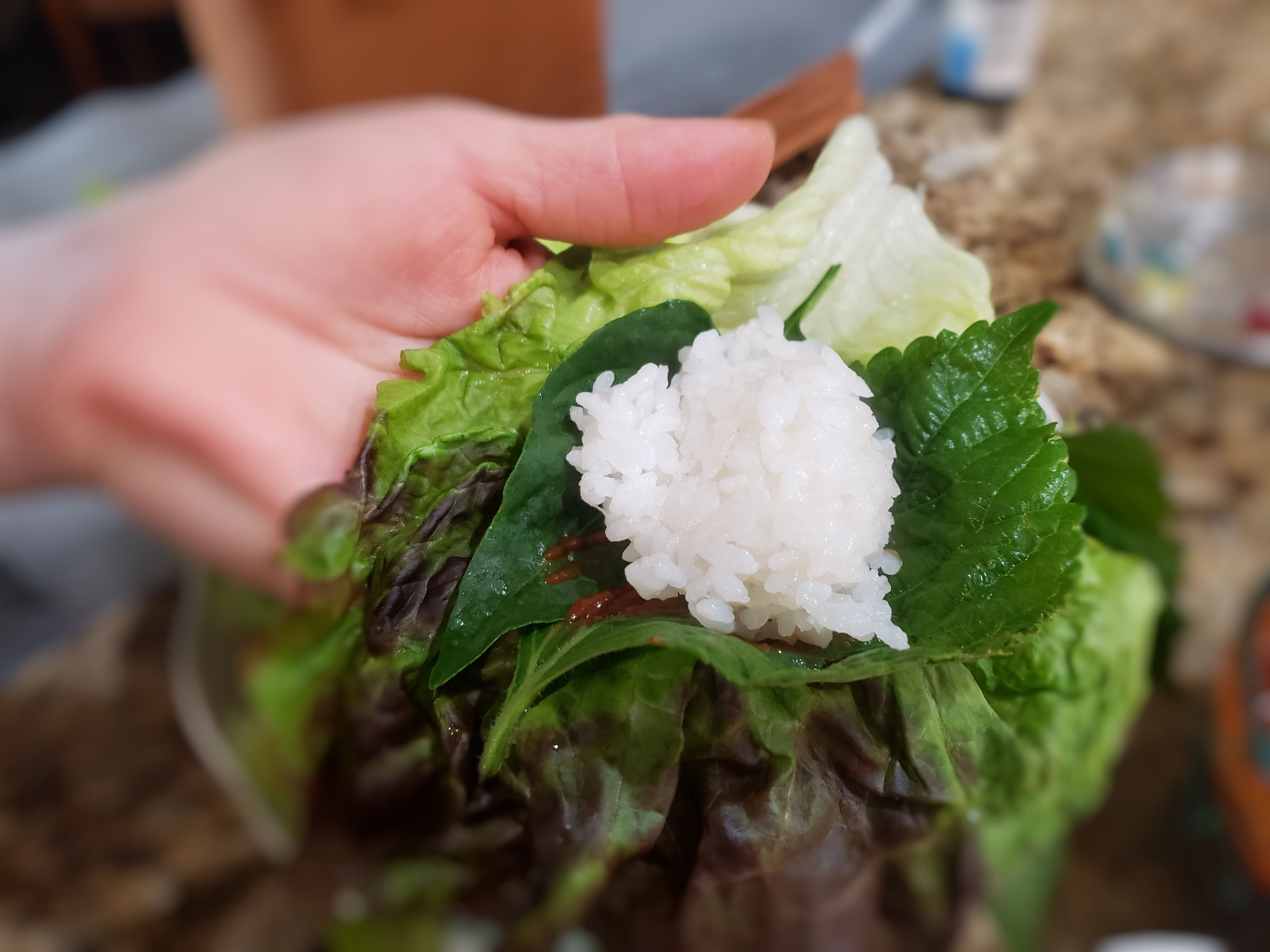
Unlike other ssams, sangchu uses lettuce as the wrap. It is typically filled with rice, meat, pickled vegetables, and condiments like gochujang or ssamjang. All the ingredients are usually served separately, and each person can customize the wrapper to suit their needs.


Ingredients
1 recipe Bulgogi🔗
4 bunch/bundle red leaf lettuce
"sticky" rice
6 cloves garlic
5 fresh jalapeño peppers
Ssam jang
4 Tbs of soybean paste (Korean-doenjang/Japanese-Miso)
4 Tbs medium ground red chili powder
1 tsp sugar
2 green/spring onion
4 cloves garlic
1 Tbs of sesame seeds
1/2 Tbs of sesame oil
1 Tbs rice wine
1 Tbs soy sauce
water

Directions
Prepare Bulgogi as directed in linked recipe.

During marinating:

Mix all Ssam jang ingredients in a small mixing bowl. Finely chop the garlic and green onion.
In order to maintain a mixable paste, add a small amount of water if necessary.
For one hour, cover and let stand at room temperature.

On a serving plate, separate lettuce leaves, rinse, and drain. Gently pat dry.

Place the garlic and peppers in separate small dishes after thinly slicing.

As directed in the linked recipe, cook the Bulgogi.

Serve with one bowl of rice for each person, and an array of banchan

Here's how to eat:
In one hand, place a leaf of lettuce, add a bit of rice, bulgogi, pepper and garlic, kimchi, and Ssam jang, then close your hand carefully. Eat the entire roll in one bite by carefully forming the lettuce into a ball around the "stuffing". You might have to practice to get that "one mouth full" size right.

If you have leftovers, bulgogi makes a great sandwich!

ssam style
bulgogi
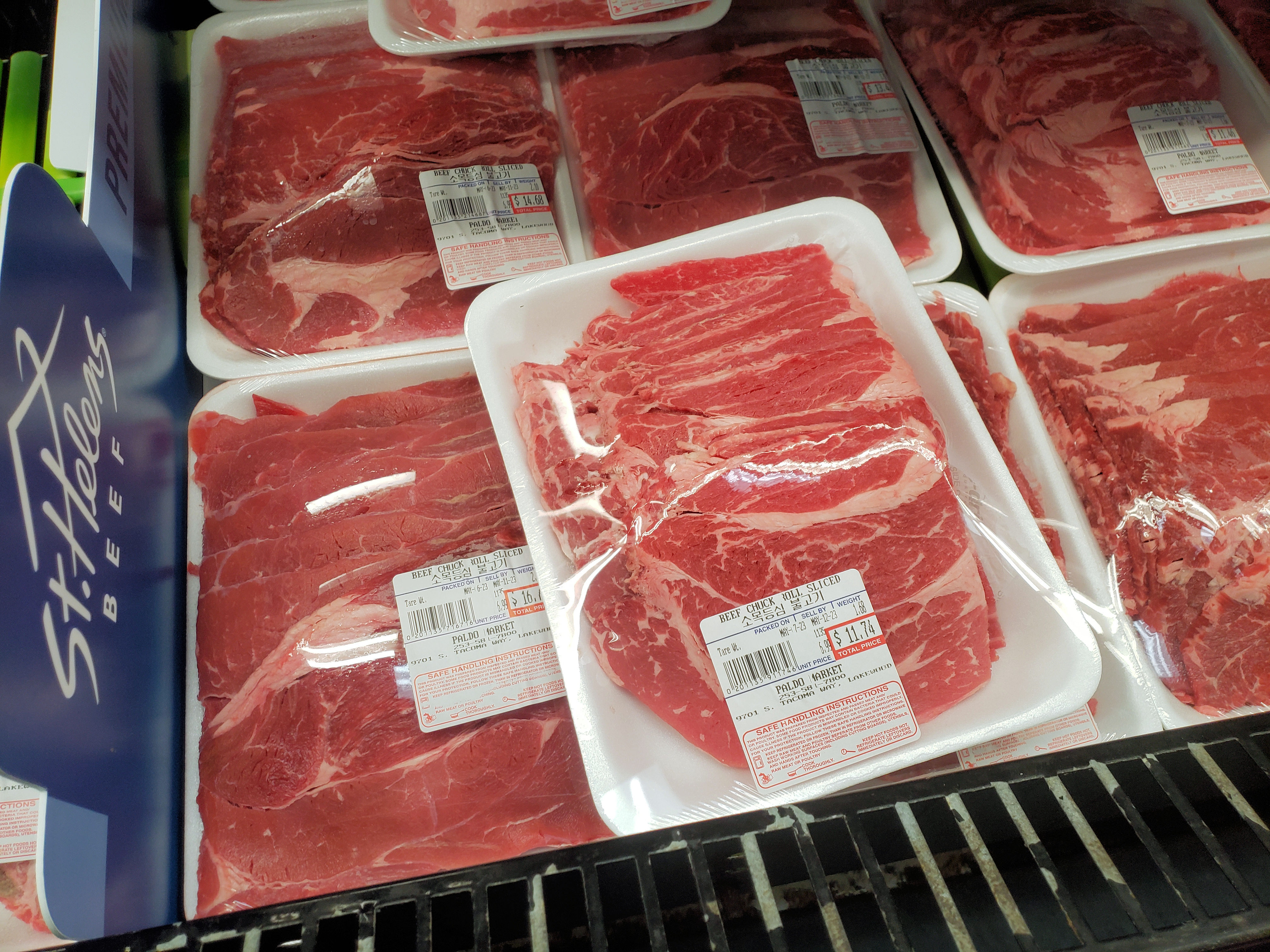
beef for bulgogi
ssam style
ssam style

Story Time

Some History

🥬 Brief History of Ssam (쌈)
Ssam—literally “wrap”—is one of Korea’s oldest and most enduring ways of eating, blending practicality, flavor, and symbolism. Its evolution mirrors shifts in Korean society from agrarian life to royal refinement and finally to the global Korean food culture we know today.
🌱 Origins in the Three Kingdoms Period (57 BC–668 AD)
Farmers working the fields wrapped small bites of meat, grains, or vegetables in whatever leafy greens were available. This early ssam was:
- A quick, portable meal
- A way to stretch limited meat supplies
- A reflection of Korea’s deep connection to foraged and cultivated greens
👑 Goryeo Dynasty (918–1392)
Ssam rose from humble fare to something culturally notable:
- A Yuan Dynasty poet recorded Koreans wrapping rice in lettuce, one of the earliest written references to ssam.
- Goryeo women held as hostages in Yuan China reportedly made ssam to ease homesickness, showing how deeply the practice was tied to identity and comfort.
- In the royal court, ssam became more refined—choice cuts of meat paired with tender greens and aromatic herbs.
🏯 Joseon Dynasty (1392–1897)
Ssam moved fluidly between elite cuisine and everyday meals:
- It became a delicacy among the yangban (nobility), served with beautifully arranged greens and banchan.
- It spread widely among commoners, becoming a staple of seasonal and festive eating.
- During Daeboreum (the first full moon), people ate bokssam (“fortune wraps”) to invite prosperity for the year.
🔥 Modern Era
Ssam transformed again with the rise of Korean BBQ culture:
- Post‑war pork belly (samgyeopsal) became a national favorite, cementing ssam as the essential way to enjoy grilled meats.
- Today, ssam is a cornerstone of Korean dining—casual, interactive, and endlessly adaptable.
- From lettuce and perilla to cabbage, seaweed, and even dried kelp, ssam continues to evolve in homes and restaurants worldwide
 

ssam

Find Korean ingredients, seasonings, tableware, dinnerware, and more on Amazon

Links are to products at Amazon. Purchases made through these links may earn a commission that helps to support this site. 
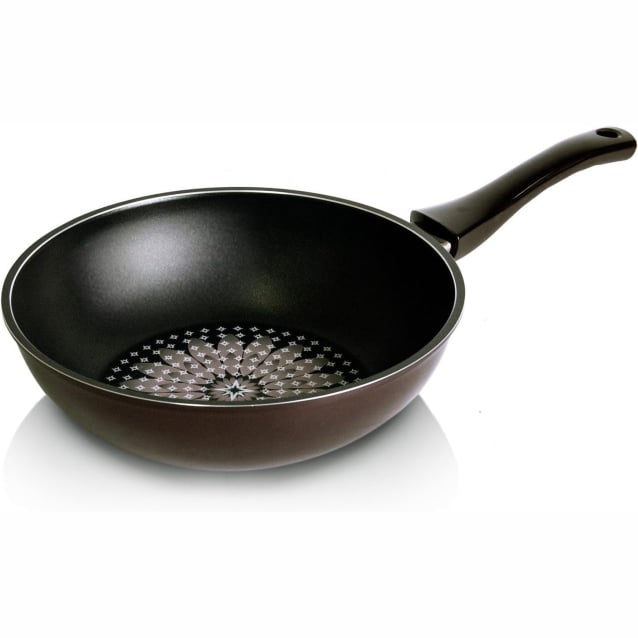
Stir Fry Pans

Check Amazon.com (US)

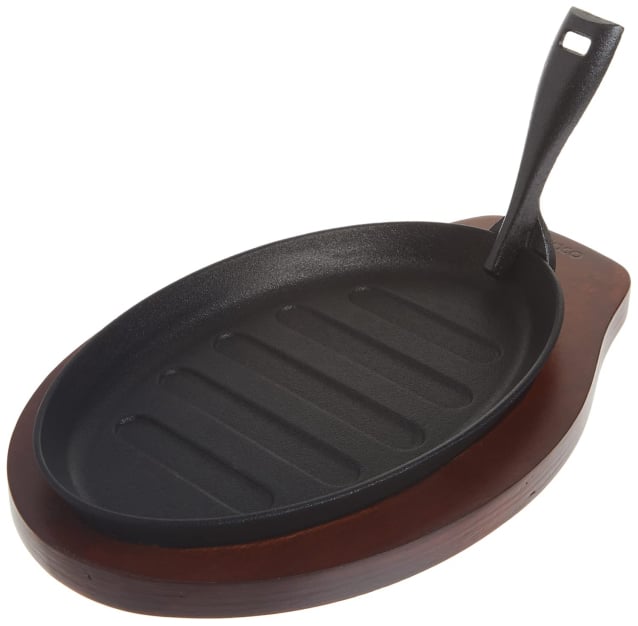
Sizzle Plate


Check Amazon.com (US)

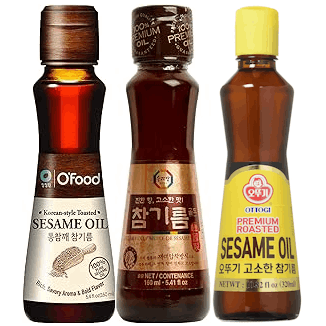
Sesame Oil Amazon Canada

Check Amazon.ca (Canada)

Grill Pans Amazon Canada

Check Amazon.ca (Canada)

Sizzle Plate Amazon Canada

Check Amazon.ca (Canada)

Comment?

hanna-one.com
The Original hannaone

 © 2007–2026 hanna-one.com℠ — All Rights Reserved
This website reflects the original work of hannaone. Korean recipes featured here have been reproduced without permission by the current registrant of hannaone.com.
Affiliate Disclosure:
hannaonetwo.com / hanna-one.com℠ participates in the Amazon Services LLC Associates Program, an affiliate advertising program designed to earn fees by linking to Amazon.com. Purchases made through these links help support this site. As an Amazon Associate, we earn from qualifying purchases.
Image Credits:
Most of the images/photos on this site are by Gil "hannaone", the owner of this website.
Some images on this site are sourced from contributors to Pixabay.com, a royalty‑free image and stock photo platform.  
Additionally, some images have been created using AI prompts by hannaone.