Korea Fantastical:  Minsok Chonggyo 

민속종교 — The Spirits of Korea’s Folk Belief
Korea’s oldest beliefs emerged from a long, evolving conversation between Shamanism, Confucianism, and Buddhism, as people sought to understand a world alive with forces beyond the human eye. In this worldview, the land itself breathed with presence. Spirits, guardians, and mysterious beings inhabited the unseen realm and, at times, stepped into the visible one — sometimes quietly, sometimes with awe‑striking power.
These beings are as varied as the landscapes they inhabit. Some are protective household or village guardians, watching over daily life. Others, like the playful yet unpredictable Dokkaebi, blur the line between helper and trickster. High in the mountains dwell Sansin, spirits whose authority borders on the divine, shaping fate, fortune, and the natural world.
This section offers a brief introduction to these figures — the supernatural beings of Korea’s folk religion — and the roles they play in the country’s cultural imagination


Korean Fantastical
dokkaebi
imugi
Jeoseung-saja
Gumiho
Bongwhang
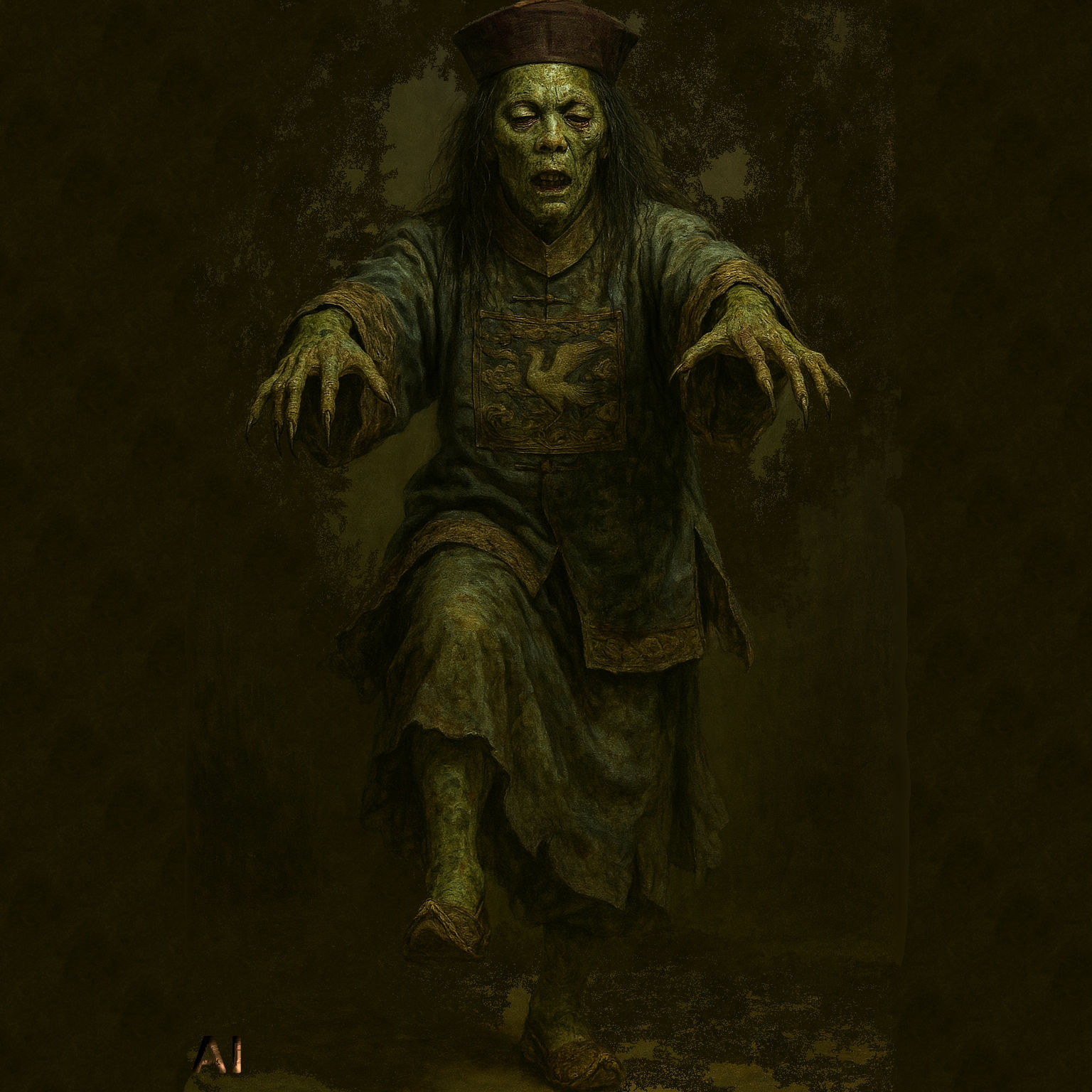
Gangshi
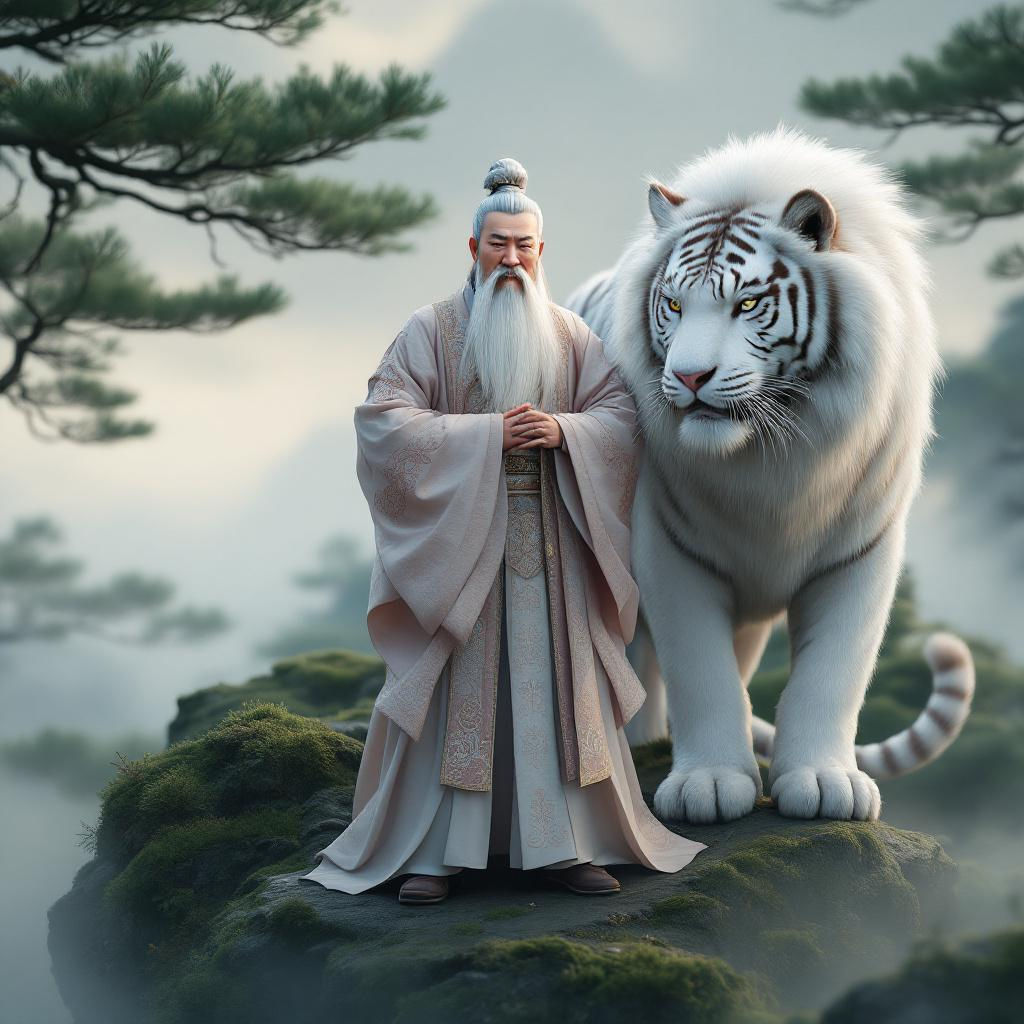
Sansin
bonghwhan
Jangseun
gangjeori

Spirits, Creatures, and Mythical Beings

Korean Spirits and Mythical Beings:


Spirits, Ghosts & Goblins
Duduri / Dudueul (두두리 / 두두을)
An early wood spirit in Korean folklore, possibly a precursor to the later and more widely known Dokkaebi. Associated with forests, uncanny sounds, and liminal spaces.
Dokkaebi (도깨비)
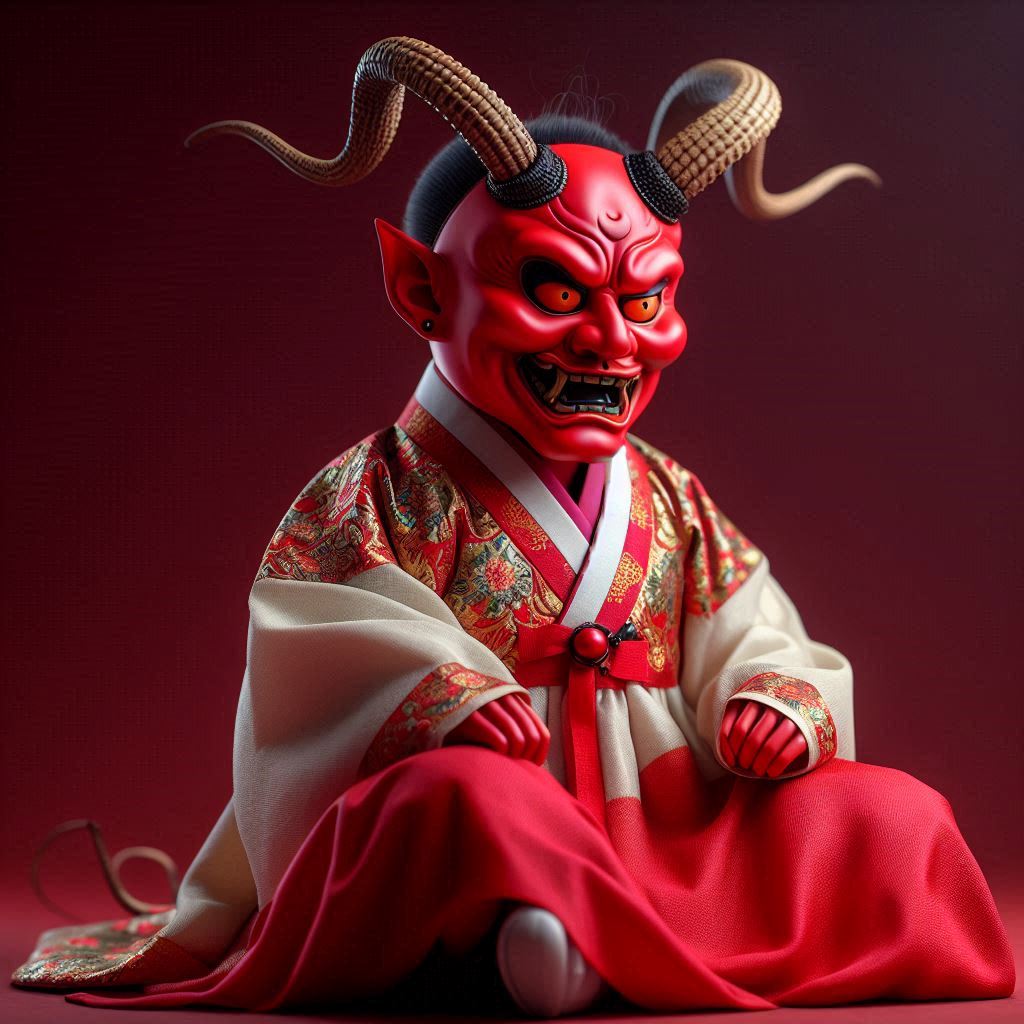
Goblin-like supernatural beings known for mischief, immense magical power, and a fondness for games and contests. They can bring fortune, challenge humans, or guard hidden treasures.
Dokkakgwi (독각귀)
A subtype of Dokkaebi known as the “one‑legged ghost.” Appears on drizzly nights wearing a satgat (bamboo hat) and dorongi (straw raincoat), hopping on a single leg with glowing eyes beneath the brim.
Gwisin (귀신)
General term for ghosts—spirits of the dead who linger due to unresolved emotions, unfinished business, or attachment to a place.
Mul‑Gwishin (물귀신)
Water ghosts associated with rivers, lakes, and seas. Often depicted as vengeful or sorrowful spirits of those who drowned.
Cheonyeo‑Gwishin (처녀귀신)
Virgin ghosts—spirits of young women who died unmarried. Iconic in Korean folklore and horror imagery.
Jeoseung Saja (저승사자)
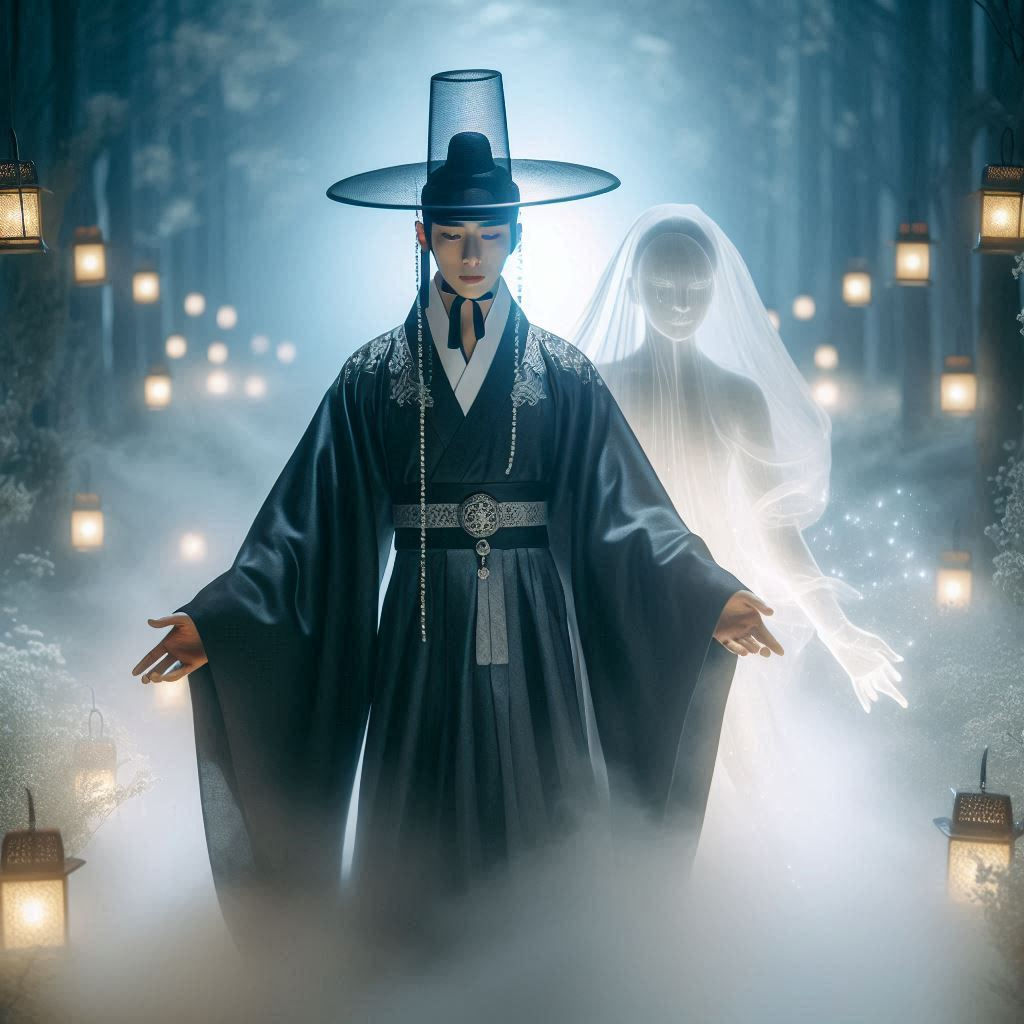
The Korean psychopomp, responsible for escorting souls to the afterlife. Often depicted as calm, dutiful, and impartial.


Guardian Figures & Ritual Beings
Jangseung (장승)
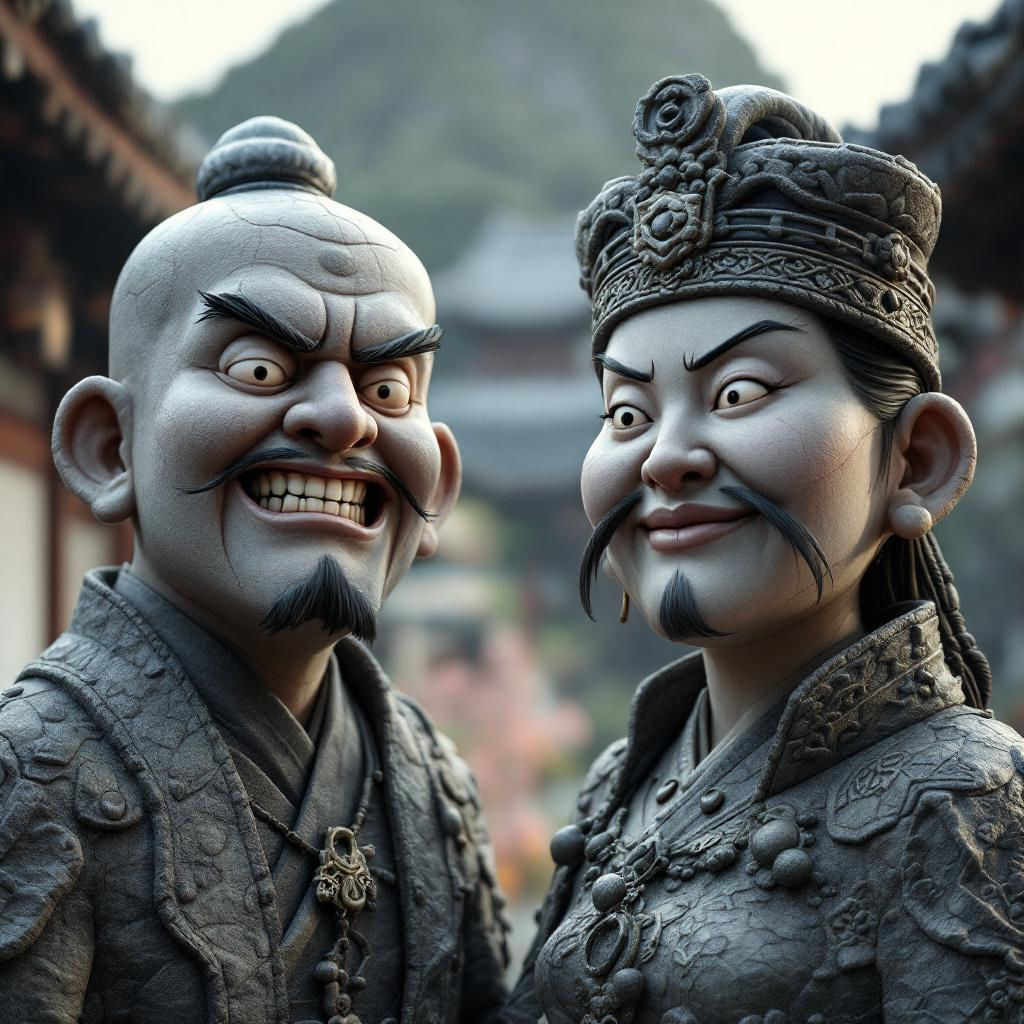
Carved wooden or stone totem poles placed at village entrances. Serve as guardians, boundary markers, and protectors against evil spirits.
Kkoktu (꼭두)
Colorful funerary figurines placed in coffins or bier frames to guide, protect, and entertain the deceased on their journey to the afterlife.


Mythical Creatures & Beasts
Bulgae (불개)
Fire dogs from the realm of darkness. They chase the sun and moon, causing eclipses when they bite or swallow them. Possibly inspired by the Sapsali dog breed.
Bulgasari (불가사리)
A fearsome, iron‑eating chimera with the body of a bear, elephant-like trunk, rhinoceros eyes, tiger claws, and a bull’s tail. Symbolizes unstoppable consumption and destructive hunger.
Gumiho (구미호)
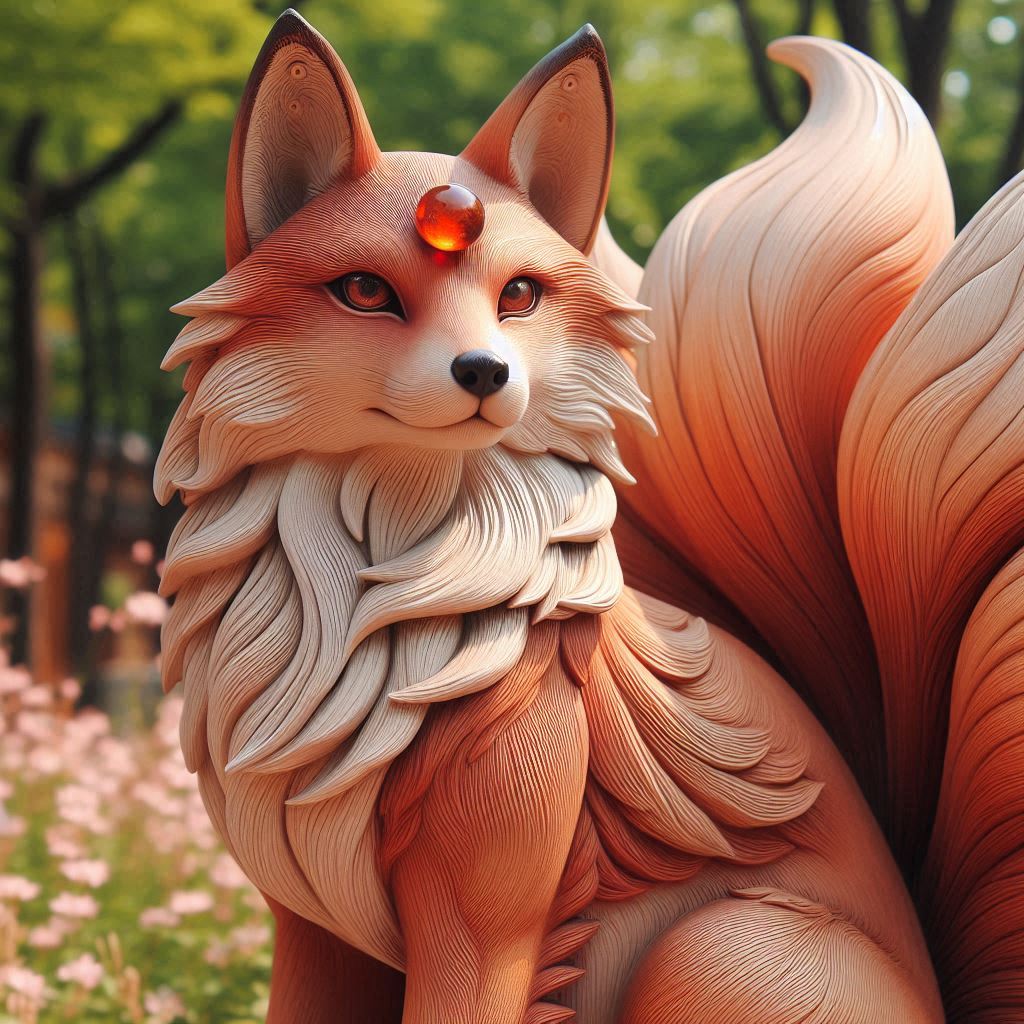
A nine‑tailed fox capable of shapeshifting, often into a beautiful woman. Traditionally portrayed as dangerous and predatory, consuming human livers or hearts, though modern interpretations vary.
Haetae (해태)
A lion-like guardian creature with dragon or unicorn features. Symbolizes justice and protection; often carved in stone near palaces and government buildings.
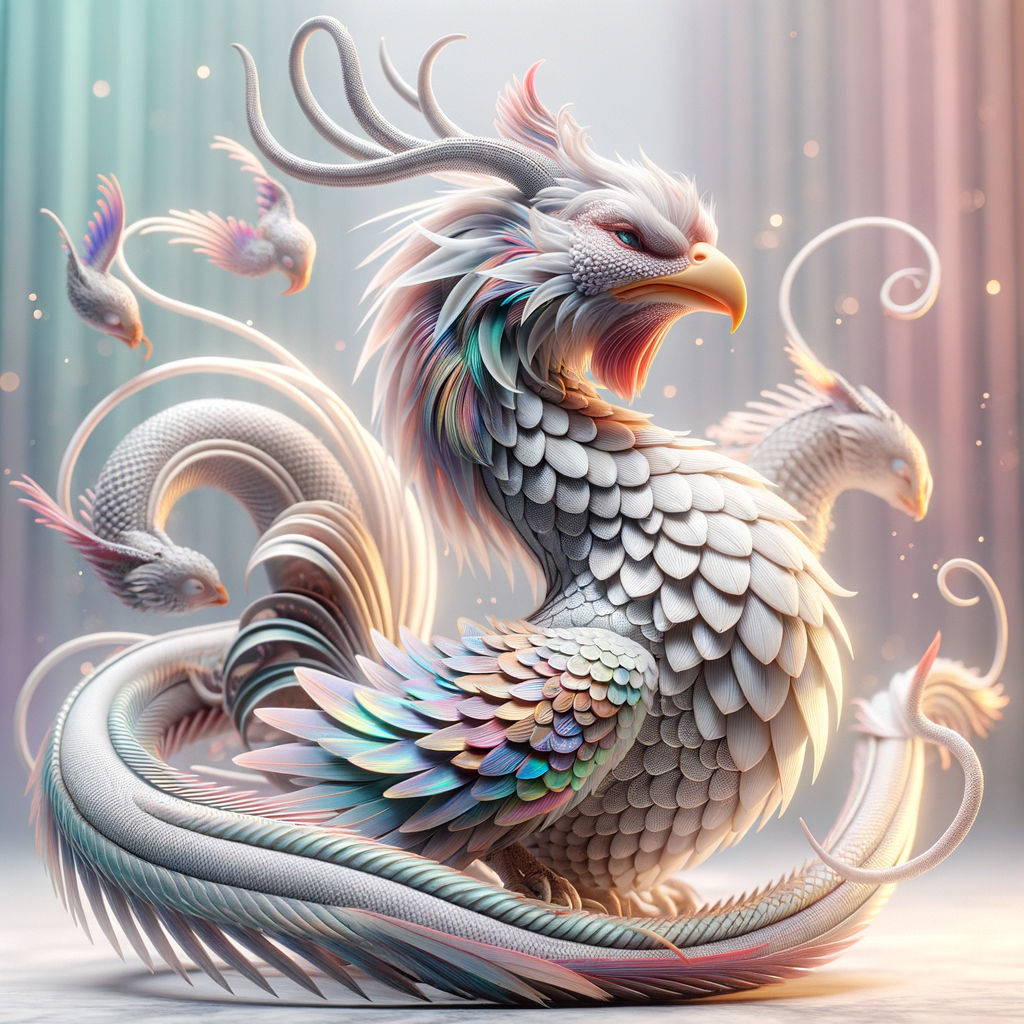
Bonghwang (봉황)
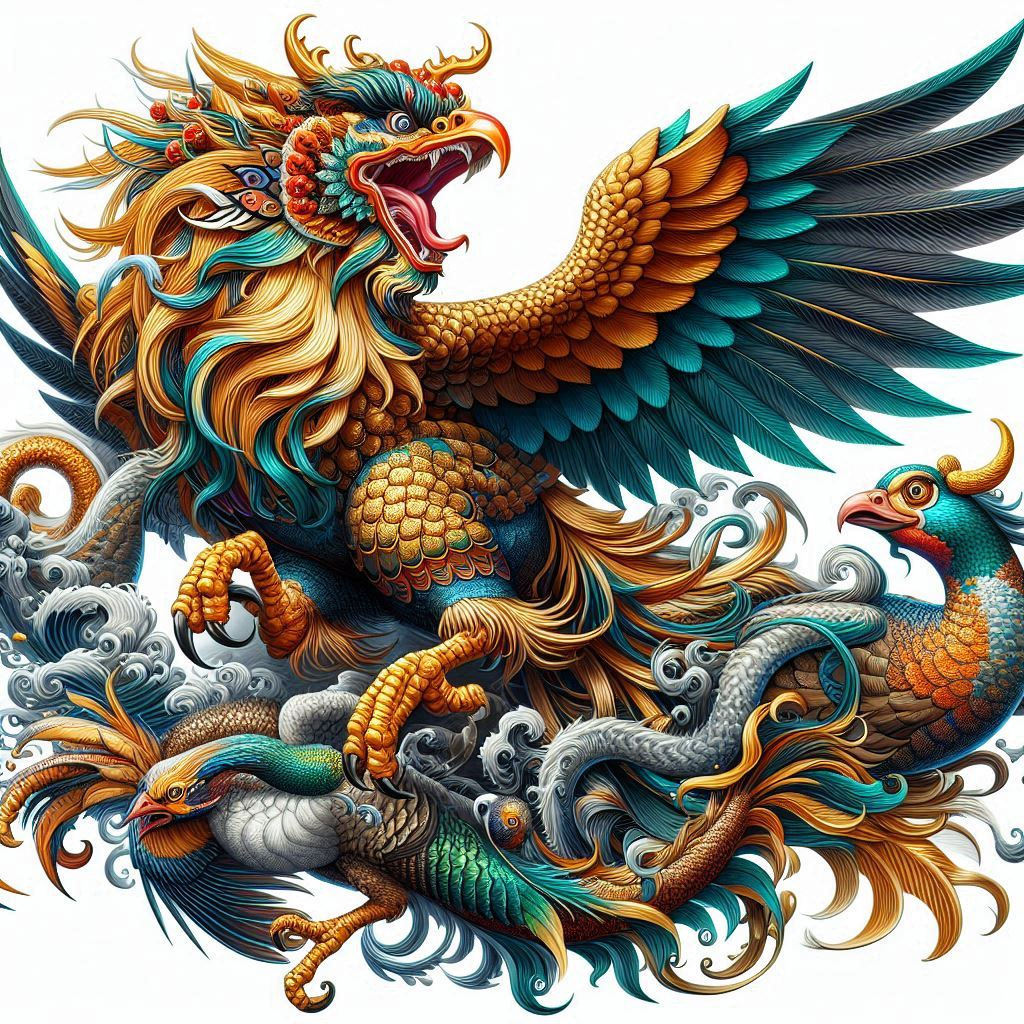
The Korean phoenix. A symbol of royalty, virtue, and rebirth, often associated with queenship and auspicious omens.
Samjoko (삼족오)
A three‑legged crow associated with the sun. Prominent in Goguryeo art and royal symbolism.
Inmyeonjo (인면조)
A bird with a human face. Appears in murals of paradise, representing harmony, transcendence, and otherworldly beauty.
Gye‑ryong (계룡)
A rooster‑dragon hybrid. Sometimes depicted as a cockatrice capable of killing with a glance; also associated with shamanic visions and royal birth myths.

Dragons
Yong (용/룡)
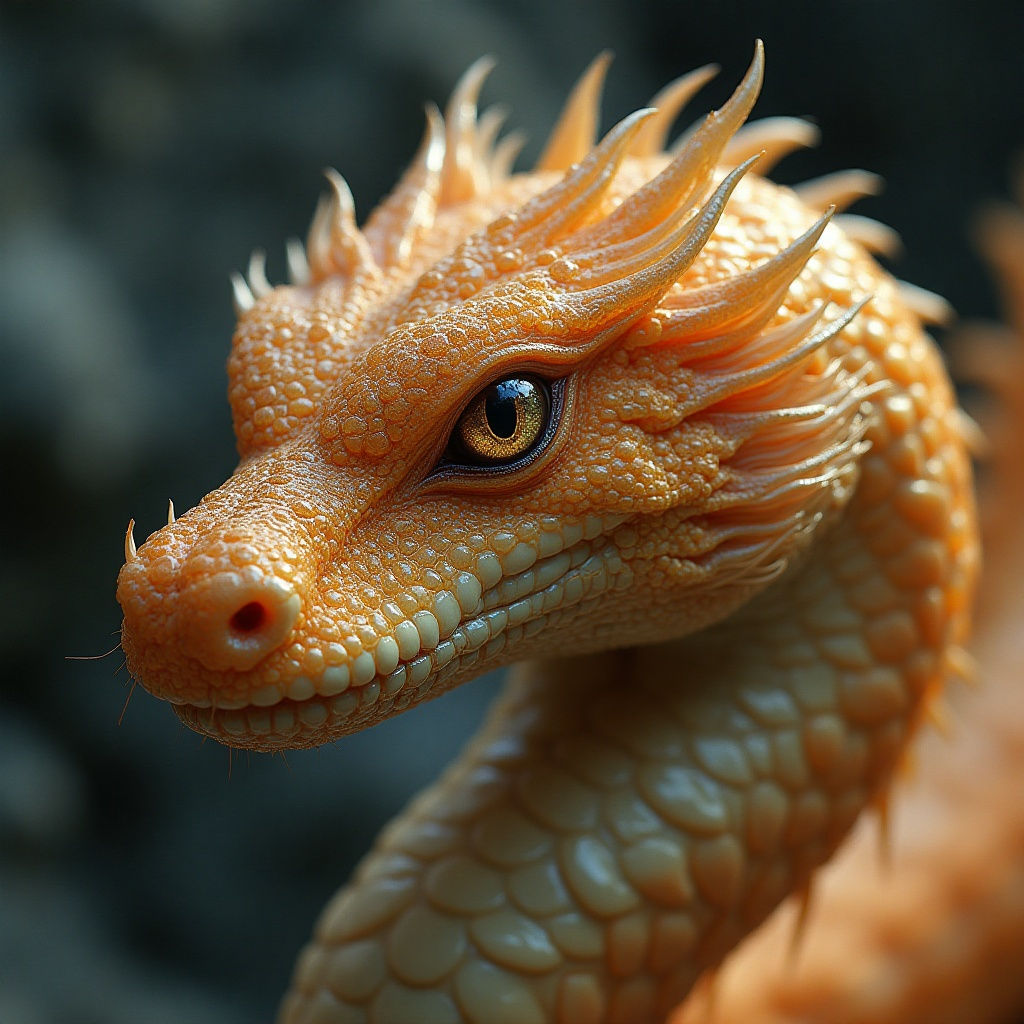
The general term for Korean dragons. Benevolent, wise, and associated with water, agriculture, and cosmic order.
Imugi (이무기)
In dragon taxonomy they represent the “larval” stage—beings striving toward full dragon-hood.
Mireu (미르)
An older or poetic term for a mature dragon. Appears in historical texts and folklore as a noble, leg-bearing dragon. 
Gangcheori (강철이 / 강처리) 
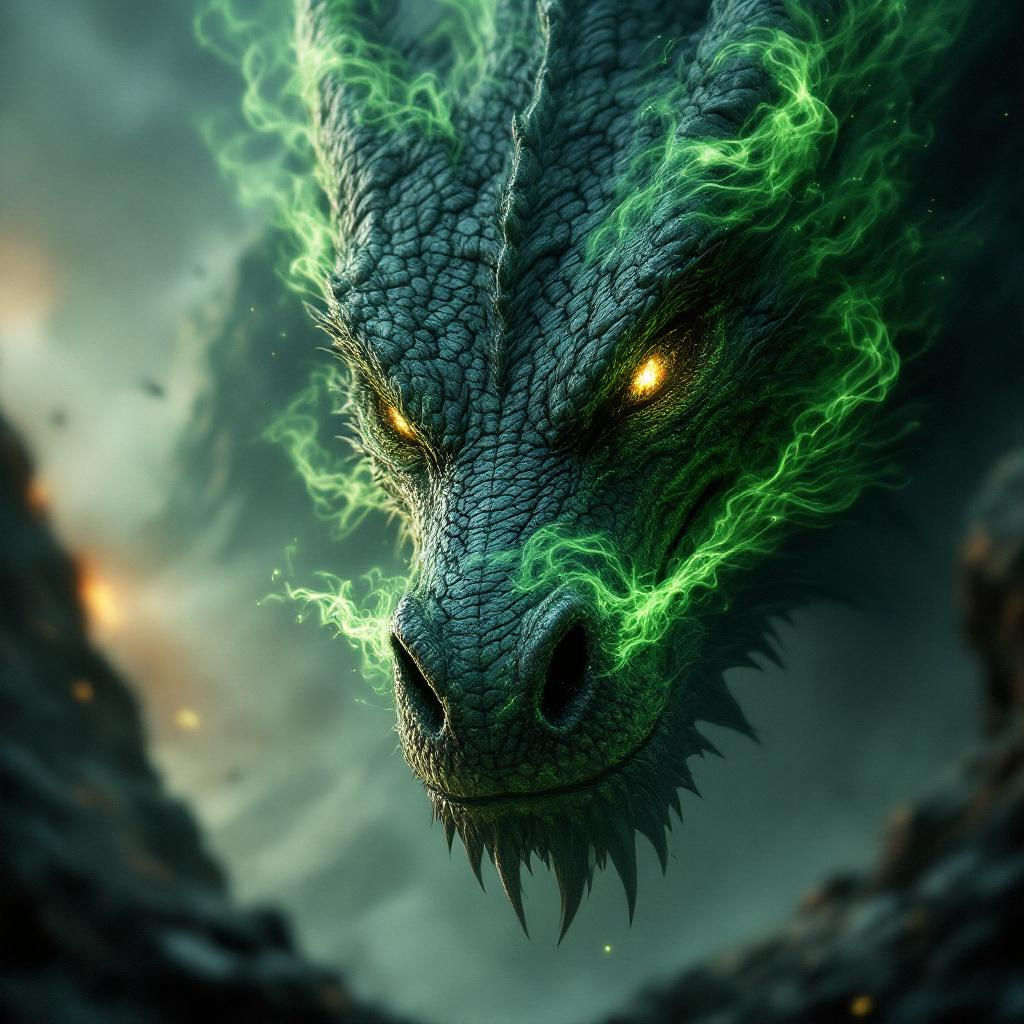
A venomous storm-dragon of Korean folklore, the Gangcheori is said to hunt and consume other dragons. This sets it apart from nearly every other Korean mythic creature. In a cosmology where dragons maintain cosmic order, a dragon-eater is a direct threat to the balance of heaven, earth, and water.

Comment?

hanna-one.com
The Original hannaone

 © 2007–2026 hanna-one.com℠ — All Rights Reserved
This website reflects the original work of hannaone. Korean recipes featured here have been reproduced without permission by the current registrant of hannaone.com.
Affiliate Disclosure:
hannaonetwo.com / hanna-one.com℠ participates in the Amazon Services LLC Associates Program, an affiliate advertising program designed to earn fees by linking to Amazon.com. Purchases made through these links help support this site. As an Amazon Associate, we earn from qualifying purchases.
Image Credits:
Most of the images/photos on this site are by Gil "hannaone", the owner of this website.
Some images on this site are sourced from contributors to Pixabay.com, a royalty‑free image and stock photo platform.  
Additionally, some images have been created using AI prompts by hannaone.