Recipes: Soups - Kongnamul-guk
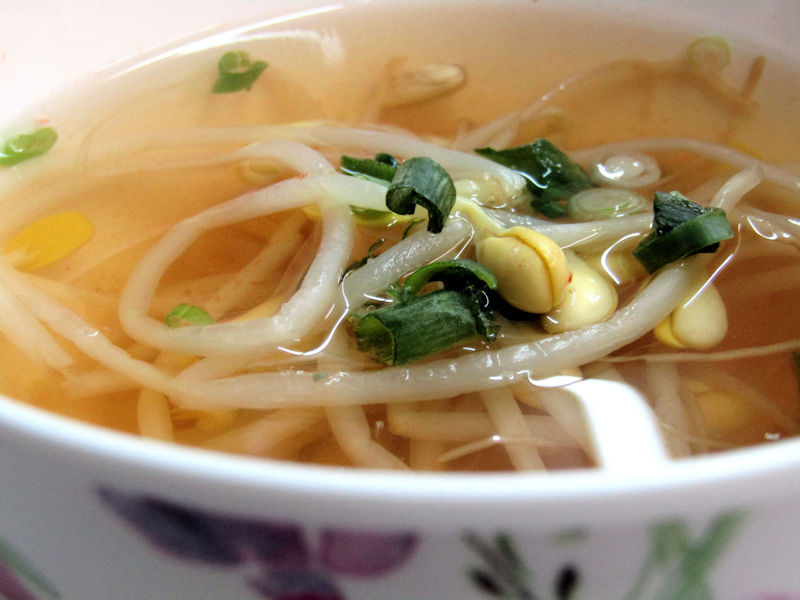
Kongnamul-guk Soybean Sprout Soup
콩나물국 | kongnamul-guk
Kongnamulguk is a popular soup that can be eaten hot or cold, depending on the preparation. The most common type is made with an anchovy broth, but some varieties may be made with beef or chicken broth, or plain water to get just the beansprout flavor.
Ingredients
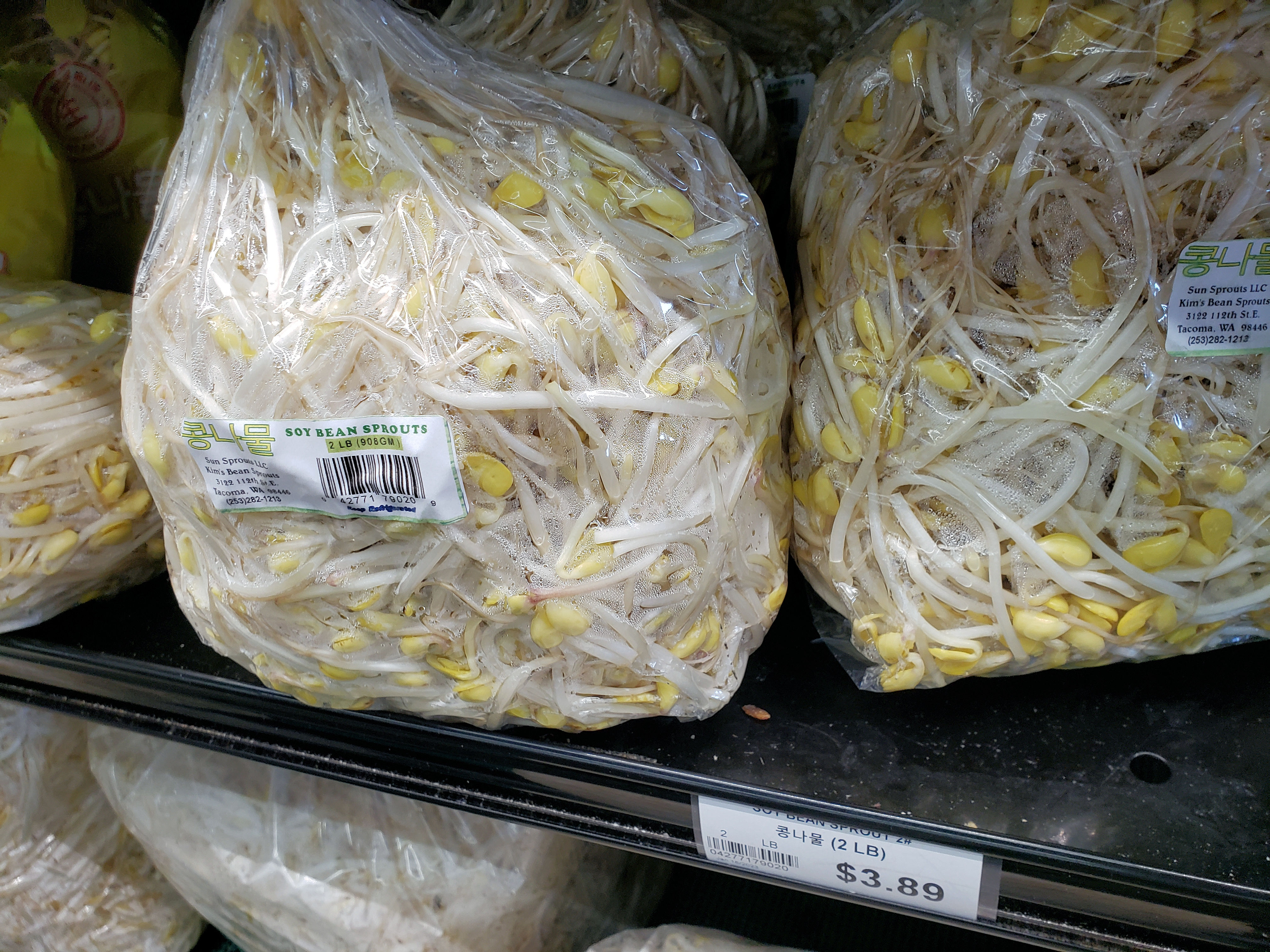
1/2 lb soy bean sprouts
6 cloves garlic
1/2 tsp salt
2 spring onions or scallions
1/2 bunch enoki mushrooms
1/2 tsp coarse ground red chili pepper
Toasted sesame seeds
Broth:
8 to 10 dried anchovies
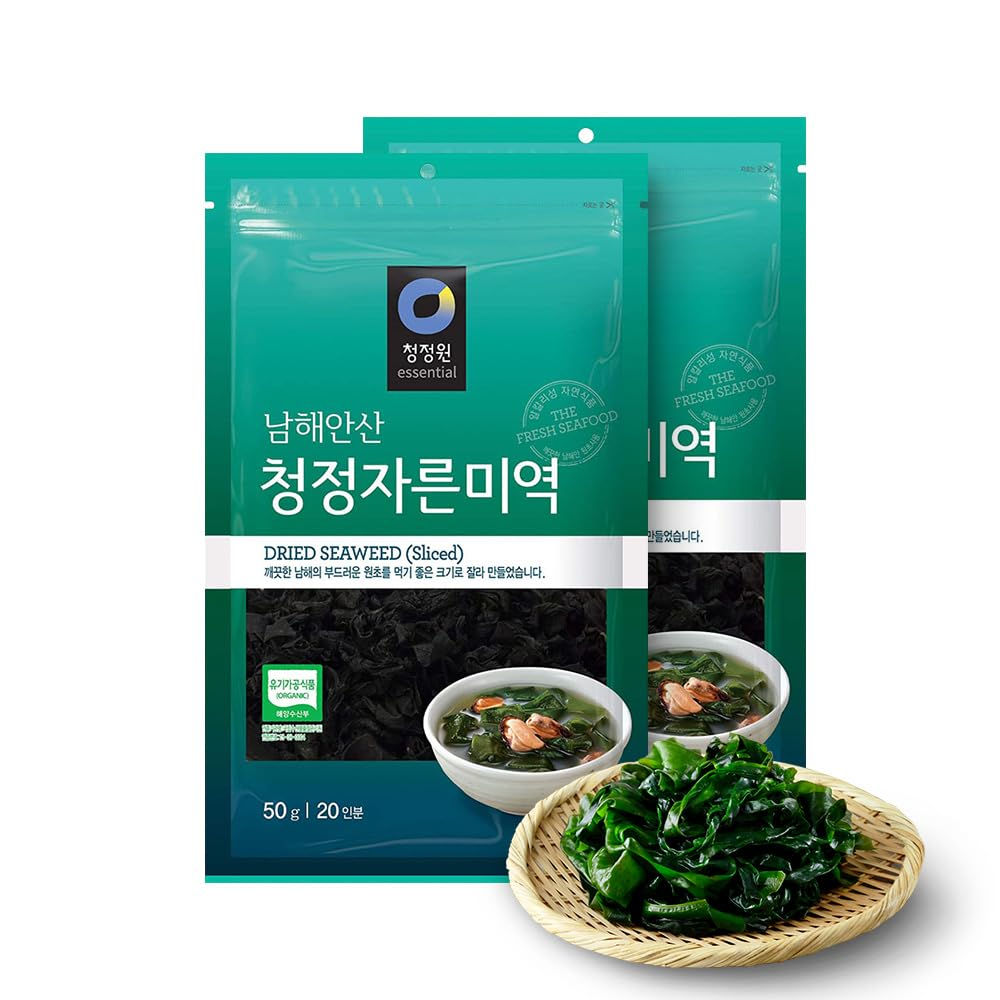
2 oz Dried kelp (Kombu)
4 cups water
Additional Ingredients for Method 2:
1/2 small onion
2 cloves garlic
Optional Ingredients:
2 oz lean beef
1 bunch chives
2 oz Daikon radish
1 or 2 red or green chili peppers
1 tsp Pure toasted sesame seed oil
seaweed
Directions
Prep and Cook:
Prepare Optional ingredients if desired:
Slice beef and/or radish as thinly as possible.
Note: Partially freezing the beef will make it easier to slice.
Broth:
Method 1:
Add kelp and anchovies to cold water and soak for 2 hours.
Bring to a slow simmer over low heat.
Simmer for 5 minutes.
Strain the broth and discard solids.
Use broth immediately or store in fridge or freezer for later use in Korean soups and stews.
Method 2:
Roughly chop the onion.
Slice the garlic into thirds from top to bottom.
Place dried anchovies and kelp in a pan and slowly toast over low heat.
Transfer toasted anchovies and kelp to a soup pot, add onion, garlic, and water, then gently heat to a slow simmer over low heat.
Simmer for 15 minutes.
Strain the broth and discard solids.
Use broth immediately or store in fridge or freezer for later use in Korean soups and stews.
Vegetables:
Wash bean sprouts and remove any remaining roots. Cut scallion/onion into 1/2 inch sections with a diagonal cut.
Slice garlic cloves in half from top to bottom.
Add garlic, and any or all of the optional ingredients to broth from either method above.
Return to simmer and cook for four minutes.
Add bean sprouts, enoki mushrooms, and chili pepper flakes and cook for three more minutes.
Remove from heat, add green onion/scallion and sprinkle with sesame seed.
Final
Serve while hot with sticky rice and kimchi.




Comment?