Recipes: Soups - Gori-gomtang - Beef Ox-Tail Soup
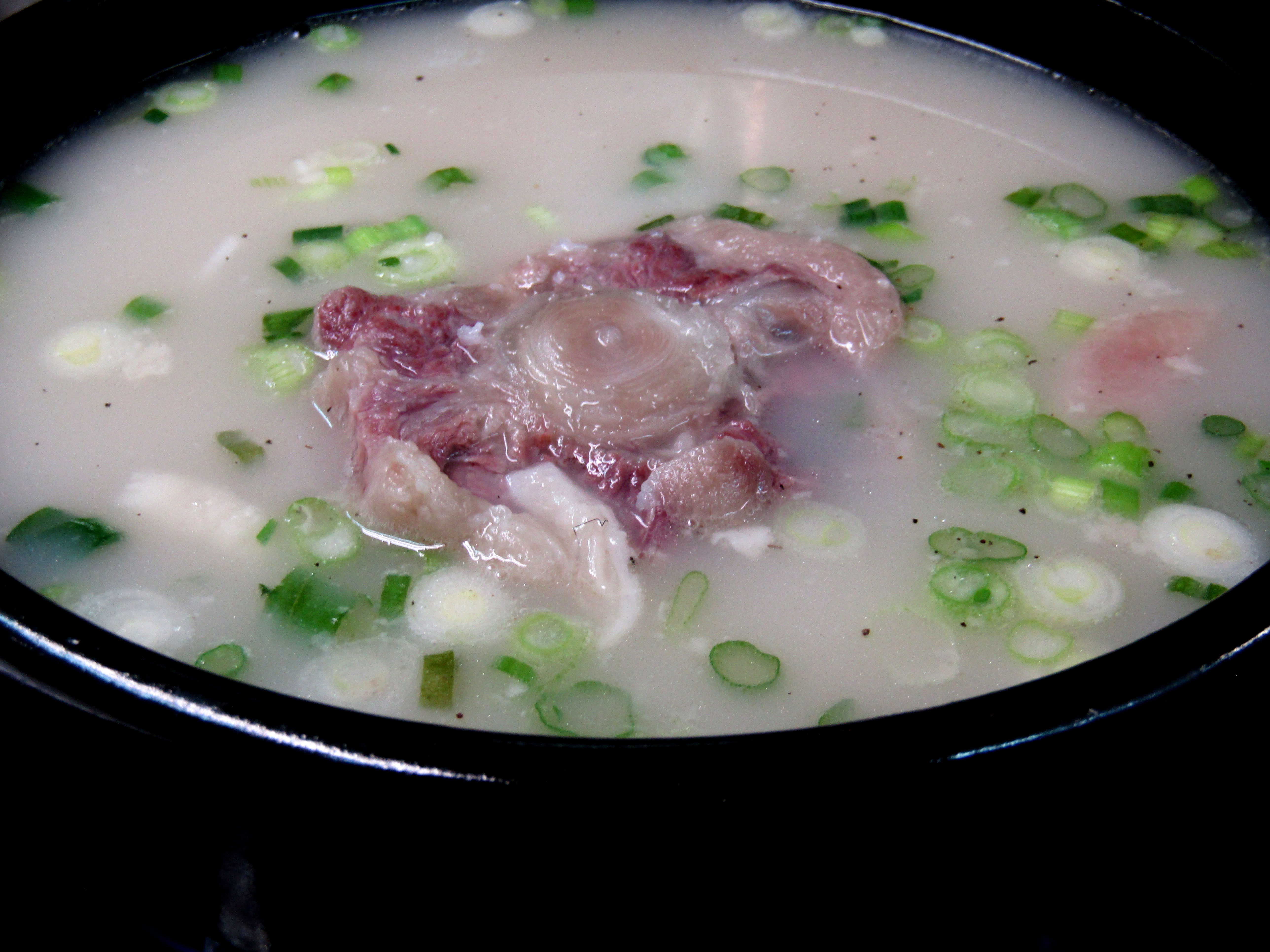
Gori-gomtang Korean Ox-tail Soup
꼬리곰탕 | gori-gomtang
Gori Gomtang (kkori-gomtang), also known as Korean Oxtail Soup, is a traditional Korean soup made from oxtail beef bones. This soup has a rich, milky broth and tender, fall-off-the-bone oxtail meat.
This is one of my go-to Korean dishes. Gori Gomtang is a hearty and flavorful comfort food. During my time in Korea, I would frequently come across this soup at various street vendors in Gunsan, Suwon, and Seoul. Interestingly, each city had its own unique take on this dish, resulting in multiple versions within each region.
Food Note: Gori Gomtang is just one of the soup types known as Gomguk.
Recipe Type: Korean, Soup, Beef
Servings: 6 to 8
Ingredients
4 pounds beef oxtail
8 cups water*
1 ounce ginger
5 each cloves fresh garlic, peeled
1/2 teaspoon salt
* may use 3 cups beef broth and 5 cups water
Optional Ingredients
1 each medium onion
1/4 small daikon radish (1 to 1 1/2 lbs)
Korean sweet potato starch noodle (glass, cellophane, or clear noodle)
salt
pepper
Basic Garnish
4 each green or spring onions
Optional Garnish
8 each cloves fresh garlic, peeled
Directions
Ox Tail
Some meat sellers will sell whole ox tail, which is what I prefer. This is the entire tail, uncut and untrimmed. You will need to separate the ox tail sections at the joint. The ox tail sections you get from this will range from little finger sized to full bowl sized.
Note: Larger sections are great on the grill.
Hand trim excess fat from the ox tail pieces. Set fat aside in a small container.
Precut oxtails will be trimmed with little fat left on the cut, and will be more of a uniform size.
Put ox tail in a large pot and completely cover with cold water. Let soak for one hour and discard water.
Rinse thoroughly.
Garlic And Ginger
Trim the hard tops from the garlic.
Slice garlic cloves in half from top to bottom.
Slice un-peeled ginger in thin diagonal slices.
Onion if used
Cut onion in half from top to bottom.
Starch noodle if used
Soak noodle in cold water for one hour (do this two hours into the cooking).
Daikon if used
Wash well and thinly slice.
Put in a small bowl and lightly salt.
Mix well and let stand ten minutes. (Do this about twenty minutes before the end of cooking)
Cooking
Place ox tail and trimmed fat in a large cooking pot with 8 cups water (or water/broth) over high heat and bring to a boil, skimming off oil and foam as needed.
Reduce heat to medium and add salt, garlic and ginger (add onion now if used).
Simmer for 3 to 4 hours, skimming as needed (until meat is almost falling from bone and broth is a milky color).
Remove ox tail from broth with a slotted spoon and place into serving bowls.
Using a hand held strainer, remove onion and garlic solids from soup and discard.
(If used, add sliced Daikon now and simmer for another ten minutes)
Remove the soup from heat.
(if used, add noodle to serving bowls)
Final
To serve gori gomtang (꼬리곰탕), ladle it into bowls and top it with your desired toppings. The soup can also be accompanied by rice and a side of kimchi or other banchan (Korean side dishes) for a complete meal. Enjoy this warm and comforting dish that will surely satisfy both your stomach and soul.

Comment?