Recipes: Soups - Galbitang - Beef Rib Soup
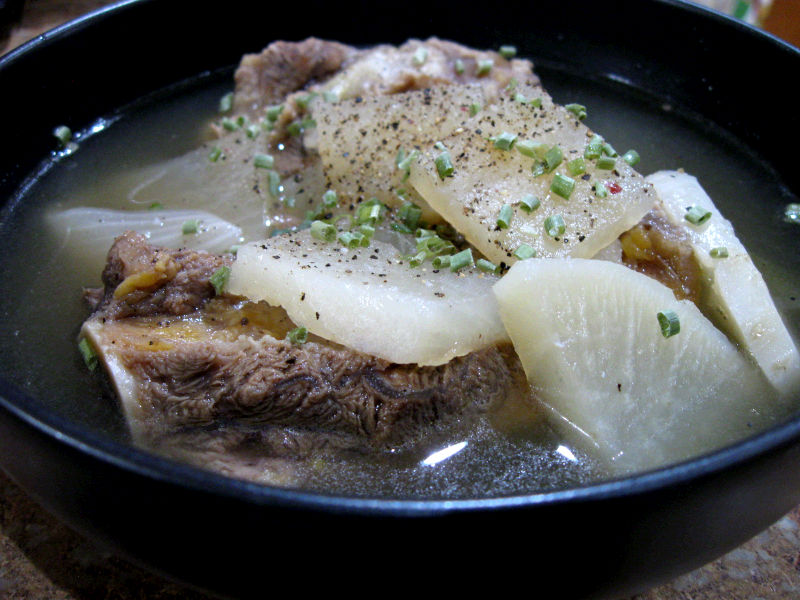
Galbitang Korean Beef Rib Soup
갈비탕 | galbitang
Beef ribs in a very flavorful broth.
Galbitang is a variety of guk (Korean watery soups) made with beef ribs, daikon radish, and onion as the primary ingredients, and chopped green onion as garnish. Other ingredients can include egg whites, whole egg, whole garlic cloves, pine nuts, sesame oil, and more.
Ingredients
3 pounds beef short ribs
1/2 pound Daikon radish
1 medium onion
3 quarts water
1 teaspoon garlic, minced (3 to 4 cloves)
5 medium green onions, chopped
ground black pepper
salt to taste
Optional
Daengmyeon (Korean sweet potato noodle)
Gyeran Jjidan (egg strips)
Directions
Rinse the ribs well in cold water making sure to remove clotted blood and any bone dust/fragments.
Place in a large bowl or pot and cover with cold water. Soak for about 20 minutes, drain, rinse, and repeat two more times.
Drain the ribs and rinse one more time.
Place the ribs in a large stock pot and cover with cold water.
Bring the pot to a boil over medium heat.
Remove from heat and carefully remove the ribs from the pot. Discard the water.
Rinse the ribs again under cold water, removing fat as you rinse.
Peel, rinse, and cut the onion into quarters.
Wash the radish, removing any rootlets, then cut into slices about 1 inch thick. Cut these slices into rectangles about 1 inch wide and 2 inches long.
Optional Gyeran Jidan
Crack three eggs into a bowl (If you have another use for egg whites you can separate the yolks from the whites and use just the yolks or repeat these steps for the whites, or just use them as is).
Whip the egg yolks together.
Heat a lightly oiled fry pan over medium low or low heat.
Pour the egg into the pan in a thin sheet and cook until the surface just begins to set.
Turn and cook until done (egg is set completely, but not browned).
Remove from pan and cut into narrow strips.
Cooking
Place the ribs back into the pot then add 3 quarts water and the onion.
Bring to a boil over medium heat and cook for one hour, skimming as needed to remove fat and/or foam.
Reduce heat to medium low, cook for about half an hour, add the radish, and cook for another half an hour.
Remove from heat then carefully take the ribs and radish from the broth and place in a large bowl. Remove and discard the onion. Clarify the broth by straining through cheese cloth or a filter.
Return the broth to the pot and heat over medium heat. Add the minced garlic (and noodles if used). Cook for about three or four minutes (or until noodles are soft throughout).
Remove from heat.
Final
Place a few ribs and some of the radish (and noodles if used) in each of the four serving bowls and ladle broth over them. Salt and pepper to taste. Garnish with the chopped green onion and gyeran jidan if desired.

Comment?