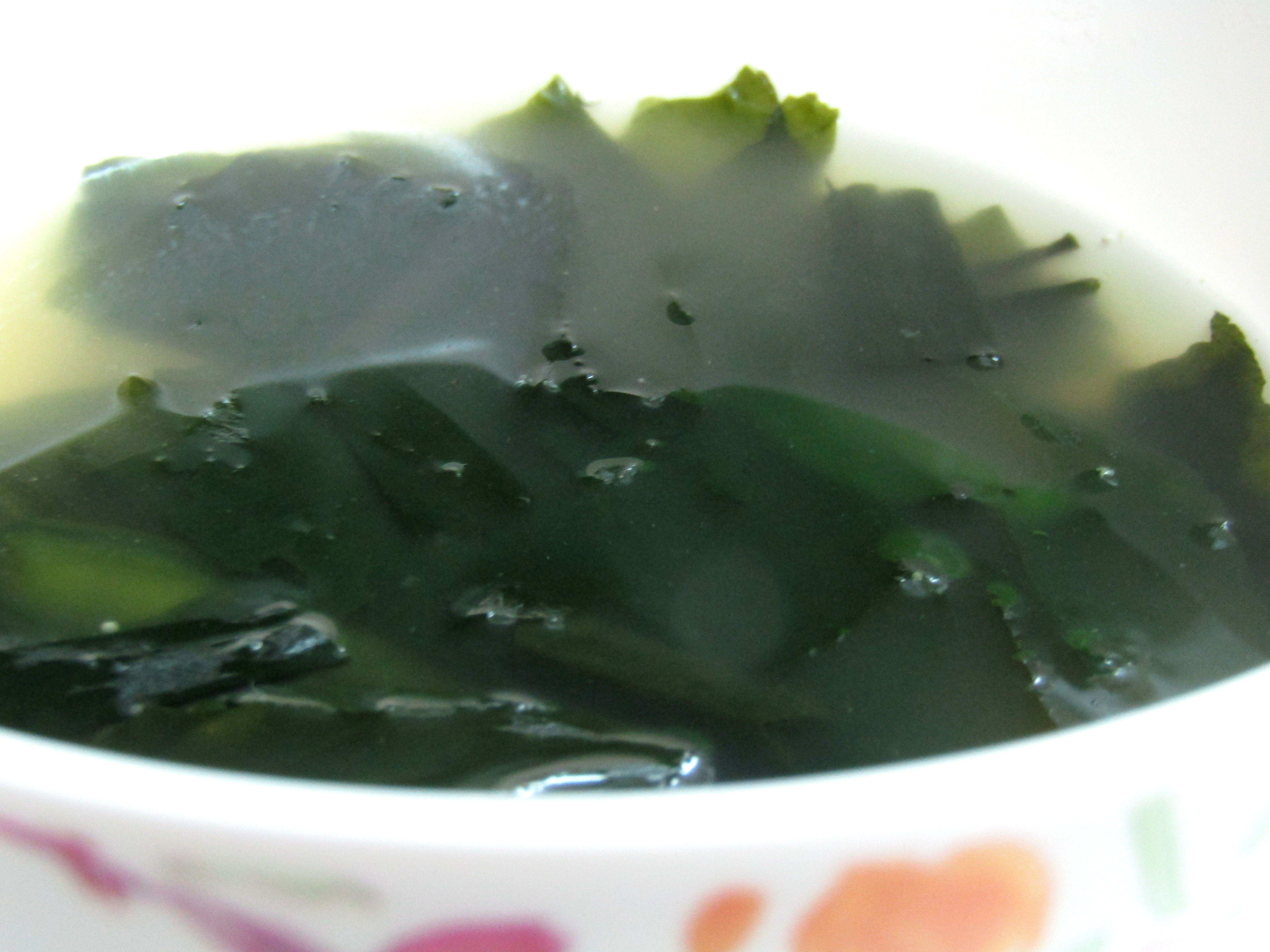
Image by hannaone: Complimentary Dashima-guk
Dashima-guk Kelp Soup
Article by Gil "hannaone" © Copyright 2007-2026. All rights reserved.
어묵국 | dashima-guk
어묵국
Dashima-guk is a simple soup made with kelp only.
Servings: 4 1 cup servings
Ingredients
1 1/2 ounce kelp
6 cups water
Optional Garnish
2 large eggs
1 hot red or green chili pepper
Directions
Add kelp to 5 cups cold water and soak for at least one hour, up to over-night.
Bring the kelp soak water to a slow simmer over low heat.
Simmer for thirty minutes.
Remove the kelp, slice into thin strips, and set aside.
Return the broth to a simmer and cook for another twenty minutes.
Note: If you wish to make a concentrated stock continue simmering until the broth is reduced to half the original volume. Cool, pour into an ice cube tray, and freeze, then place in a freezer bag. Stock may be kept for up to six months in the freezer.
Optional Garnish
Eggs
Separate yolks from whites.
Combine yolks and whip together.
Pour into a hot oiled pan in a thin layer (tilt pan back and forth to cover bottom of pan).
Cook over medium heat until top is just firm, but bottom is not browned, flip and cook 15 to twenty seconds.
Remove from heat and let cool.
Cut into thin strips about 1/8 inch wide by 1 1/2 inch long.
Repeat with egg whites.
Pepper
Slice the chili pepper in half from top to bottom, remove seeds and any pith, then sliver each half from top to bottom.
Final
Place the kelp strips into serving bowls and ladle broth over it.
Add garnish if desired and serve as a starter soup for a Korean meal, or as a refreshing lunch portion.
Story Time
Kelp has long served as a foundation for Korean broths, forming the base of countless soups, stews, and noodle dishes. Depending on the dish, the broth may be made from kelp alone or combined with shiitake mushrooms, anchovies, or meat to deepen its character. After simmering, the liquid is strained to remain clear and free of solids, preserving its clean profile.
The umami from kelp is intentionally subtle—never overpowering, never showy. It adds a gentle lift that makes a dish taste quietly “better than usual,” and its absence is often felt more than noticed, leaving a faint sense that something essential is missing.
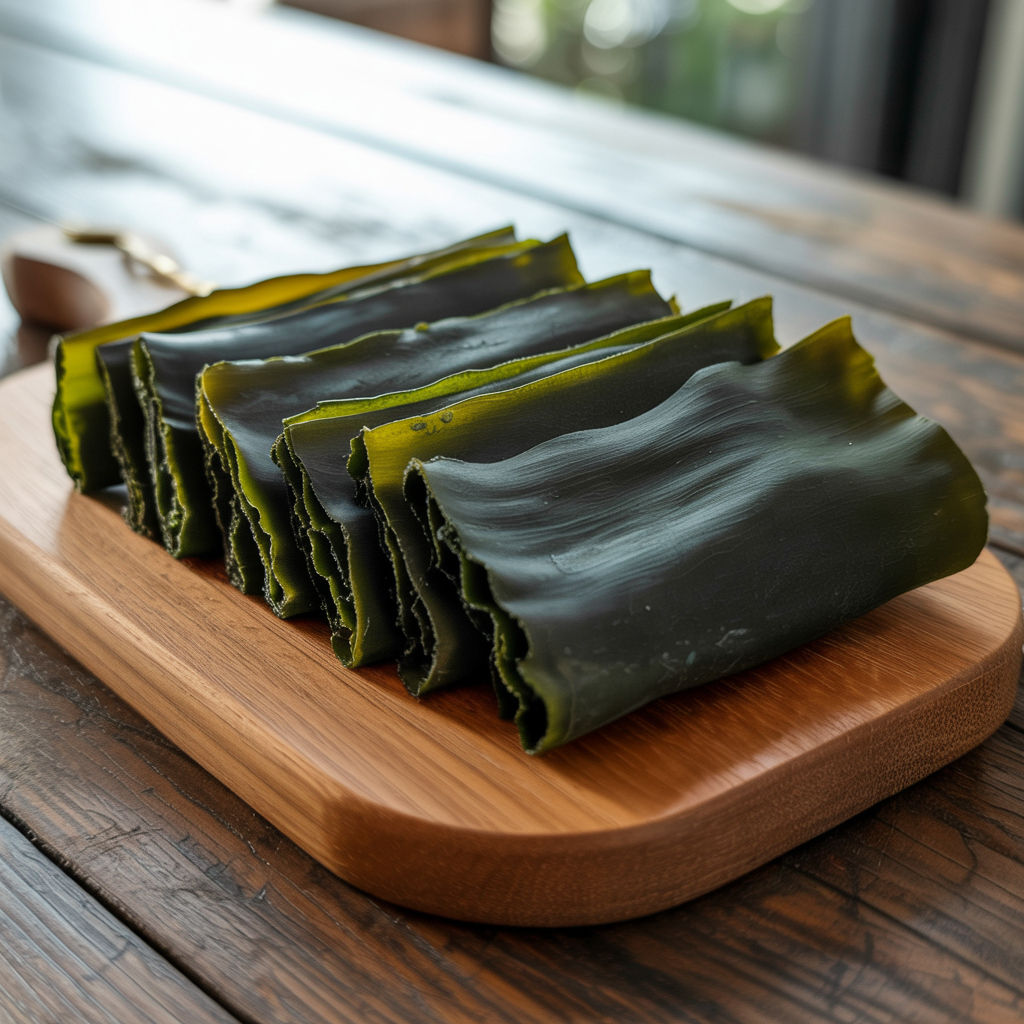
Image by hannaone and AI: Dried Kelp
Kelp broth has deep roots in Korean cooking, with written references appearing as early as the late Joseon period, when coastal trade made dried kelp more widely available in markets. By the early 20th century, dashima had become a standard pantry ingredient in both home kitchens and temple cuisine, valued for its ability to create a refined, understated stock without the heaviness of meat. This preference for a clear, quietly savory broth reflects a long‑standing Korean aesthetic: flavor that supports rather than dominates, enhancing the dish while remaining almost invisible.
Find it on Amazon! Purchases made through these links help support this site. As an Amazon Associate, we earn from qualifying purchases.