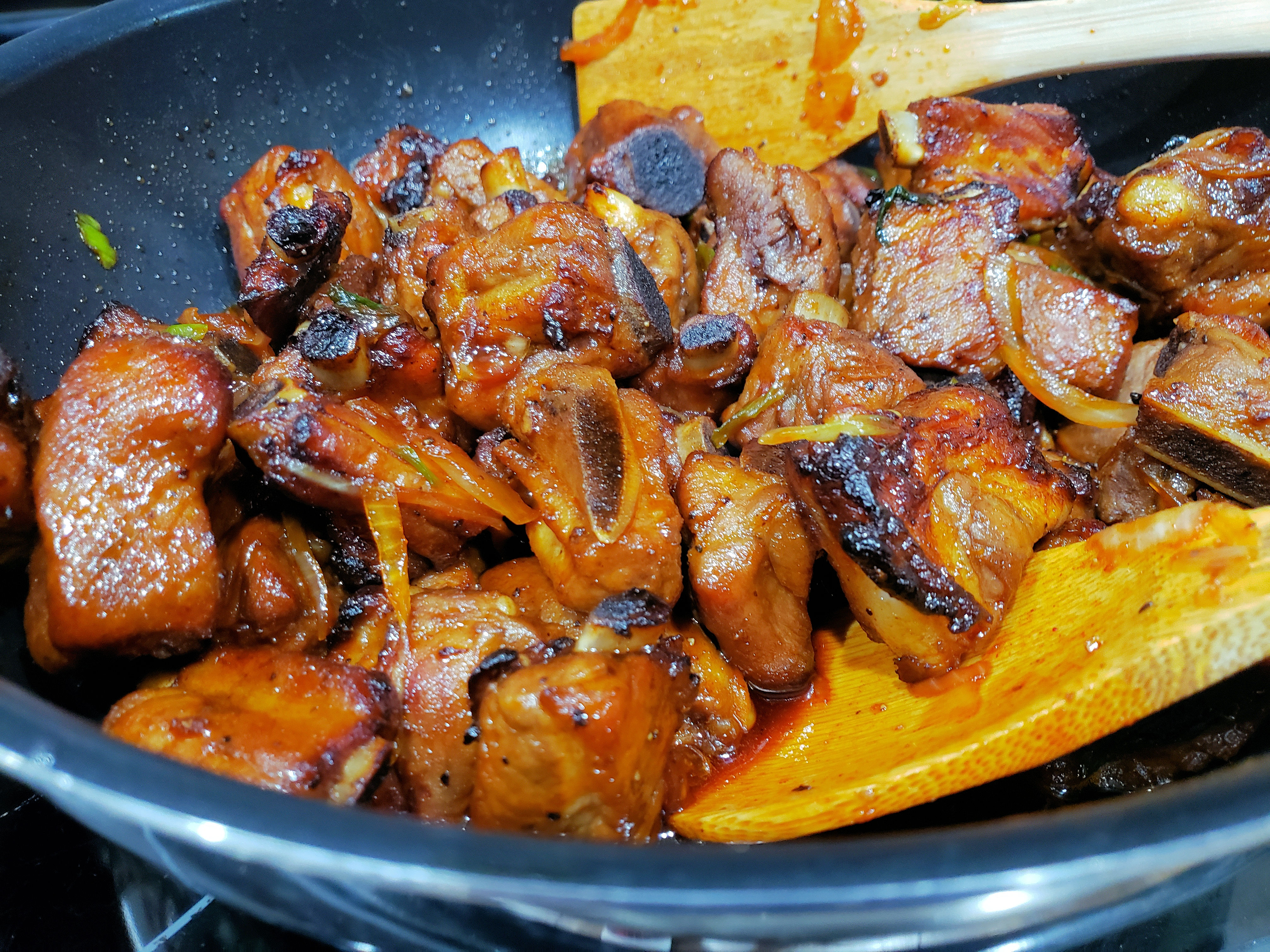
Image by hannaone: Maeun-dwaeji-galbi
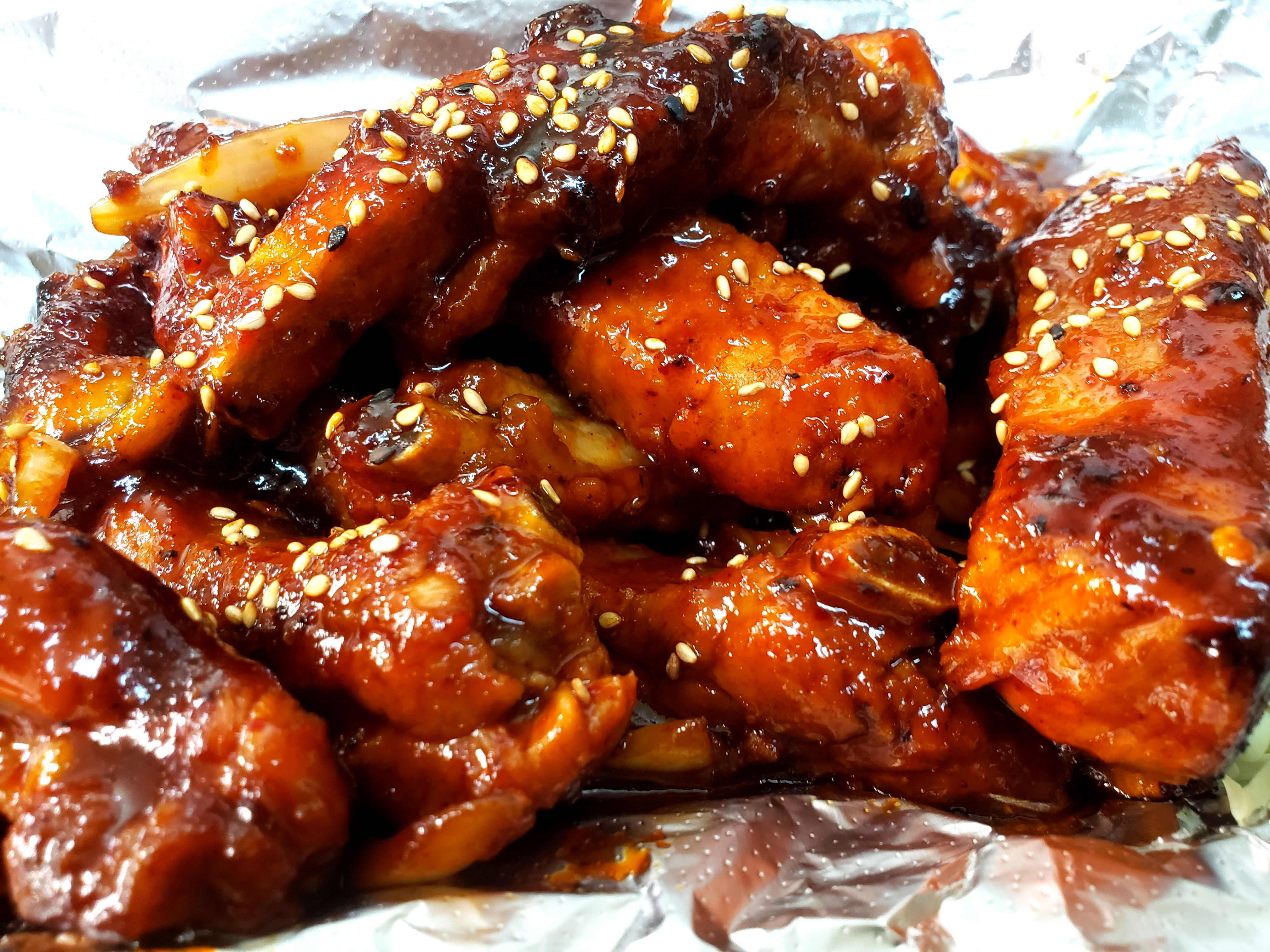
Image by hannaone: Maeun Dwaeji Galbi
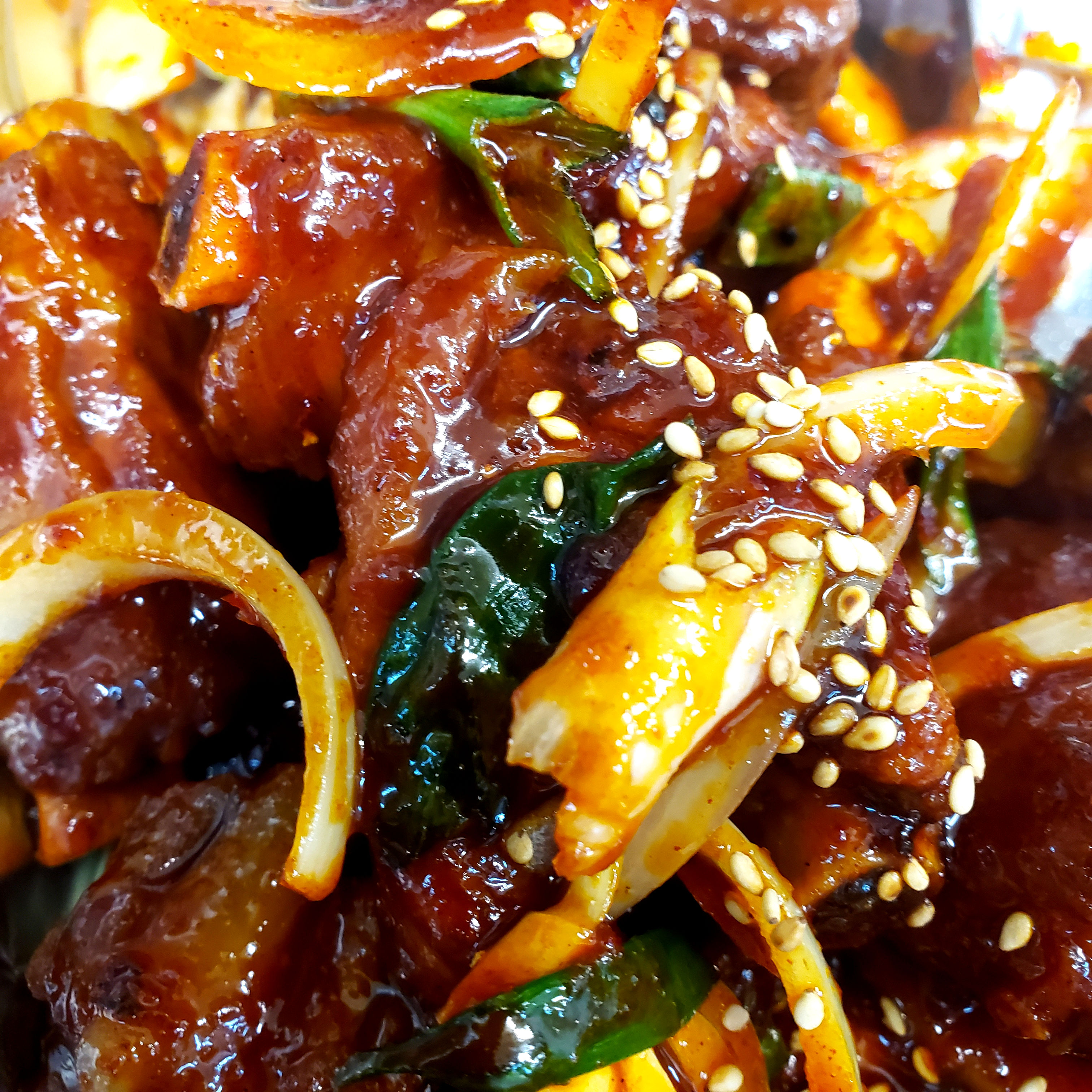
Image by hannaone: Maeun Dwaeji Galbi
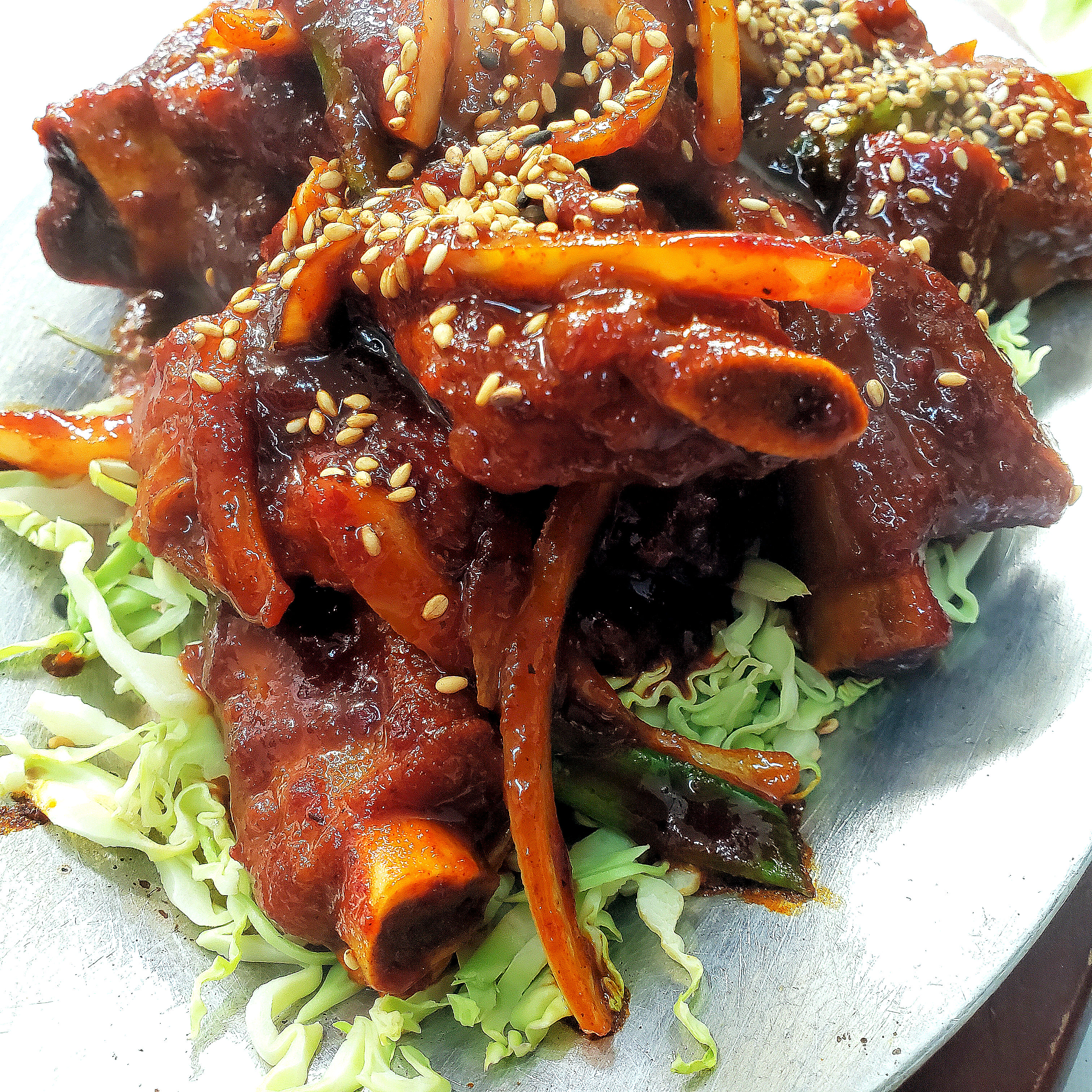
Image by hannaone: Maeun-dwaeji-galbi
Maeun Dwaeji Galbi Spicy Pork Ribs
Article by Gil "hannaone" © Copyright 2007-2026. All rights reserved.
매운 돼지갈비 | maeun-dwaeji-galbi
매운 돼지갈비
This recipe for Korean Spicy Pork Ribs showcases a three step cooking process. Par boiling the ribs before lightly browning them, then a quick stir fry in a sweet, savory, and spicy sauce results in a flavor and texture unique to Korean style cooking.
This recipe is not for the fall off the bone tender pork rib dish known as dwaeji galbi-jjim,
Servings: 6
Recipe Type: Korean, Meat, Pork
Ingredients
3 pounds pork spare ribs, 1 1/2 inch cross cut, separated*
1 1/2 ounces fresh ginger
3/4 small white or yellow onion
3 each green/spring onions or scallions
1 tablespoon toasted sesame seed
2 tablespoons cooking oil
* Substitute 3 pounds pork riblets, separated or 2 1/2 pounds boneless "country style" ribs
Optional
1 each small carrot
2 each medium red potato
Stir Fry Sauce
5 tablespoons finely ground red chili pepper (gochugaru)
4 tablespoons sugar
6 cloves fresh garlic
2 each fresh red chili peppers or jalapeños
1 ounce fresh ginger
1/4 small white or yellow onion
4 tablespoons soy sauce
1/2 teaspoon black pepper
1 teaspoon pure roasted sesame seed oil
water as needed
Directions
Preparation
Cut ginger into 1/8 to 1/4 inch slices.
Thick slice the onion.
Finely chop green onion/scallion
Pork:
Your local butcher or meat counter should be able to cross cut the ribs for you. If not, country style boneless ribs or pre cut riblets are recommended or your local grocery/meat market may carry pork back rib pieces, or "sweet & sour" rib sections - these also work well.
Bone in:
Separate ribs by cutting between each rib section, leaving meat on both sides of the bone.
Place the ribs in a large pot, cover with water, and soak for 1 hour. Discard water.
Cover with fresh water, add sliced ginger, and bring to a boil over high heat.
Boil for ten minutes, remove from heat, and discard water.
Rinse in cold water and drain well.
Boneless country style:
Cut into cubes, very lightly salt each side, and let stand ten minutes.
Optional Ingredients:
Peel and rinse the potatoes. Cut in 1 inch cubes and rinse again.
Thick shred the carrot.
Stir Fry Sauce
Cut onion quarter, peppers, and ginger into small pieces.
Place all ingredients into a blender and blend into a semi thick smooth paste. (Add water as needed for even blending)
Cooking
Coat a large stir fry pan with cooking oil and place on stove over high heat.
Bone in:
Add rib sections and lightly brown.
Country Style:
Add cubes and cook until well browned on all sides.
Optional:
In a separate skillet, lightly brown potato over high heat.
Finish
Reduce heat to medium low.
Add onion (and browned potato) and stir fry for two minutes.
Add 1 cup water or beef broth and simmer covered for about fifteen to twenty minutes.
Increase heat to high and add stir fry sauce.
Stir fry until sauce thickens and adheres to the pork ribs.
(add shredded carrot if used, and stir fry for one minute)
Sprinkle with sesame seed and chopped green onion.
Serve hot with steamed rice and ban chan.
Story Time
Pitmul‑ppaegi & Dechigi (빼기 · 데치기)
Meats used for soups, stews, and braises are traditionally rinsed thoroughly in cold water, then soaked to draw out residual blood before being parboiled and rinsed again. This two‑step preparation is central to achieving a clean, light flavor.
Key Techniques
- Pitmul‑ppaegi (빼기): “Removing blood water” through rinsing and soaking in cold water.
- Dechigi (데치기): A brief blanching or parboiling step that removes impurities and excess fat.
Application to Maeun Dwaeji‑galbi
The pork ribs for Maeun dwaeji‑galbi are prepared using this same sequence, ensuring a cleaner base flavor before marinating and cooking

Comment?