Book of Ingredients
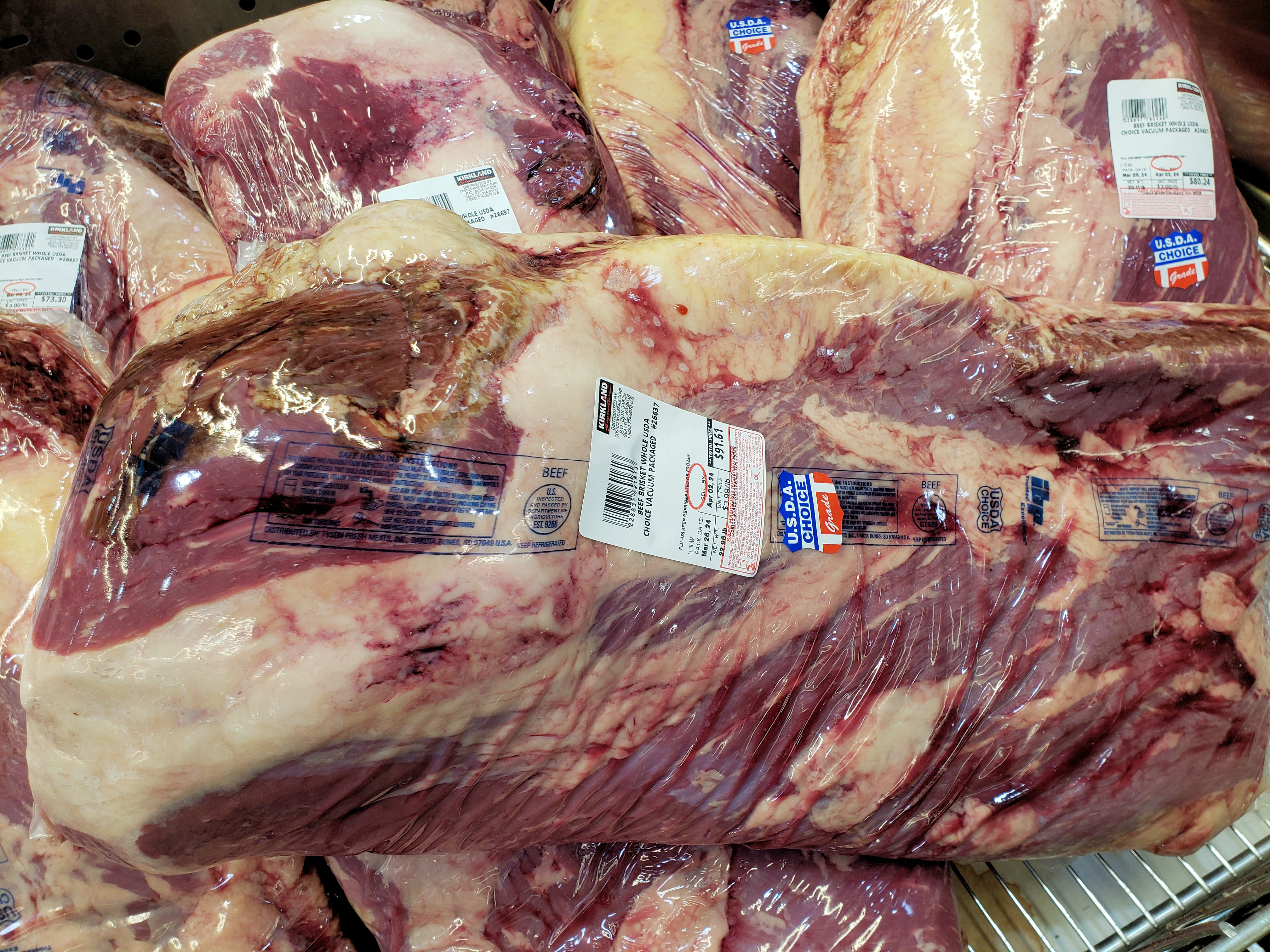
Image by hannaone: Whole Brisket (Costco)
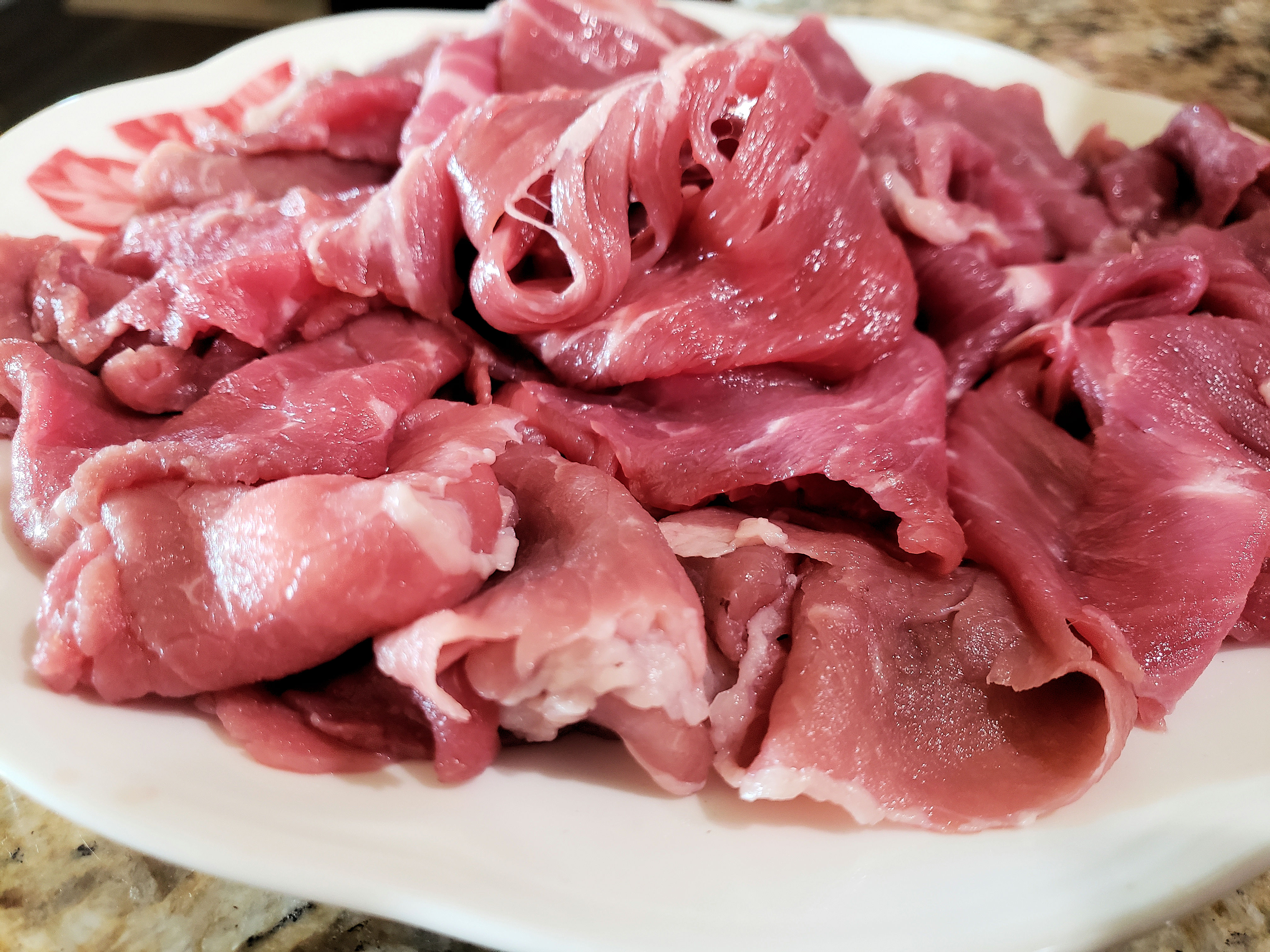
Image by hannaone: Sliced Brisket
Yangjimeori Brisket
Article by Gil "hannaone" © Copyright 2007-2026. All rights reserved.
양지머리 | yangjimeori
Ingredient Name: Yangjimeori / Chadolbaegi
Korean Spelling: 양지머리 / 차돌박이
English Name: Brisket
Category: Beef Cuts (Soegogi)
General Information
Yangjimeori (양지머리) refers to brisket, a richly flavored, moderately fatty cut taken from the cow’s breast and lower chest. In Korean cooking, it is prized for its deep beefiness, pleasant chew, and versatility across both quick‑cooking and long‑simmered dishes.
When shaved paper‑thin, brisket point becomes the iconic chadol-baegi, a staple of Korean BBQ that cooks in seconds and delivers concentrated beef flavor with a clean, fatty finish.
In its whole form, brisket is a foundational ingredient for soups, stews, pressed meats, and broths, where its connective tissue and fat create body and richness.
In the United States (U.S.) brisket is traditionally divided into two main sections:
- Flat (편육용 양지 / Yangjimeori) — leaner, ideal for boiling, slicing, and pressed dishes.
- Point (차돌박이 / Chadolbaegi) — fattier, used for grilling or quick stir-fries.
Shopping and Selecting
Brisket is widely available in Korean and Asian markets, butcher shops and carnicerías, grocery stores with a full meat department, club or membership stores, and more.
It may be sold whole (full brisket), separated into flat or point, or pre-sliced for Korean BBQ or hot pot in Korean and Asian markets
Quality indicators:
- Bright, clear red meat
- Firm, white fat with no gray discoloration
- Even marbling in the point section
- For pre-sliced brisket, look for thin, even slices without excessive water purge
Storage
- Refrigerated (cryo-sealed): Up to 5 days
- Refrigerated (unpackaged): Up to 3 days
- Frozen: Up to 6 months when tightly wrapped or vacuum-sealed
For pre-sliced brisket, use within 1–2 days for best texture.
Common Preparation
Whole or Sectioned Brisket: Rinse briefly under cold water, soak for 30–60 minutes to remove residual blood (a common Korean practice for soup and stew cuts), then trim or portion depending on intended use. Brisket sections are often simmered whole for pyeonyuk, guk, or jjigae.
Sliced Brisket (Chadol-baegi): No soaking or special prep. Sliced brisket should be cooked within two days of purchase.
Culinary Uses
Chadol-baegi (차돌박이) or point:
Korean Grill, ultra-thin slices grilled briefly—often mere seconds—until just browned. Typically dipped in sesame oil with salt and pepper.
Chadol Doenjang-jjigae (차돌 된장찌개):
A robust soybean paste stew where brisket fat enriches the broth and balances the fermented flavors.
Stir-fries where it is often paired with:
- Mungbean sprouts (숙주)
- Green onions
- Garlic chives
Quick, high-heat cooking preserves its tenderness.
Yangjimeori
Soups and Broths:
Brisket flat is a classic base for:
- Miyeok-guk (미역국) – seaweed soup
- Muguk (무국) – radish soup
- Gomtang and Yukgaejang variants
Its collagen and fat create a savory, full-bodied broth.
Pyeonyuk (편육)
Boiled brisket pressed and sliced thinly, served cold with dipping sauces or wrapped in kimchi.
Substitutes
For Soups and Stews
Cuts that withstand long cooking and offer similar richness:
- Chuck roast
- Beef shank
- Beef cheeks
For Sliced BBQ or Stir-fry
Cuts that slice thinly and cook quickly:
- Ribeye
- Sirloin
- Flank steak
- Skirt steak
Other Names
- Chadolbaegi (차돌박이): Refers specifically to the fatty point/plate section when sliced thin for grilling
- Yangji (양지): General term for brisket in many markets
- Yangji-meori (양지머리): Full term used in traditional cooking contexts
| |||||||||||||||||||||||||||||||||||||||||||||||||||||||||||||||
| |||||||||||||||||||||||||||||||||||||||||||||||||||||||||||||||
| |||||||||||||||||||||||||||||||||||||||||||||||||||||||||||||||
Yangjimeori Brisket
Historical and Cultural Notes
Throughout much of Korean history, beef was rare and heavily regulated, especially during periods when Buddhism influenced state policy and discouraged meat consumption. After the Mongol invasions in the 13th century, meat-eating reemerged, but beef remained prohibitively expensive for commoners.
Because cattle were essential for agriculture, slaughter was restricted, making beef a luxury food associated with wealth, status, and ceremonial occasions. Cuts like brisket—used for soups served at ancestral rites, weddings, and major holidays—carried cultural significance beyond everyday cooking.
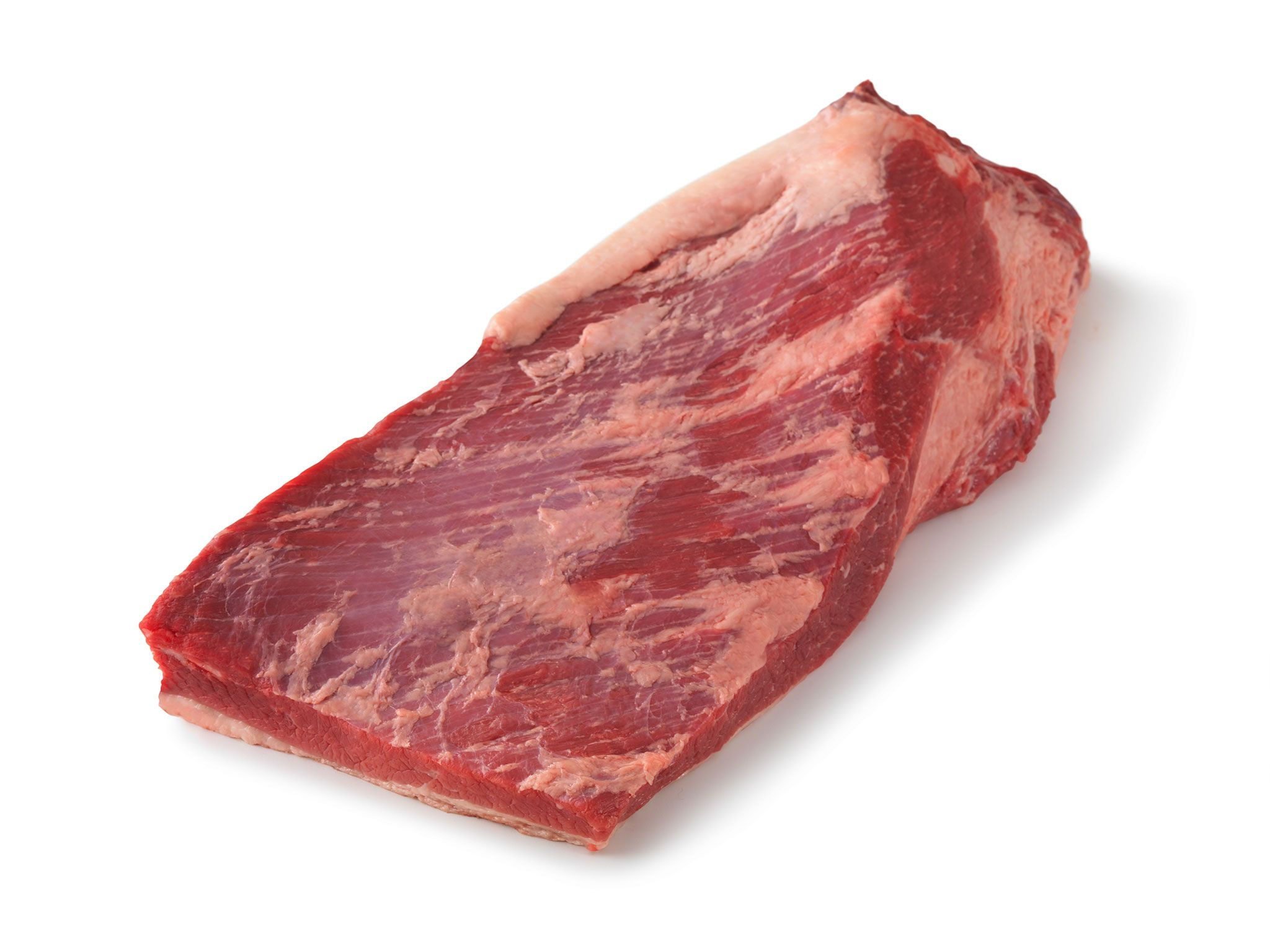
Image from: beefitswhatsfordinner.com/
Today, brisket remains one of the most beloved cuts in Korean cuisine, especially in Korean Grill culture, where chadol-baegi is synonymous with convivial, fast-paced grilling.
Check out Wooltari for Korean food and gifts!
Find it on Amazon! Purchases made through these links help support this site. As an Amazon Associate, we earn from qualifying purchases.