Book of Ingredients
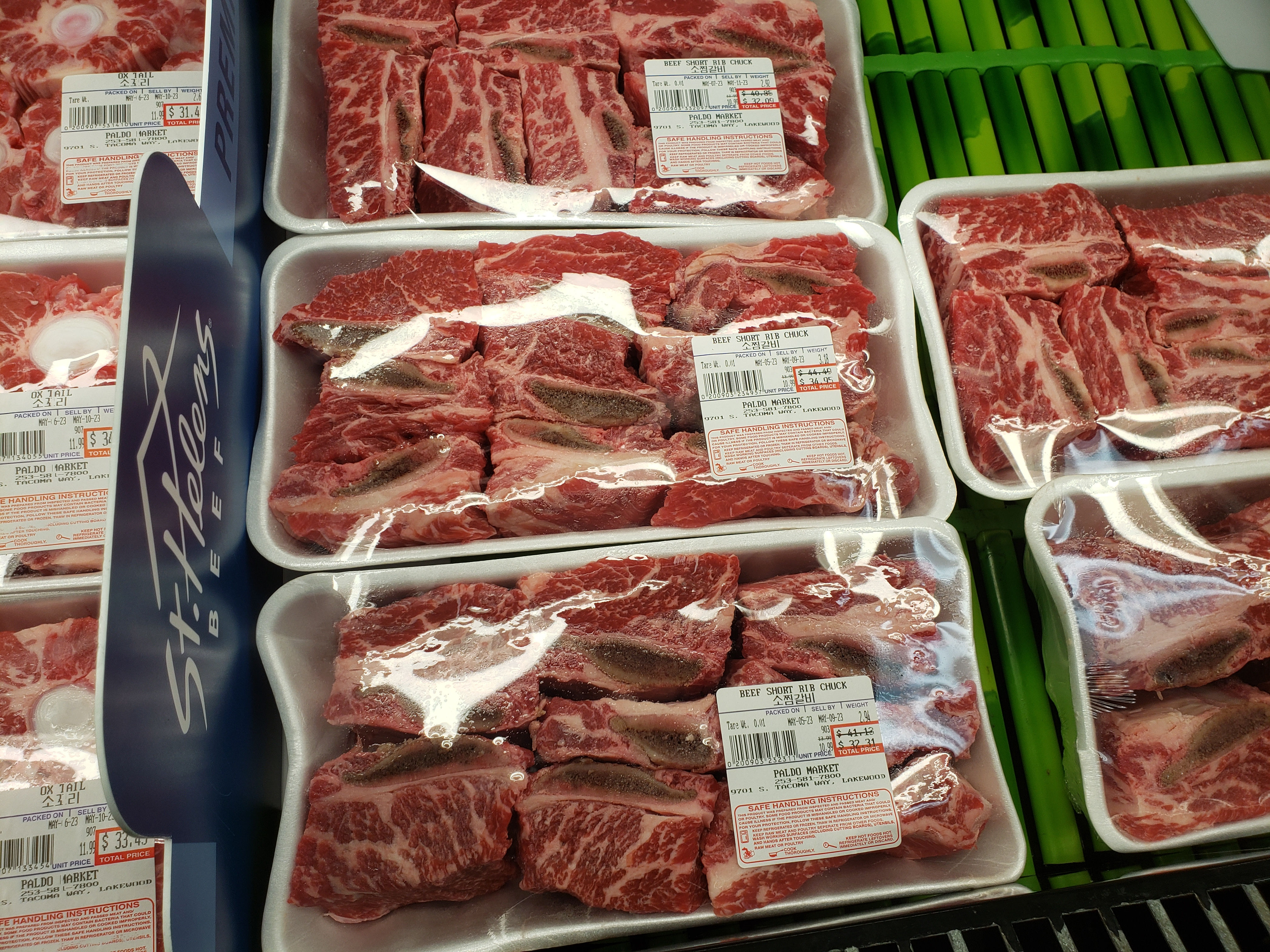
Image by hannaone: Wang Galbi in the market
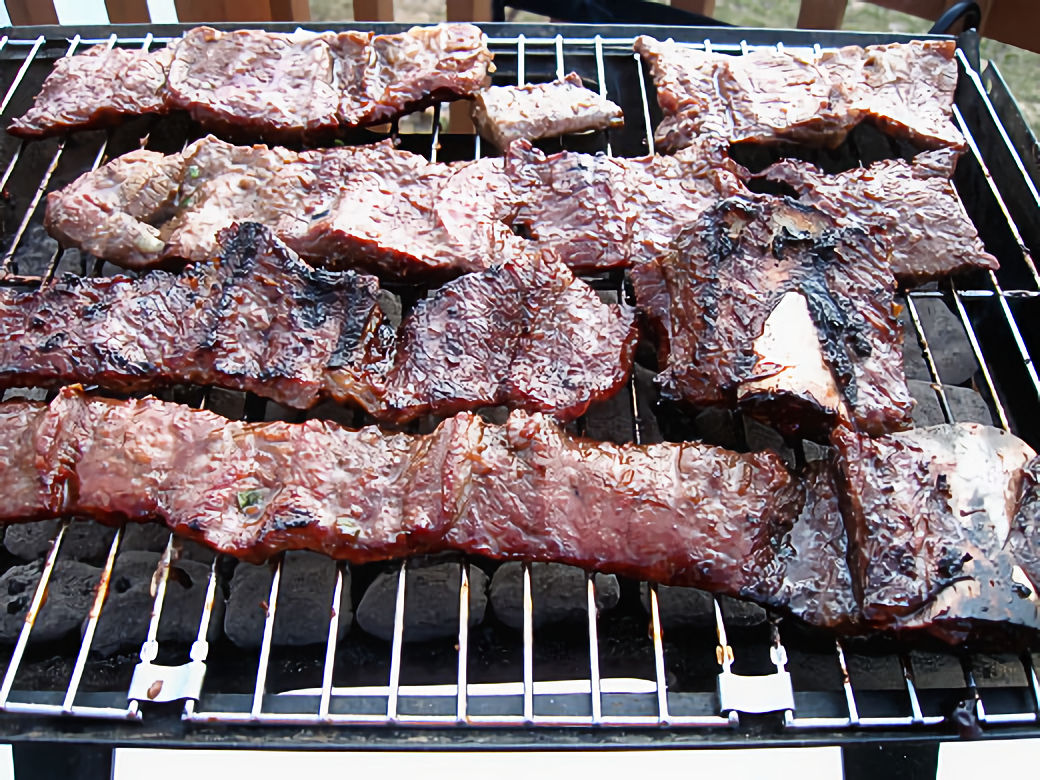
Image by hannaone: Wang Galbi on the grill
Wang Galbi King Ribs (Beef Short Ribs)
Article by Gil "hannaone" © Copyright 2007-2026. All rights reserved.
왕갈비 | wang galbi
Ingredient Name: Wang Galbi
Korean Spelling: 왕갈비
English Name: King Cut Short Ribs
General Information:
Wang galbi refers to a distinctive cut of short ribs used primarily in Korean barbecue. Unlike the more commonly known LA cut, this version follows an English-style butchering method, where the ribs are cut across the bone approximately 2 inches wide. Each rib section is then carefully portioned into a thin strip with the bone attached at one end, often referred to as "head and tail," "un-folded," or "bone-on fillet." In some cases, the meat is butterflied, creating two thin strips that remain attached by a central bone.
This cut is favored for its presentation and texture, often appearing in high-end Korean barbecue settings. It may be marinated or served plain, depending on the style of preparation. Due to its labor-intensive butchering and larger individual portion size, it is typically more expensive than the LA cut of short ribs.
Shopping and Selecting:
For authentic wang galbi, your best bet is a Korean grocery store with a dedicated butcher counter. Many larger Korean markets carry pre-cut wang galbi. If unavailable, a knowledgeable local butcher may be able to custom cut this style upon request.
In mainstream supermarkets, you can find English-cut short ribs that may require hand-cutting at home to achieve the desired shape. When selecting your ribs, consider the following:
Selection Tips:
• Color: Look for a deep red or burgundy hue, indicating freshness.
• Marbling: Rich marbling (intramuscular fat) contributes to tenderness and deep flavor.
• Cut: The English-style cut, roughly 2 inches wide, is ideal.
• Freshness & Quality: Meat should be firm to the touch, odorless, and properly packaged. Avoid grey or brown meat, which suggests spoilage.
Storage Guidelines:
Refrigeration:
• Keep fresh ribs in the coldest section of your refrigerator (35-40°F) for up to five days.
• For extended freshness, if stored below 34°F, they may last up to eight days.
Freezing:
• Wrap ribs tightly in plastic wrap or an airtight freezer bag to prevent freezer burn.
• Properly stored, they can last between six to twelve months in the freezer.
• Vacuum sealing extends their freezer life to a full year.
Common Preparation Methods:
Before cooking, rinse the ribs thoroughly in cold water to remove any residual bone debris. Depending on the desired preparation, the ribs may be:
1. Grilled directly for a bold, smoky flavor.
2. Marinated (typically in a soy sauce-based galbi marinade) to enhance tenderness and sweetness.
3. Charcoal grilled for deeper caramelization and richness.
Used In:
Wang galbi is an iconic cut for Korean BBQ, particularly for dishes such as:
• Galbi Gui (갈비구이) – Grilled short ribs with or without marinade.
• Sutbul Galbi (숯불갈비) – Charcoal-grilled ribs, often marinated.
Substitutes:
If wang galbi is unavailable, consider these alternatives:
• LA Galbi (갈비) – Thin-cut short ribs, sliced across the bone.
• Bone-In Ribeye Steaks – Though different in shape, they offer comparable flavor and texture.
• Flanken-style Short Ribs – Slightly thinner, but can be grilled or marinated similarly.
| |||||||||||||||||||||||||||||||||||||||||||||||||||||||||||
Wang Galbi King Ribs
In the U. S. the flanken style LA Galbi seems to be more prevalent than the traditional Wang or King cut ribs.
The Wang style, or King Ribs may be found at more upscale Korean grill restaurants.
Wang Galbi is usually cut in a "head and tail" style with the bone section on one end, but in some cases the ribs are cut with the bone in the center and "wings" of meat on each side. The meat, once flayed from the bone, is usually thinner than the LA style.
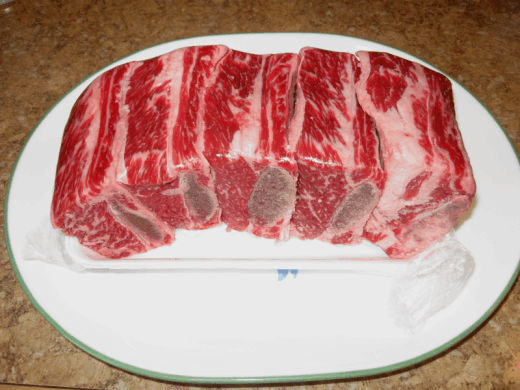
Image by hannaone: Rib sections to cut for Wang Galbi
Cutting Wang Galbi from an English‑Cut Section
If your butcher can’t provide true Wang (King) cut ribs, you can create a similar style from standard English‑cut short ribs.
Technique
- Separate the ribs by slicing cleanly between each bone.
- On the meaty side, use a small, thin knife to make a shallow cut at one edge, just above the bone.
- Slice the meat into thin flaps—about ⅛ inch thick—stopping just before cutting all the way through.
- Roll the loosened flap back, exposing the next layer of meat.
- Continue slicing and rolling until you reach the end of the meat, creating a long, unfolded sheet attached to the bone.
This method mimics the traditional “head and tail” Wang Galbi style, giving you a thick, grill‑ready rib with maximum surface area for marinating.
Check out Wooltari for Korean food and gifts!
Find it on Amazon! Purchases made through these links help support this site. As an Amazon Associate, we earn from qualifying purchases.