Book of Ingredients
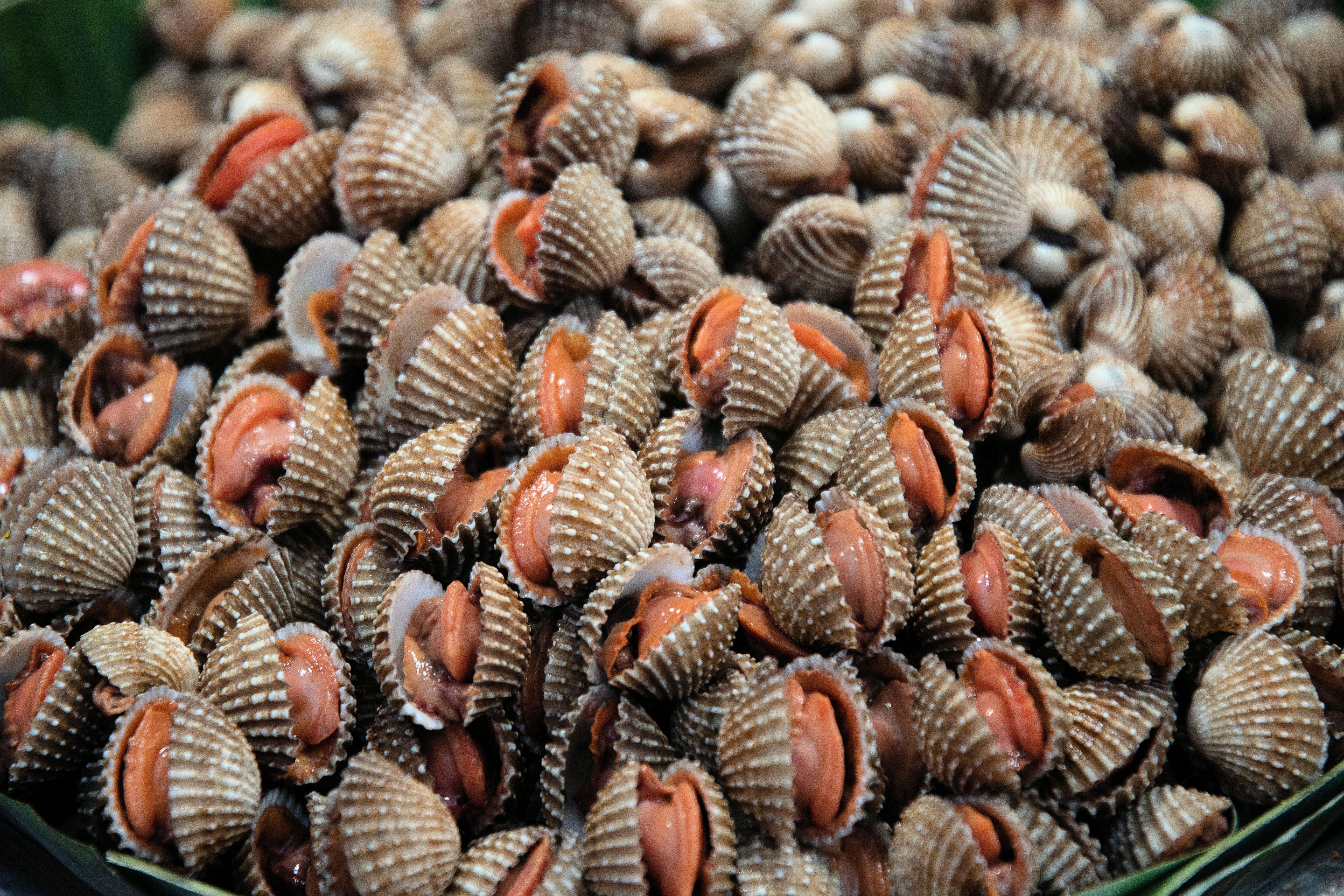
Image from Pixabay: Ark Shell Clams
Kkomak Ark Shell Clam
Article by Gil "hannaone" © Copyright 2007-2026. All rights reserved.
꼬막 | kkomak
Ingredient Name: Kkomak
Korean Spelling: 꼬막
English Name: Ark Shell Clam
Classification: Seafood • Shellfish • Mollusk
🌐 General Information
Kkomak (꼬막), the Korean ark shell clam, is one of Korea’s most beloved winter seafoods. The species most commonly eaten in Korea—Anadara broughtonii—is known for its firm, pleasantly chewy texture and deep, savory flavor. When cooked properly, the meat stays plump and slightly crunchy, with a natural sweetness and a mild brininess that stands out even in seasoned dishes.
🛒 Shopping & Selection
Fresh kkomak are typically sold in larger Korean markets with a robust seafood section. They may appear seasonally in markets such as 99 Ranch, H Mart, Uwajimaya, T&T Supermarket, and other well‑stocked Asian grocers.
Fresh Kkomak (Best Quality)
When buying fresh ark shell clams, prioritize signs of liveliness and cleanliness:
What to Look For
• Shell Status: Choose clams with tightly closed shells. If slightly open, they should close quickly when tapped.
• Color: Healthy kkomak have a brownish‑red shell with distinct ridges. Avoid shells that look chalky, cracked, or overly damaged.
• Weight: They should feel heavy for their size—an indicator that the clam is alive and full of moisture.
• Smell: A clean, ocean‑like scent is ideal. Any strong fishy or sour smell means they’re past their prime.
Other Forms
If fresh kkomak aren’t available, you can often find:
• Frozen raw kkomak
• Pre‑boiled frozen kkomak
• Canned ark shell meat
These are convenient for bibimbap, muchim, and stir‑fries, though they won’t have the same crisp texture as fresh.
🧊 Storage
Short‑Term Storage (Live, In Shell)
• Store in the refrigerator in an open container such as a bowl or colander.
• Cover with a damp towel to maintain humidity.
• Do not store in water or directly on ice—this suffocates the clams.
• Use within 2–3 days (up to 4 days at most).
Purging Before Storage
Kkomak often contain mud or fine sand. To purge:
• Place clams in a shallow container of lightly salted water.
• Soak for 1–2 hours, or overnight if they’re especially sandy.
• Drain and store as above.
Long‑Term Storage (Frozen)
Shucked Meat
• Remove meat from shells and rinse thoroughly.
• Store in airtight or vacuum‑sealed bags.
• Freeze for up to 3 months for best quality.
Frozen in Shell
• Live clams can be frozen in moisture‑vapor‑resistant bags.
• Texture softens slightly after thawing.
• Still excellent for soups, jjigae, and stir‑fries.
🔪 Common Preparation
Kkomak require minimal prep but benefit from careful handling:
• Purging: Soak in salted water to remove mud and grit.
• Cleaning: Rinse under cold running water to remove debris.
• Shucking: After boiling or steaming, remove one shell or fully extract the meat depending on the dish.
• Trimming: Some cooks remove the dark stomach contents for a cleaner flavor and appearance.
Kkomak are rarely eaten completely raw. Most preparations involve quick par‑boiling—just long enough for the shells to open. Overcooking makes them tough, so timing is key.
🍲 Culinary Uses
Kkomak appear in a variety of traditional Korean dishes, especially in winter:
• Kkomak-muchim (꼬막무침)
A classic banchan made with blanched cockles mixed with a savory‑spicy sauce of soy sauce, gochugaru, garlic, sesame oil, and aromatics. Often served chilled.
• Kkomak Bibimbap (꼬막비빔밥)
A specialty of Gangneung, featuring seasoned cockles mixed generously with rice, chives, and vegetables. Known for its bold, briny flavor and satisfying texture.
• Kkomak-jjim (꼬막찜)
Lightly steamed cockles with one shell removed, topped with a soy‑based or spicy sauce. Often served warm as a side dish.
• Kkomak Sookhoe (꼬막숙회)
Briefly blanched cockles served with dipping sauces such as chojang (vinegar‑gochujang) or soy‑wasabi.
• Cockle Pancakes (꼬막전)
Cockles mixed with flour and egg batter, then pan‑fried until golden. A hearty, savory jeon variation.
🔄 Substitutes
If kkomak aren’t available, these alternatives work well depending on the dish:
• Small Clams (Littleneck or Cherrystone): Use fewer due to their larger size.
• Manila Clams: Similar size and sweetness; great for muchim or steamed dishes.
• Mussels: Smaller Mediterranean mussels offer a similar chew and can be steamed or seasoned similarly.
• Other Cockle Species: Any fresh, briny cockle with a heart‑shaped shell is a close match.
📜 Historical & Cultural Notes
Kkomak have long been associated with Korea’s southern coastal food culture. Regions like Yeosu and Boseong host annual cockle festivals celebrating the winter harvest, where visitors enjoy freshly blanched kkomak, bibimbap, and seafood platters.
In traditional Korean dining, kkomak were considered a seasonal delicacy—something to look forward to during the colder months when the clams are at their plumpest. Their distinctive texture and deep flavor made them a favorite accompaniment to rice, makgeolli, and simple home‑cooked meals.
🏷️ Other Names
• Blood Cockle (due to the natural red pigment in the meat)
• Ark Shell
• Anadara broughtonii (species name)
• Korean Cockle
📝 Miscellaneous Information
• Kkomak naturally contain hemoglobin, which gives the meat its reddish color—this is normal and not a sign of undercooking.
• The ridged, heart‑shaped shell is a key identifier and helps distinguish them from other small clams.
• In Korea, kkomak are often sold pre‑trimmed and partially shucked for convenience during peak season
| |||||||||||||||||||||||||||||||||||||||
Kkomak Ark Shell Clam
Kkomak are harvested from Korea’s southern coastal regions, especially around Yeosu, Boseong, and Suncheon, areas famous for producing high‑quality shellfish thanks to their nutrient‑rich tidal flats. In Korean cuisine, they appear in everything from simple blanched preparations to bibimbap, jeon, and seasoned banchan.
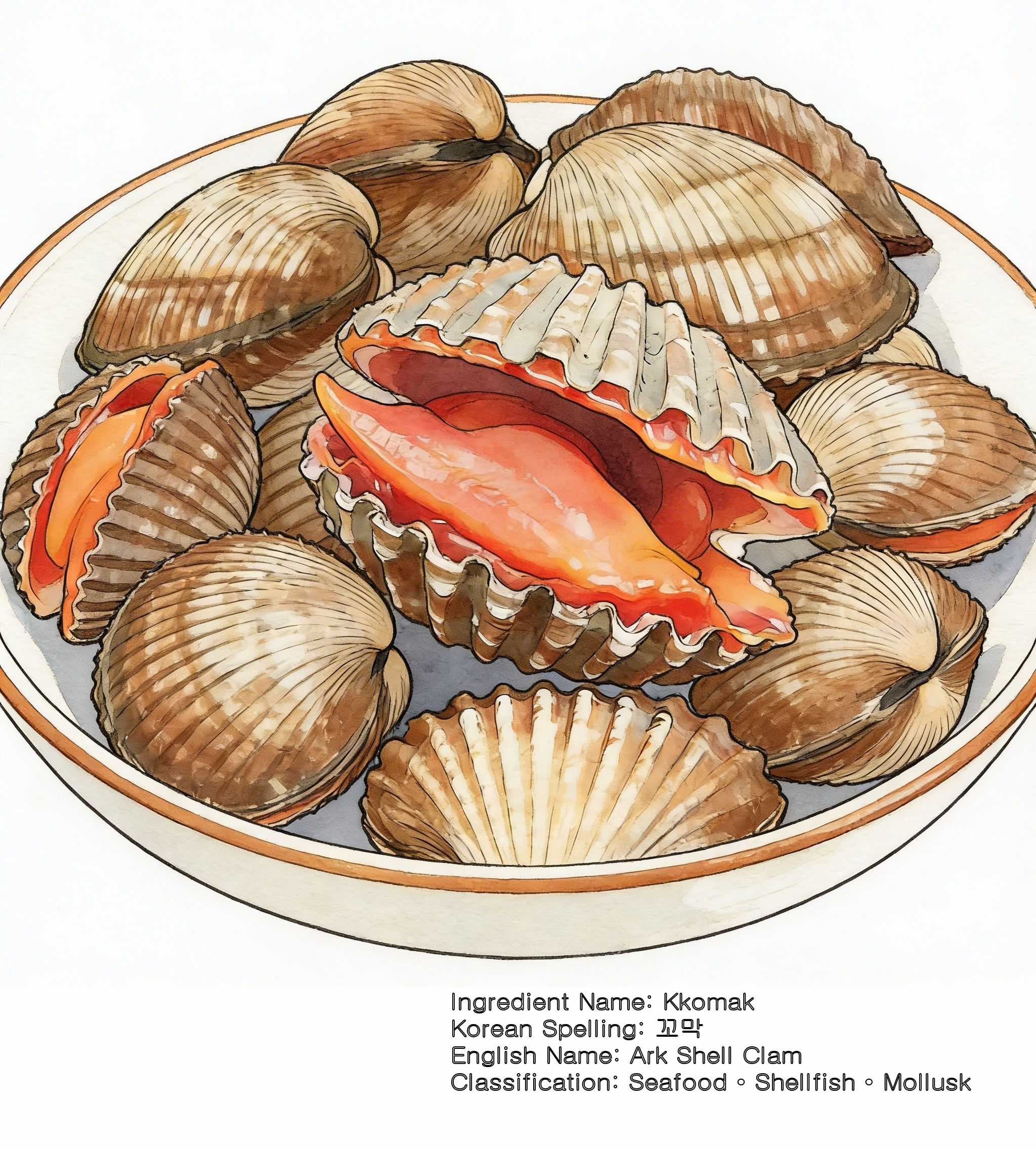
Image: Bajirak ingredient card
Kkomak are most prized during their peak season—December through March—when the meat is at its fullest and sweetest.
Check out Wooltari for Korean food and gifts!
Find it on Amazon! Purchases made through these links help support this site. As an Amazon Associate, we earn from qualifying purchases.