Book of Ingredients
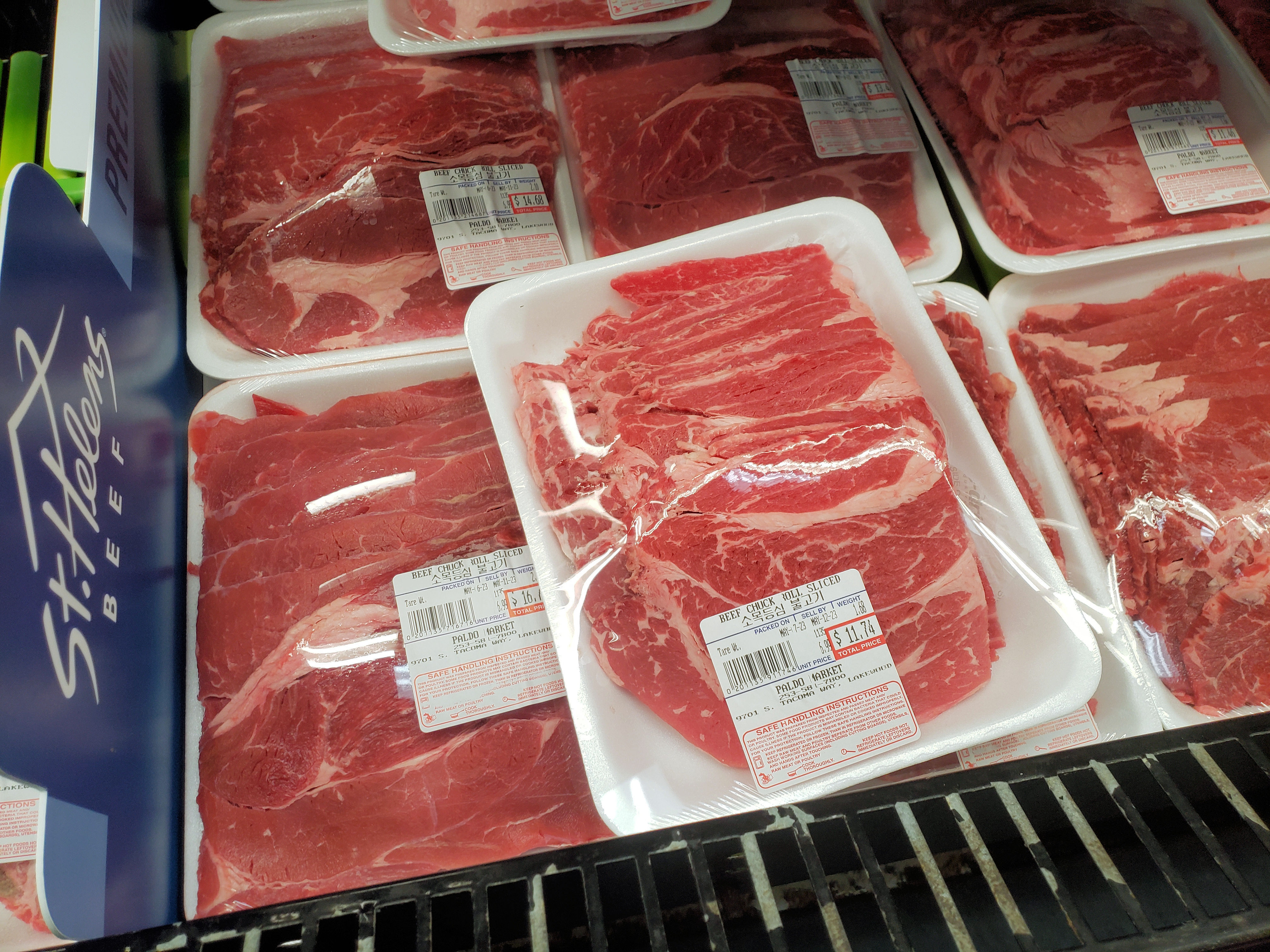
Image by hannaone: Sliced Deungshim for Bulgogi
Deungshim Beef Chuck with Ribeye Roll
Article by Gil "hannaone" © Copyright 2007-2026. All rights reserved.
등심 | deungshim
Ingredient Name: Deungshim
Korean Spelling: 등심
English Name: Chuck with Ribeye Roll
General Information:
Deungshim, often translated as sirloin or ribeye, is a well-marbled cut of beef favored in Korean cuisine. It plays a central role in grilling dishes such as bulgogi and galbi, but its versatility extends to soups, stews, stir-fries, and braises. The rich marbling enhances flavor, keeping the meat tender and juicy throughout various cooking methods. In Korean barbecue, it can be served either marinated or plain, allowing diners to appreciate its natural taste.
Shopping and Selecting:
This cut is readily available at larger Korean supermarkets, often pre-sliced and labeled as sliced beef for bulgogi or bulgogi meat. In mainstream U.S. grocery stores, variations of this cut are sold as chuck roll, chuck eye roll, or chuck tender.
What to Look For:
• Color: A deep red hue indicates freshness.
• Marbling: Visible streaks of fat interwoven throughout the meat ensure a tender texture and rich flavor.
• Texture: Choose firm and smooth meat with no excessive moisture or stickiness.
• Freshness: Avoid cuts that appear dull, gray, or brown, and steer clear of meat with any unpleasant odor.
Storage Guidelines:
To maintain optimal quality, proper storage is key.
Refrigeration:
• Store fresh beef in the coldest part of the refrigerator (35-40°F).
• It will remain fresh for up to five days but may last longer (up to eight days) if stored below 34°F.
Freezing:
• Wrap the meat in airtight freezer wrap or seal it in a zip-top bag to prevent freezer burn.
• Properly stored, it can last between six and twelve months in the freezer.
• Vacuum-sealing significantly extends storage life, maintaining peak quality for up to a year.
Common Preparation Methods:
Before cooking, rinse well in cold water and slice according to the desired preparation.
Culinary Uses:
• Korean Grill: Often grilled over an open flame or tabletop grill.
• Soups & Stews: Used in dishes like Yukgaejang (spicy beef soup) and Gomtang (bone broth-based soup).
• Stir-Fries: Works well with high-heat methods, absorbing flavors while retaining juiciness.
• Braises: Ideal for slow-cooking methods that enhance its natural richness.
Substitutes:
If deungshim is unavailable, consider these alternatives:
• Ribeye Steak: Offers similar marbling and tenderness.
• Chuck Eye Steak: Comparable in texture with a slightly stronger beef flavor.
• Short Rib (Boneless): Another well-marbled option suited for Korean-style grilling or braising.
| |||||||||||||||||||||||||||||||||||||||||||||||||||||||||||||||||||
Deungshim Beef Rib-eye Roll
Deungshim, often translated as sirloin or ribeye, is one of the most prized cuts for Korean BBQ. It is naturally tender, well‑marbled, and typically served unmarinated, allowing its buttery, melt‑in‑your‑mouth texture to shine.
Key Details
- Location: Cut from the loin/ribeye section along the spine, commonly around the 6th–9th thoracic vertebrae.
- Usage: Highly favored for Korean Grill (gogi-gui) due to its tenderness, balanced fat, and rich beef flavor.
- Variations:
- Kkot Deungshim (꽃등심): “Flower sirloin,” the most marbled, premium portion of the ribeye.
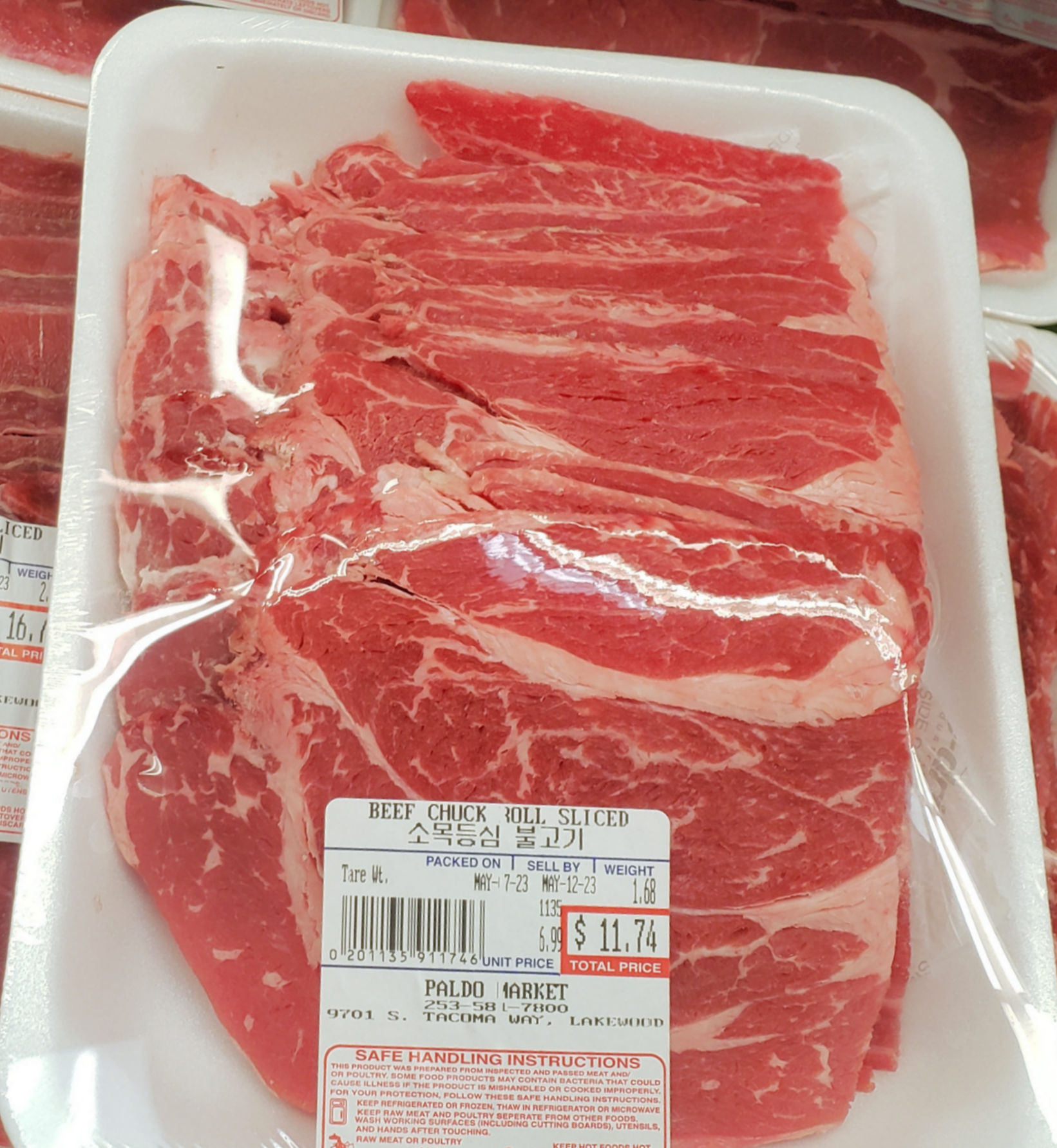
Image by hannaone: Sliced deungshim at Paldo
Pork Equivalent: In pork, deungshim refers to the loin, a lean and tender cut used for grilling, cutlets, and stir-fries.
Check out Wooltari for Korean food and gifts!
Find it on Amazon! Purchases made through these links help support this site. As an Amazon Associate, we earn from qualifying purchases.