Book of Ingredients
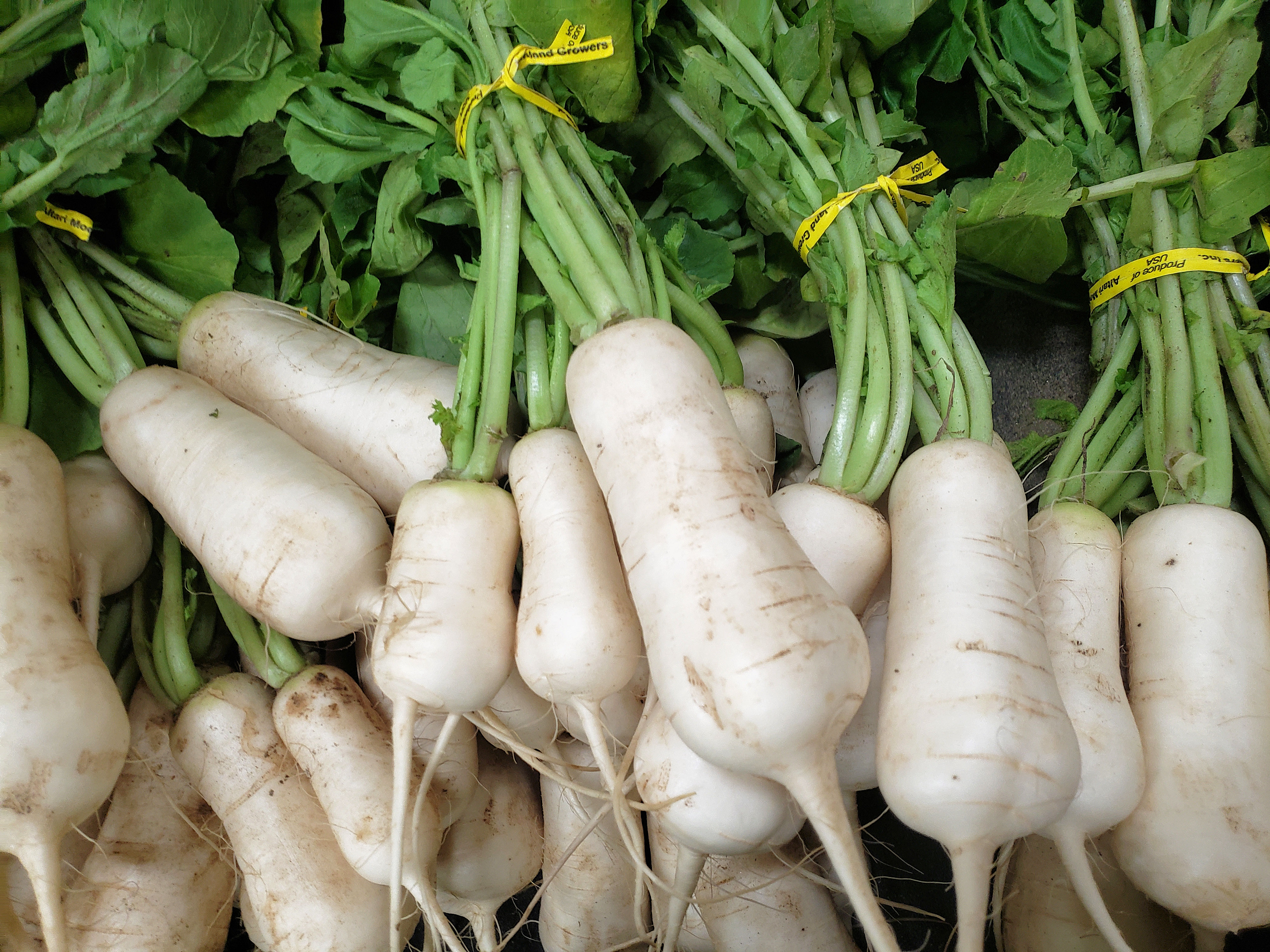
Image by hannaone: Chonggak-mu
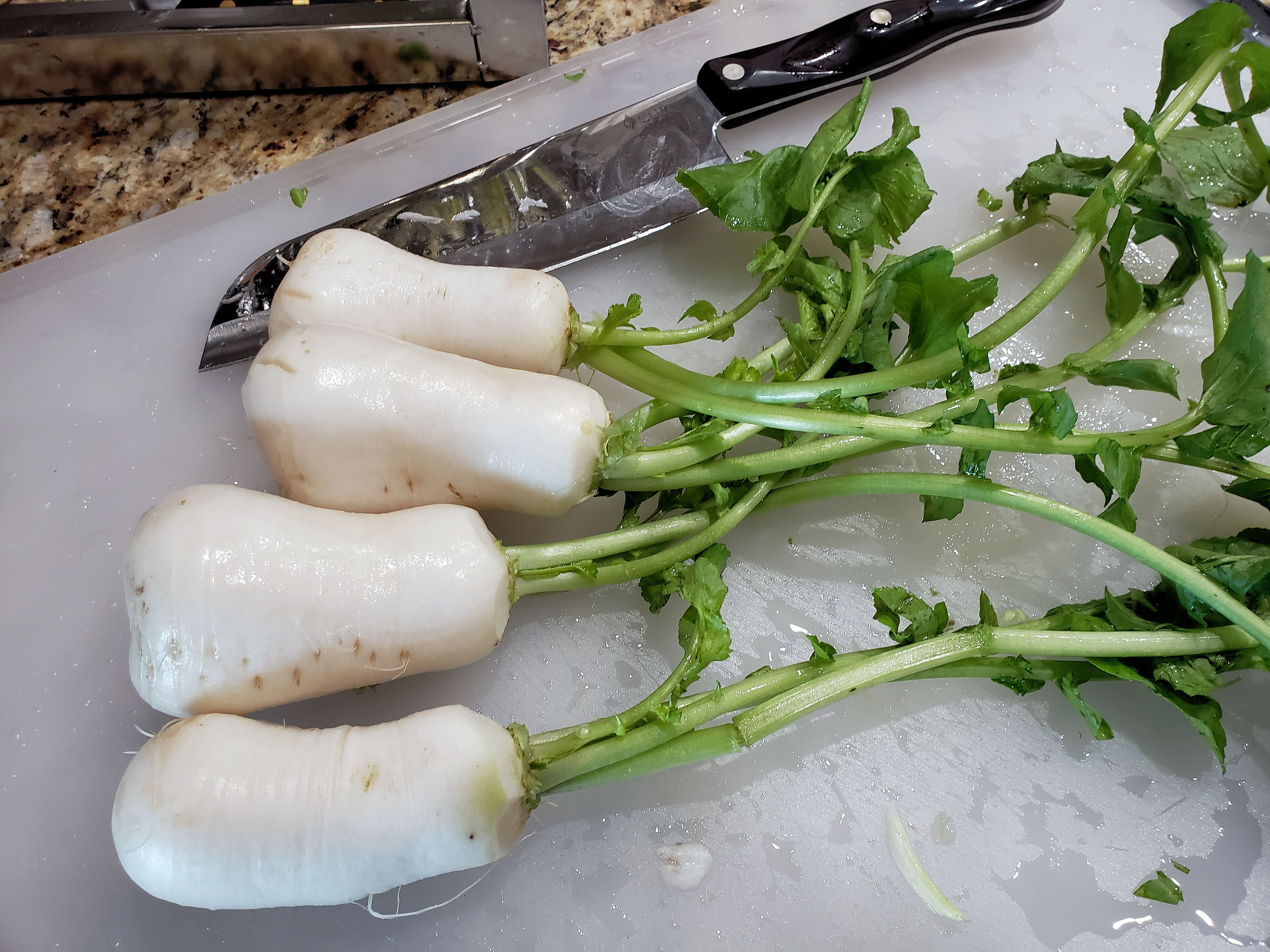
Image by hannaone: Chonggak-mu
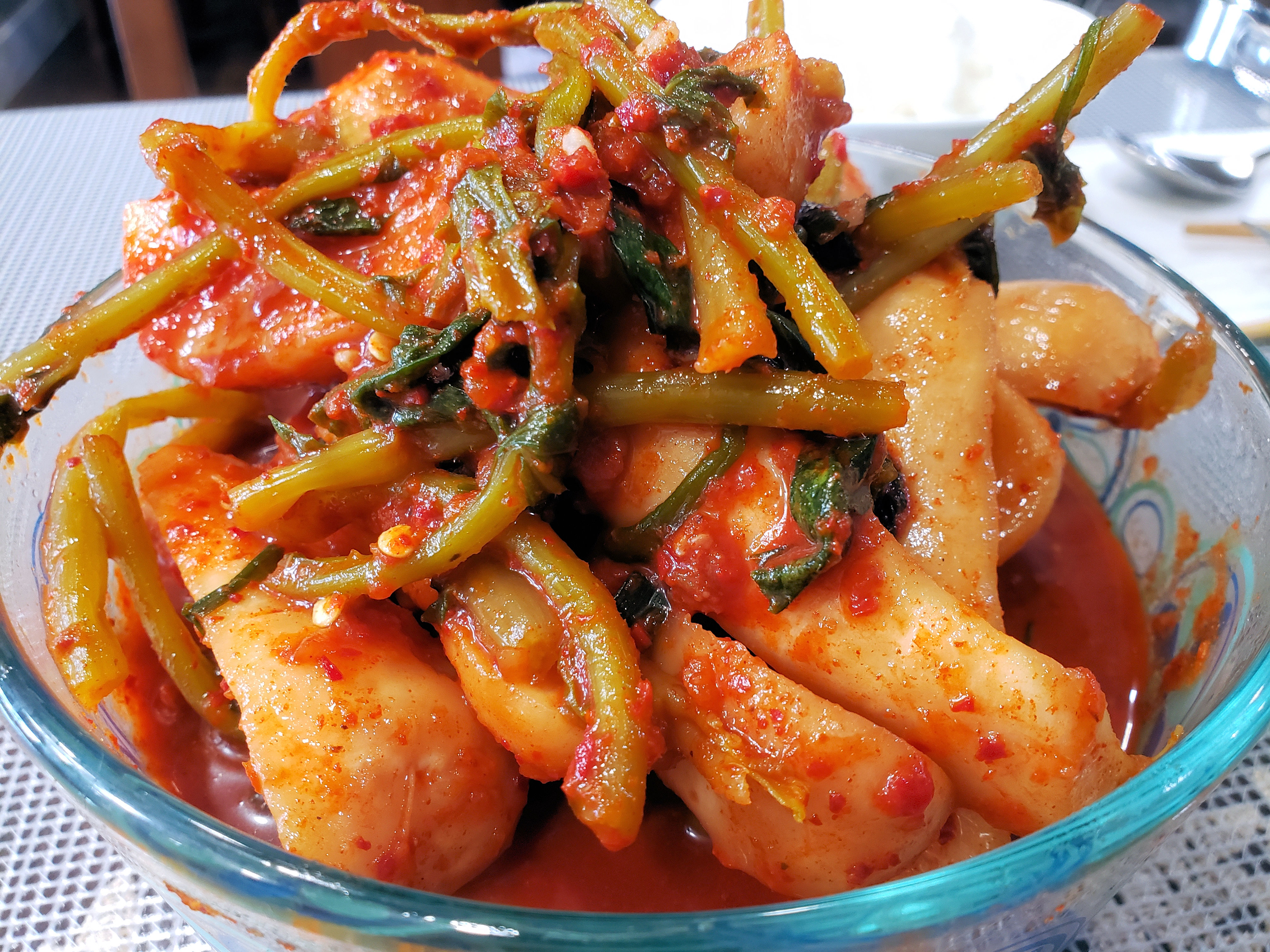
Image by hannaone: Chonggak kimchi
Chonggak-mu Bachelor Radish
Article by Gil "hannaone" © Copyright 2007-2026. All rights reserved.
총각무 | chonggak-mu
Ingredient Name: Chonggak-mu
Korean Spelling: 총각무
English Name: Ponytail Radish
Classification: Vegetable, Root Vegetable
🌱 General Information
Chonggak‑mu is a small, slender white radish variety prized in Korean cuisine for its crisp texture, mild peppery bite, and distinctive “ponytail” greens. The radish typically measures 2–4 inches in length and often develops a slightly curved, bulbous shape. Both the root and greens are edible and traditionally used together, especially in chonggak kimchi, where the radish is fermented whole or halved with its leafy tops intact.
🛒 Shopping & Selection
Chonggak‑mu is commonly available at:
• Large Korean grocery stores
• Some farmers markets (especially those with Korean growers)
• Specialty produce markets
• Occasional online produce retailers
What to look for:
• Color: Uniform white to pale green shoulders
• Texture: Firm, crisp roots with no soft spots
• Surface: Minimal blemishes, scars, or tool marks
• Greens: Fresh, vibrant, and flexible—avoid yellowing, dryness, or limp leaves
Because the greens are an important part of the ingredient, their condition is a strong indicator of overall freshness.
🧊 Storage
Short-term (best quality):
Use within 1–2 days if you want both the roots and greens at peak freshness.
Preparation for storage:
• Wash thoroughly in cold water
• Dry completely
• Store in the refrigerator
If storing longer:
• Separate the greens from the roots
• Wrap each loosely in paper towel
• Place in a breathable bag or container
Greens may be refrigerated for up to 4 days for best quality.
The root may be stored for up to two weeks.
🔪 Common Preparation
• Wash thoroughly and shake off excess water
• Trim any wilted or discolored leaves
• Scrub the root lightly if soil remains
For Chonggak Kimchi:
• Use whole radishes if small
• For larger ones, slit from the bottom halfway up, keeping the greens attached to both halves
• Salt radish and greens for 1 hour to overnight, then rinse in cold water
For Soups:
• Quarter the radish lengthwise
• Keep greens attached to as many pieces as possible for flavor and presentation
🍲 Culinary Uses
Chonggak-mu is grown almost exclusively for:
• Chonggak Kimchi (총각김치) — its signature dish
• Dongchimi — where its small size and clean flavor work beautifully
• Soups and stews — including variations of ugeojji galbitang, substituting radish greens for cabbage
• Banchan — lightly seasoned radish greens or stir‑fried preparations
Its crisp texture holds up well to fermentation, making it ideal for kimchi styles that rely on whole radishes rather than chopped pieces.
🔄 Substitutes
While no substitute perfectly replicates the texture and presentation of chonggak‑mu, the following can work depending on the dish:
• Small Korean mu (cut into wedges)
• Daikon radish (young, slender specimens preferred)
• Baby daikon or Korean “summer radish” varieties
📜 Historical & Cultural Notes
The name chonggak‑mu comes from chonggak (총각), meaning unmarried young man. Historically, unmarried men wore their hair in a top‑knot ponytail, and Koreans of the time thought the radish—with its long leafy greens—resembled this hairstyle. The association stuck, giving the radish both its name and its cultural charm.
Chonggak‑mu has been cultivated in Korea for centuries, especially in regions where smaller radish varieties thrive in early‑summer and autumn planting cycles. Its role in kimchi culture is deeply rooted, as whole‑radish kimchi styles were prized for their texture and longevity during fermentation.
🏷️ Other Names
• Ponytail Radish
• Bachelor Radish
• Chonggak Daikon (informal, outside Korea)
📝 Miscellaneous Information
• The greens are nutritionally dense, containing vitamins A and C, calcium, and fiber.
• Smaller radishes ferment more evenly, which is why growers often harvest them young for kimchi production.
• In traditional markets, bundles are often sold with roots and greens intact to signal freshness and authenticity.
| |||||||||||||||||||||||||||||||||||||||||||||||
Chonggak-mu Ponytail Radish
While its primary role is in kimchi, chonggak‑mu also appears in dongchimi (radish water kimchi), light soups, and banchan where a smaller radish is more practical than the larger Korean mu.
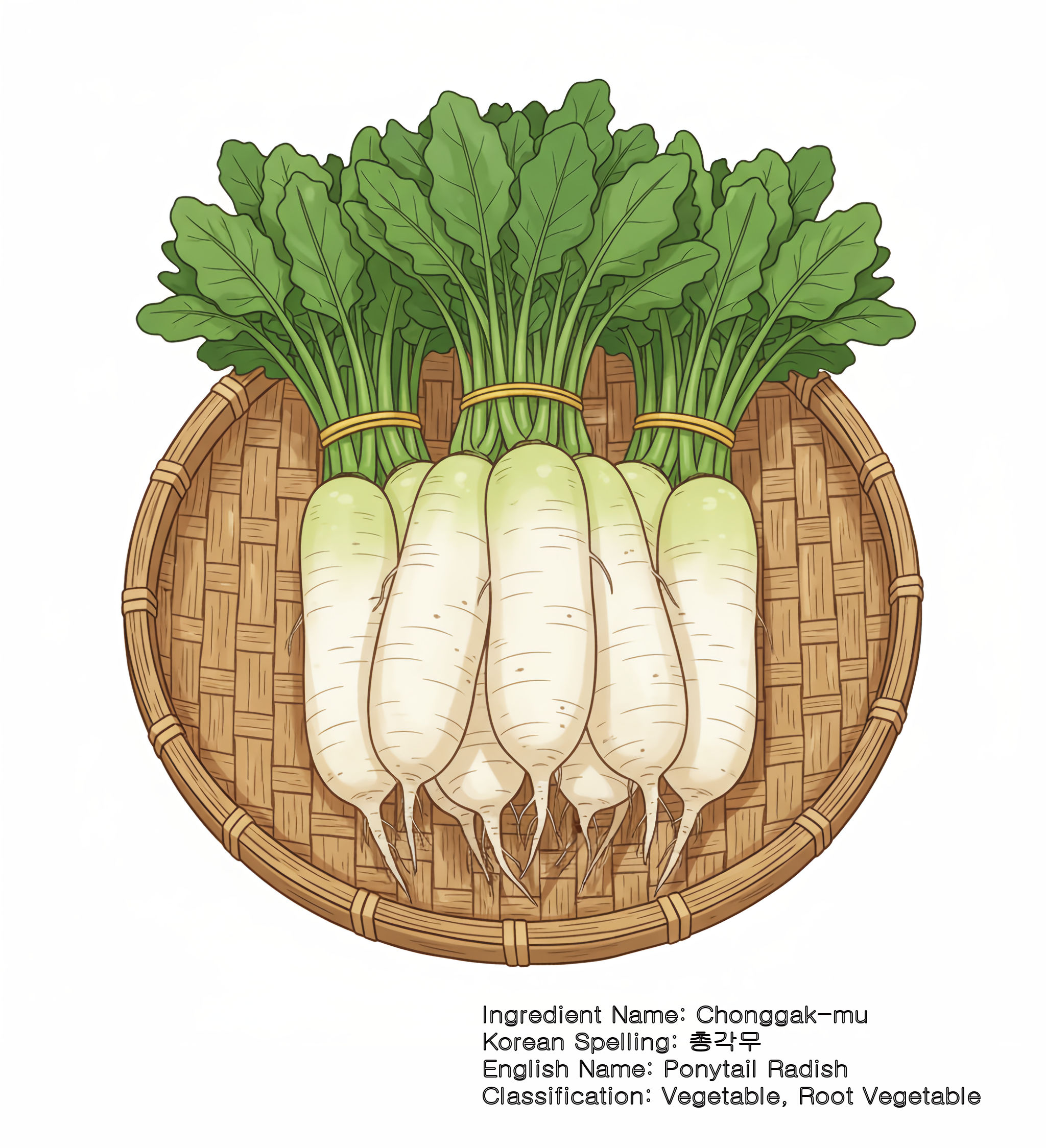
Image: Chonggak-mu ingredient card
The greens—tender, mildly bitter, and nutrient‑dense—can be used in soups, stir‑fries, and seasoned vegetable dishes.
Check out Wooltari for Korean food and gifts!
Find it on Amazon! Purchases made through these links help support this site. As an Amazon Associate, we earn from qualifying purchases.