Book of Ingredients
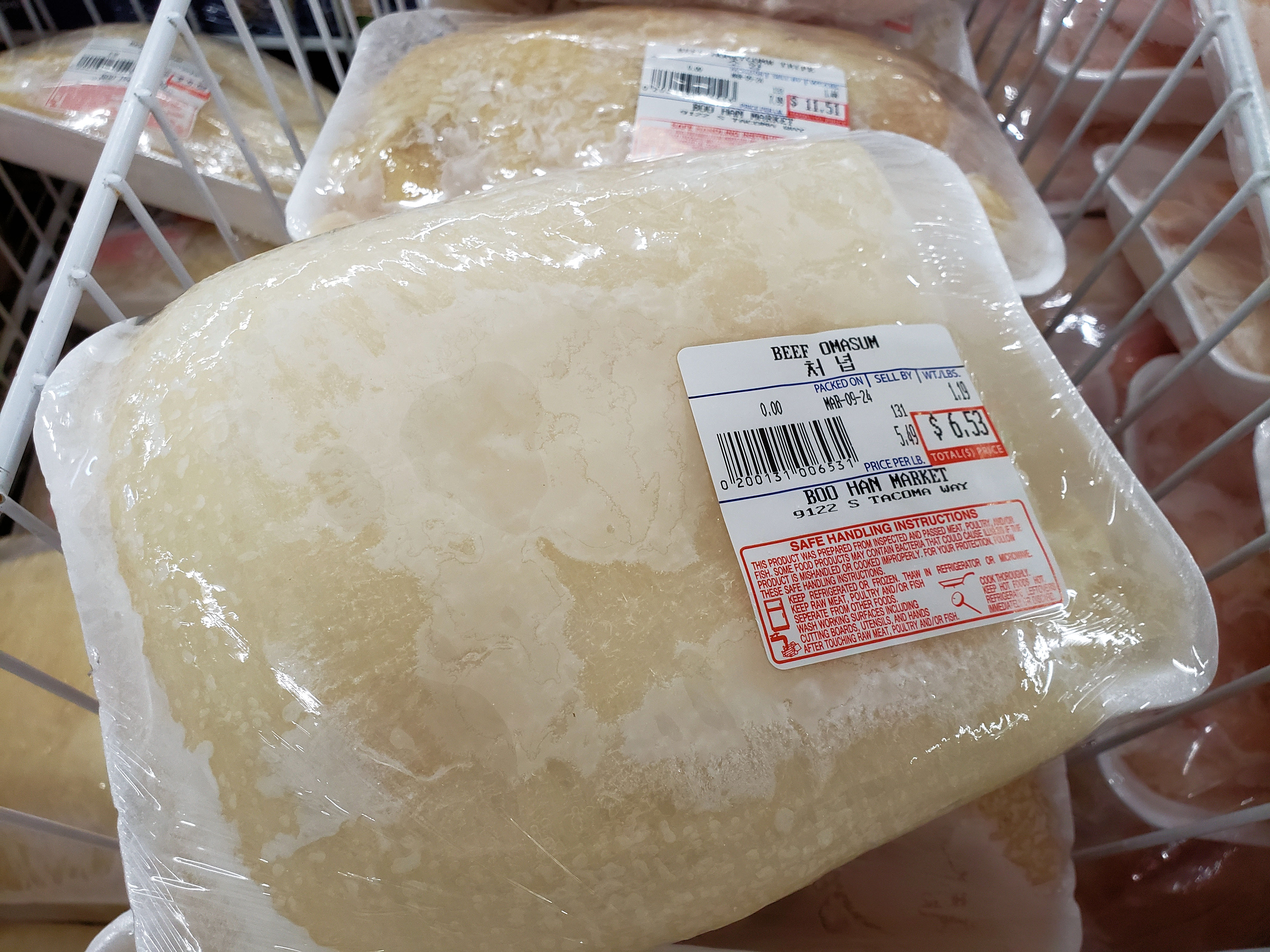
Image by hannaone: Omasum
Cheonyeop Omasum | Beef Stomach
Article by Gil "hannaone" © Copyright 2007-2026. All rights reserved.
찹쌀 | cheonyeop
Ingredient Name: Cheonyeop
Korean Spelling: 천엽
English Name: Omasum/Beef Stomach
Category: Meat, Beef, Offal
General Information
Cheonyeop (천엽), the third chamber of a cow’s stomach, is a distinctive offal ingredient prized in Korean cuisine for its crunchy, springy texture and clean, mild flavor. The interior surface forms thin, layered “leaves” (sometimes called cheonyeop-ip), giving it a unique appearance and a satisfying bite when eaten raw or lightly cooked.
Shopping and Selecting
Cheonyeop is widely available in Korean and broader Asian markets, Carnicerías, Specialty meat markets, some mainstream supermarkets with expanded offal sections, and Butcher shops that handle whole animals.
When selecting omasum:
• Color: Look for a clean off‑white to pale gray tone.
• Texture: The “leaf” structure should be intact and firm, not mushy.
• Smell: It should smell neutral and fresh, never sour or ammonia‑like.
• Surface: Avoid pieces with excessive slime, discoloration, or dark patches that haven’t been trimmed.
Pre‑cleaned versions are sometimes sold, but even these typically benefit from additional home cleaning.
Storage
• Refrigerated: Use within 1–2 days for best texture and freshness.
• Frozen: Keeps up to 6 months when vacuum‑sealed or stored in original packaging.
• Thawing: Thaw slowly in the refrigerator to maintain firmness.
Common Preparation
1. Cleaning and Odor Removal (Essential)
Cheonyeop requires thorough cleaning to remove mucus, odor, and debris trapped between the leaves.
• Initial Rinse: Rinse under cold running water to remove surface impurities.
• Salt & Flour Scrub: Rub vigorously with coarse salt and flour (or vinegar) to strip away slime and brighten the surface.
• Repeated Rinsing: Rinse several times until the water runs completely clear.
• Membrane Removal: Peel off the dark gray outer membrane to reveal the paler interior. This improves both appearance and texture.
2. Preparing for Raw Serving (Cheonyeop‑hoe)
• Optional Blanching: A quick dip in boiling water can firm the texture and remove lingering odor while keeping it essentially raw.
• Slicing: Cut into thin, bite‑sized strips across the grain.
• Dipping Sauces:
• Sesame oil + salt + black pepper (classic)
• Chogochujang (sweet‑spicy vinegar chili sauce)
3. Preparing for Cooking (Soups, Stews, Hot Pots)
• Boiling: Often simmered with brisket, radish, or other beef parts to enrich broths such as gomguk.
• Seasoning: Once tender, season with soy sauce, garlic, and green onions.
• Hot Pot: In dishes like gopchang‑jeongol, cheonyeop adds texture contrast to richer, fattier offal.
Used In
• Cheonyeop‑hoe (Raw): Thinly sliced and served chilled; often paired with raw liver (ganhoe) as a traditional anju.
• Gopchang‑jeongol: Adds chew and structure to spicy tripe hot pots.
• Mixed Offal Grill: Grilled with yang, gopchang, and makchang for varied textures.
• Soups & Broths: Contributes a clean, beefy depth to milky broths.
Substitutes
Cheonyeop’s texture is unique, but in a pinch:
• For raw preparations:
• Yang (first stomach), though softer
• Makchang (abomasum), though fattier
• For soups and stews:
• Honeycomb tripe (second stomach)
• Beef tendon (for chewiness, though flavor differs)
Historical and Cultural Notes
Offal has long held a place in Korean food culture, especially in regions and eras where whole‑animal usage was essential. Cheonyeop, like other stomach cuts, became a valued drinking food due to its refreshing crunch, ability to stay firm even when chilled, and its compatibility with sesame oil dipping sauces.
Raw cheonyeop and raw liver were once common in traditional markets and pojangmacha settings, though modern regulations have restricted raw liver service. Cheonyeop‑hoe, however, remains widely enjoyed and is considered a nostalgic dish for many Koreans who associate it with classic anju culture.
Other Names
• 천엽 (Cheonyeop): Standard modern spelling
• 처녑: Older or dialectal variant
• Omasum: English anatomical term
• Third Stomach / Book Tripe / Bible Tripe: Common English descriptors referencing the layered structure
Miscellaneous Information
• The “leafy” interior texture is sometimes compared to pages of a book, which is why omasum is called book tripe in English.
• When overcooked, cheonyeop can become tough and rubbery; it is best either raw/lightly blanched or long‑simmered.
• In Korean BBQ restaurants, cheonyeop is less common than yang or gopchang but is prized by diners who enjoy crisp, clean‑tasting offal.
| |||||||||||||||||||||||||||||||||||||||||||||||||||||||||||||||||||
Cheonyeop Omasum
It is most famously served as cheonyeop‑hoe, a raw preparation dipped in sesame oil with salt and pepper. It also appears in hot pots, gopchang‑jeongol, and mixed offal grills alongside yang (first stomach) and gopchang (small intestine).
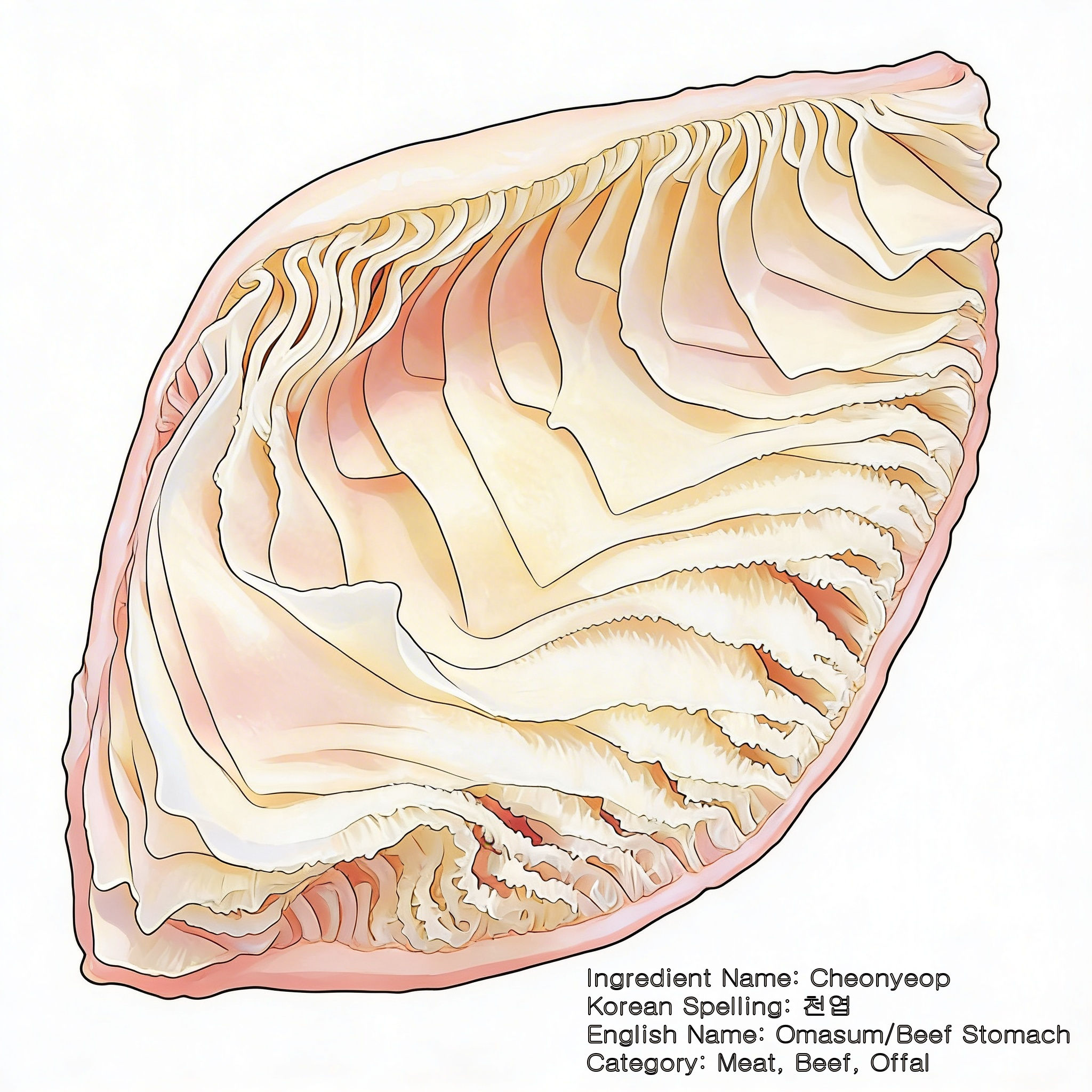
Image: Cheonyeop Ingredient Card
In drinking culture, raw cheonyeop is a classic anju, valued for its refreshing texture and ability to pair well with soju or makgeolli.
Check out Wooltari for Korean food and gifts!
Find it on Amazon! Purchases made through these links help support this site. As an Amazon Associate, we earn from qualifying purchases.