Book of Ingredients
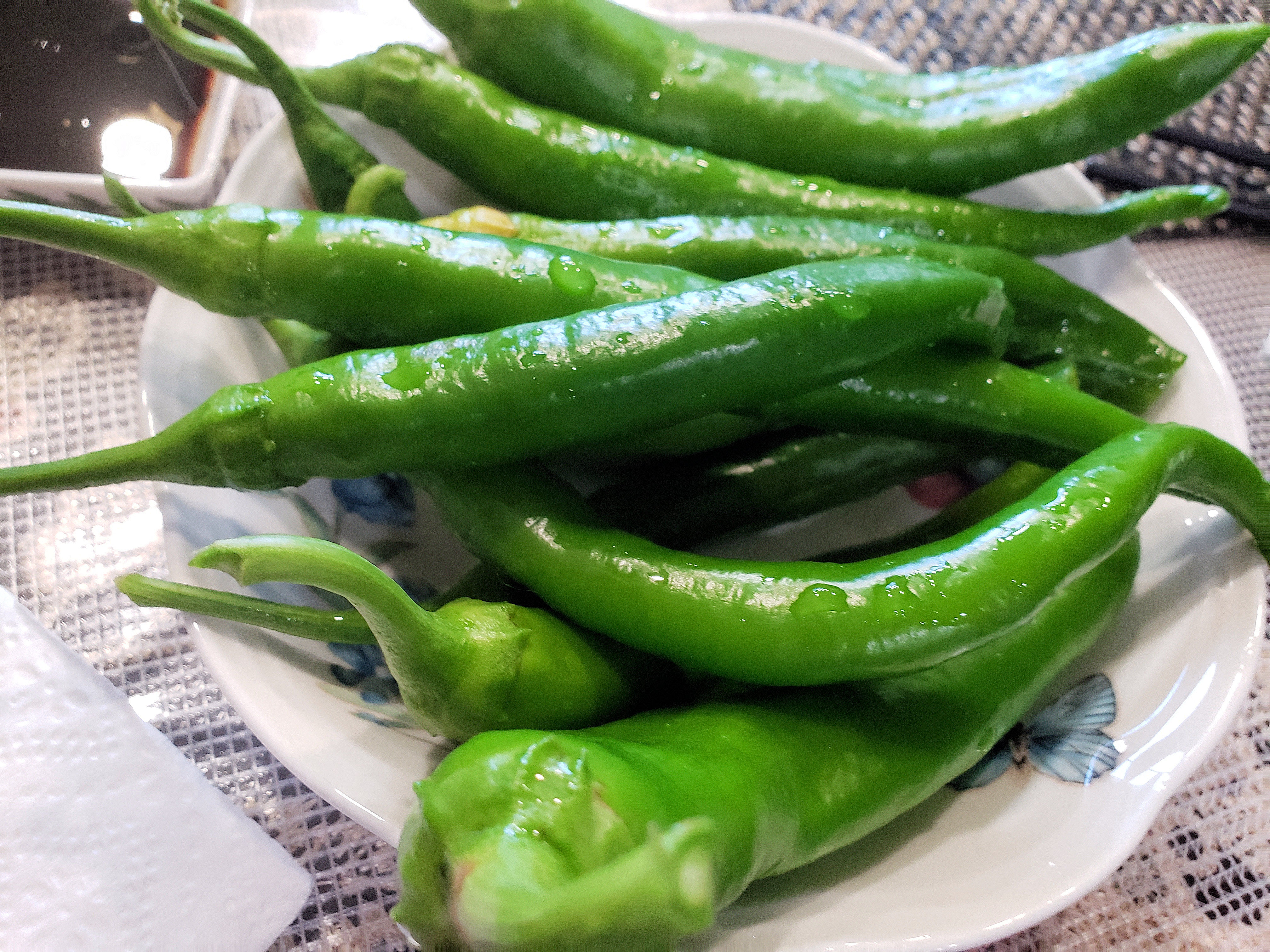
Image by hannaone: Home grown Cheongyang gochu
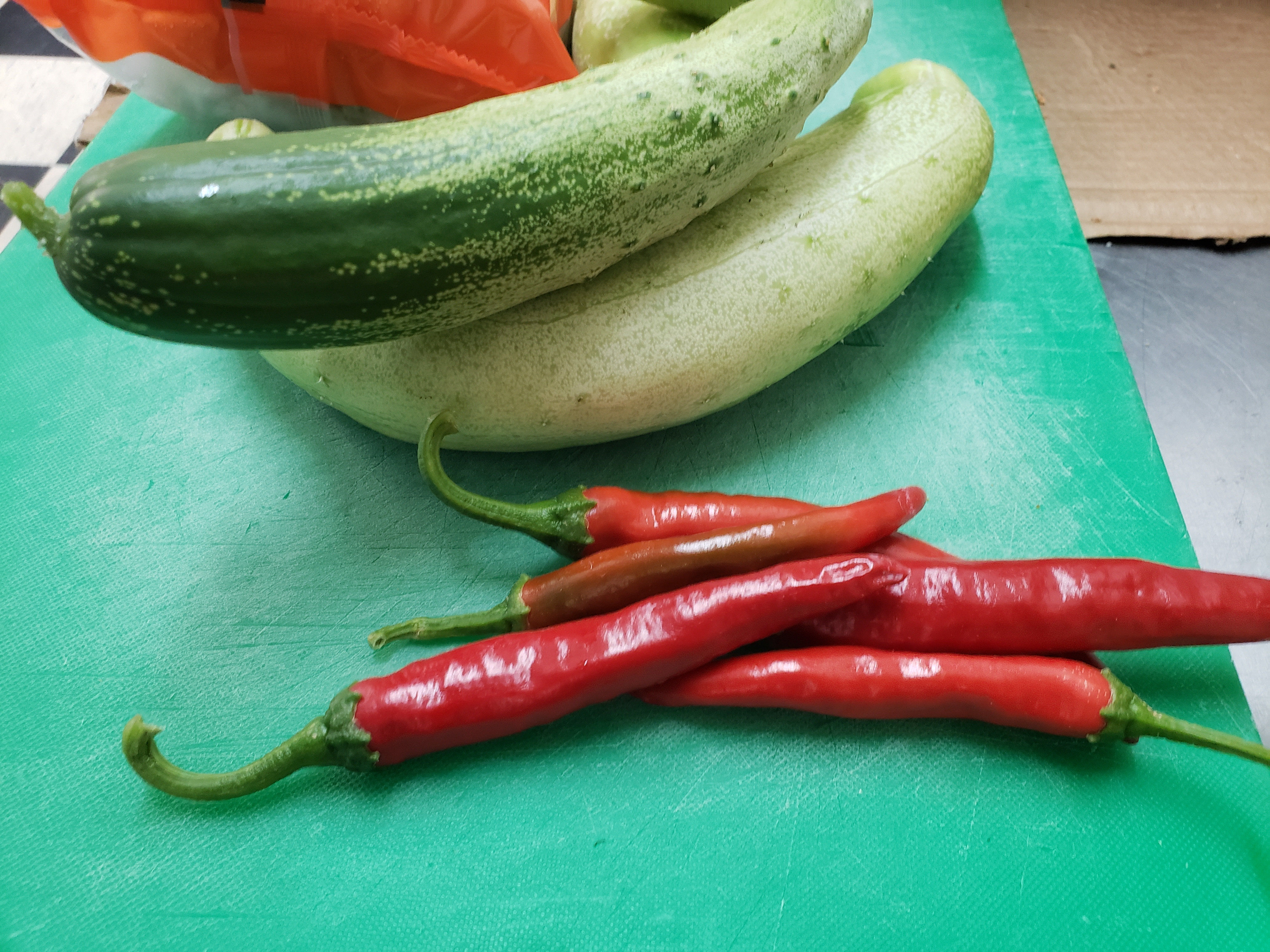
Image by hannaone: Red Cheongyang and Oi (Home-grown)
Cheongyang Gochu
Article by Gil "hannaone" © Copyright 2007-2026. All rights reserved.
청양고추 | Cheongyang gochu
Ingredient Name: Cheongyang Gochu
Korean Spelling: 청양고추
English Name: Korean Hot Chili Pepper
Category: Fruit (Botanical) Vegetable, Spice (Culinary)
General Information
Cheongyang gochu is Korea’s signature “hot” chili pepper—small, slender, and deceptively fiery. With a heat range of 10,000–23,000 Scoville Heat Units, it sits comfortably in the same intensity bracket as serrano peppers, but with a cleaner, sharper burn that Korean cooks prize for cutting through rich broths, fatty meats, and fermented flavors.
The peppers are typically harvested green, when their flavor is brightest and their heat most assertive, but they ripen to a deep, glossy red. Both stages are used in Korean cooking, though the green form is more iconic.
Cheongyang peppers are a relatively modern addition to the Korean culinary landscape, yet they’ve become indispensable—especially in dishes that need a quick, fresh jolt of heat rather than the deeper warmth of dried gochugaru.
🛒 Shopping & Selecting
Where to Find Them
Cheongyang peppers are widely available in:
• Korean grocery stores with robust produce sections
• Markets with dried‑goods aisles
• Online retailers such as Weee! or Woori/Woltari
• Seasonal plant starts at Korean markets
• Seeds from online specialty vendors
Fresh Peppers
Look for:
• Medium to dark glossy green skin (or bright, glossy red if fully ripe)
• Firm texture with no soft spots
• No dark patches, wrinkles, or splotches
Dried or Ground
Choose products with:
• Intact, sealed packaging
• No visible moisture
• No clumping or mold
• A bright, clean aroma when opened
🧊 Storage
Fresh Peppers
• Countertop: 1–2 days
• Refrigerator: Up to 2 weeks in a container lined with cloth or paper towel
• Freezer: Up to 6 months when vacuum‑sealed or kept in original packaging
• Thawing: Slow thaw in the refrigerator to maintain firmness
Preparation before storage:
Remove stems, wash, and dry thoroughly.
Dried or Ground
• Pantry: Store in a cool, dark place. Quality remains good for a reasonable period past the “best by” date, though aroma and heat may fade.
• Freezer: Vacuum‑sealed or stored in a freezer‑safe container for 8–9 months to preserve potency.
🔪 Common Preparation
Preparation depends on the intended use, but typically includes:
• Removing stems
• Washing thoroughly
Additional prep may include:
• Splitting lengthwise
• Removing seeds (to reduce heat)
• Slicing or chopping
• Leaving whole for soups, stews, or grilling accompaniments
🍲 Culinary Uses
Cheongyang gochu is used across Korean cooking wherever a clean, fresh heat is desired.
Common applications include:
• Kimchi (especially fresh kimchi and summer varieties)
• Marinades for grilled meats
• Soups and stews (jjigae, guk, tang)
• Banchan, especially stir‑fried or soy‑braised dishes
• Making gochugaru (for a spicier, sharper chili powder)
• Anju: served whole with dipping sauce alongside Korean BBQ or drinks
Its heat disperses quickly in liquid, making it ideal for brightening broths without overwhelming them.
🔄 Substitutes
If Cheongyang peppers are unavailable, suitable replacements include:
• Serrano peppers (closest in heat and flavor)
• Jalapeños (milder; use more for equivalent heat)
• Other medium‑to‑hot chilies with clean, bright heat
📜 Historical & Cultural Notes
Cheongyang gochu is a modern Korean cultivar, developed in 1983 by crossing:
• A local pepper variety from Jeju Island, and
• A Thai chili pepper known for its sharp heat
🏷️ Other Names
• Cheongyang chili
• Korean hot green chili
• 청양고추 (standard Korean spelling)
📝 Miscellaneous Information
• Cheongyang peppers are often used to “boost” the heat of dishes made with milder Korean chilies.
• They are a popular home‑garden plant due to their productivity and compact growth habit.
• When dried and ground, they produce a noticeably spicier gochugaru than standard taeyangcho varieties.
• Their heat can vary significantly depending on growing conditions—sun exposure and soil stress tend to increase pungency
| |||||||||||||||||||||||||||||||||||||||||||||||||||||||||||||||
Cheongyang Gochu
The name “Cheongyang” (청양) comes from Cheongsong (청송) and Yeongyang (영양) counties in North Gyeongsang Province—not because the pepper originated there, but because the breeders chose the name to evoke regional identity and agricultural pride.
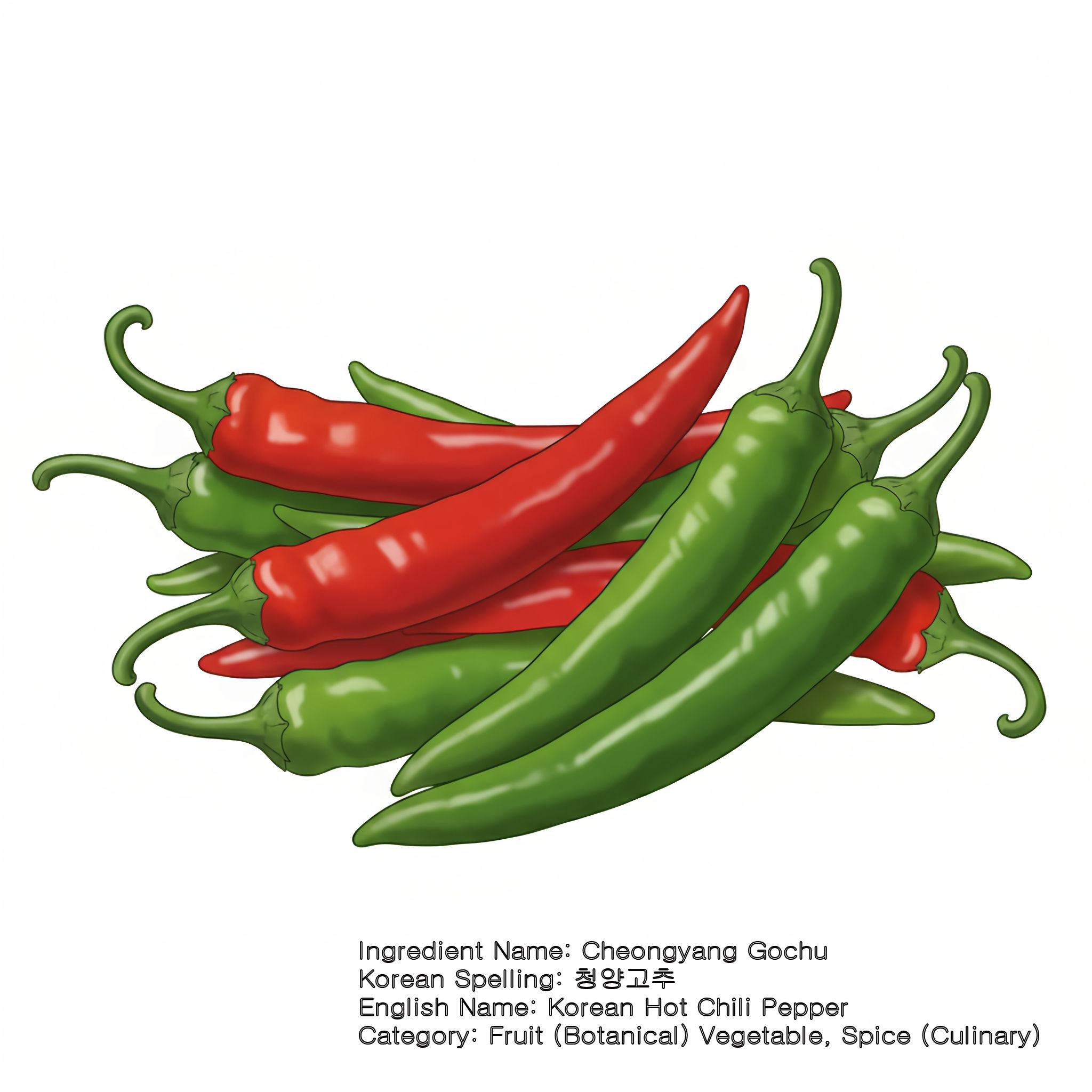
Image: Cheongyang Ingredient Card
Since its introduction, Cheongyang gochu has become the go‑to pepper for cooks who want a distinctly Korean heat profile that’s hotter than standard Korean green chilies but still flavorful and versatile.
Check out Wooltari for Korean food and gifts!
Find it on Amazon! Purchases made through these links help support this site. As an Amazon Associate, we earn from qualifying purchases.