Book of Ingredients
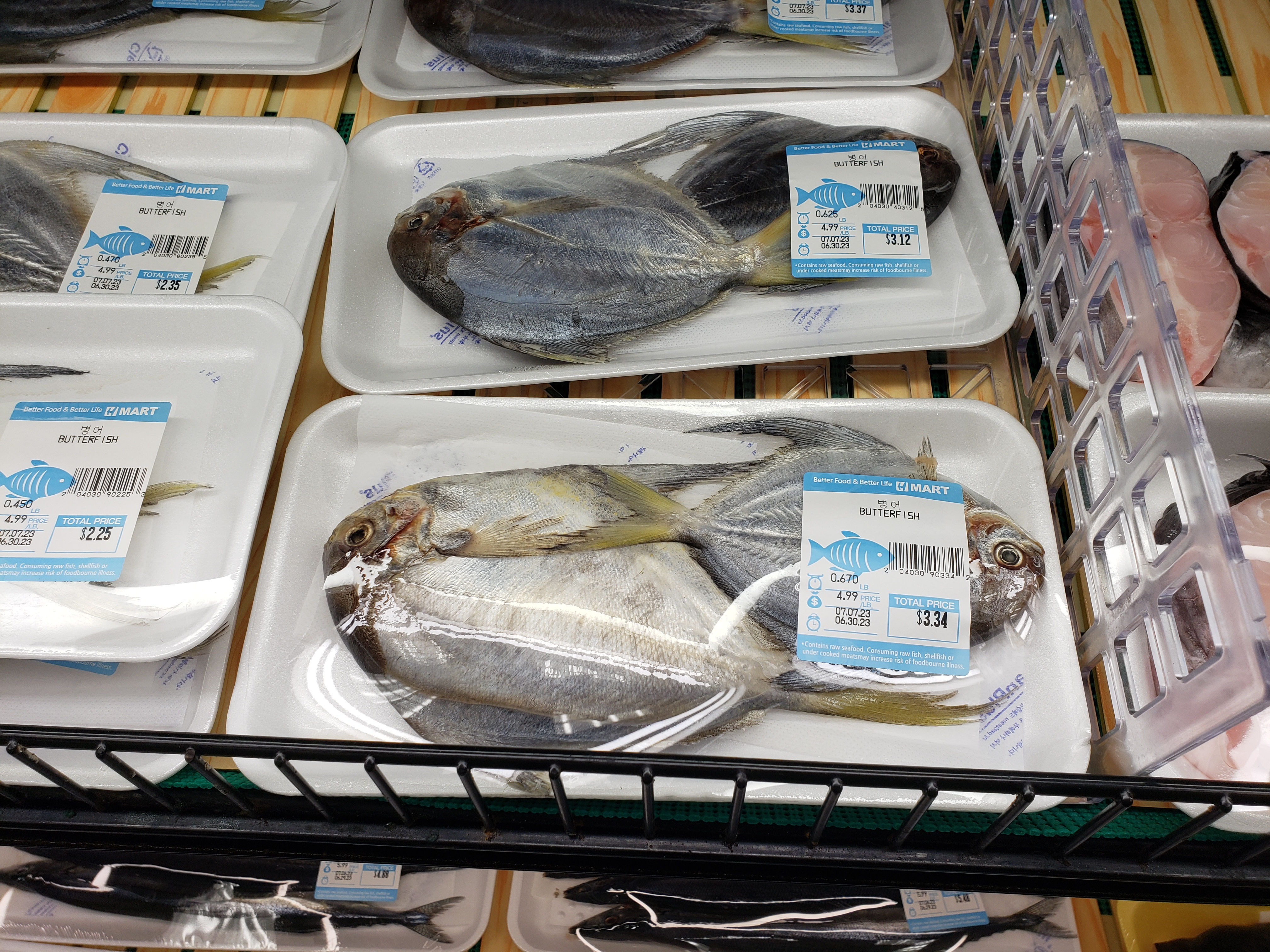
Image by hannaone: Byeongeo in the Market
Byeongeo Butter Fish
Article by Gil "hannaone" © Copyright 2007-2026. All rights reserved.
병어 | byeongeo
Ingredient Name: Byeong-eo
Korean Spelling: 병어
English Name: Butterfish/Silver Pomfret
Category: Fish, Ocean Fish
General Information
Byeong‑eo is a tender, white‑fleshed fish valued for its soft, delicate texture and naturally rich mouthfeel. Its flavor is clean and mild with very little fishiness, which makes it especially receptive to marinades, aromatics, and braising sauces. Because the flesh cooks quickly and absorbs seasoning readily, it appears frequently in home‑style Korean dishes.
Shopping & Selecting
Commonly available in larger Korean, Japanese, and Chinese markets, sold both fresh and frozen. Some full‑service seafood counters may also carry it seasonally.
What to Look For
• Clear, bright eyes
• Firm flesh that springs back when pressed
• Fresh, ocean‑like scent (avoid sour or overly “fishy” aromas)
• Forms Sold: Whole fish, fillets, or pre‑cleaned frozen packs
Storage Guidelines
• Fresh Fish: Use within 2–3 days for best quality.
• Freezing: Wrap tightly in freezer wrap, place in an airtight container, or vacuum‑seal.
• Optimal Quality: Best within 3 months; acceptable up to 6 months.
• Safety: Still safe beyond 6 months, though texture and flavor may decline.
• Temperature: Keep frozen at 0°F or lower to maintain quality.
Basic Preparation
• Rinse briefly under cold water.
• Scale and clean (remove stomach and entrails) if not pre‑cleaned.
• Fillet or cut into portions depending on the dish.
Culinary Uses
• Byeongeo‑jorim (병어조림): A classic braise featuring pomfret simmered in a spicy soy‑based sauce with radish, green onions, and peppers.
• Byeongeo‑gui (병어구이): Pan‑fried or grilled pomfret, appreciated for its mild flavor and soft texture—often served to children or elders.
• Byeongeo‑jjim (병어찜): Steamed pomfret seasoned with soy sauce, aromatics, and sometimes a touch of red chili powder.
Substitutes
When byeong‑eo is unavailable, suitable alternatives include:
• Flounder (gajami)
• Black pomfret
• Tilapia (mild flavor, similar cooking behavior)
• Sea bream (domi) for firmer but still delicate white flesh
Historical & Cultural Notes
Byeong‑eo has long been appreciated in coastal regions of Korea, especially in the southwest where pomfret fisheries are more common. Its soft texture and mild flavor made it a favored fish for family meals, children, and elders. Dishes like byeongeo‑jorim became staples of everyday home cooking, often appearing in lunchboxes and simple weekday dinners. In many households, the fish is associated with comfort food—gentle, nourishing, and easy to prepare
| |||||||||||||||||||||||||||||||||||||||||||||||||||||||||||
Byeongeo Butterfish
Byeongeo is considered to be best from December to April.
It has a light, tender, and sweet taste and is often served as a main dish.
Byeongeo was historically considered valuable enough to be served on the royal table during the Joseon dynasty.
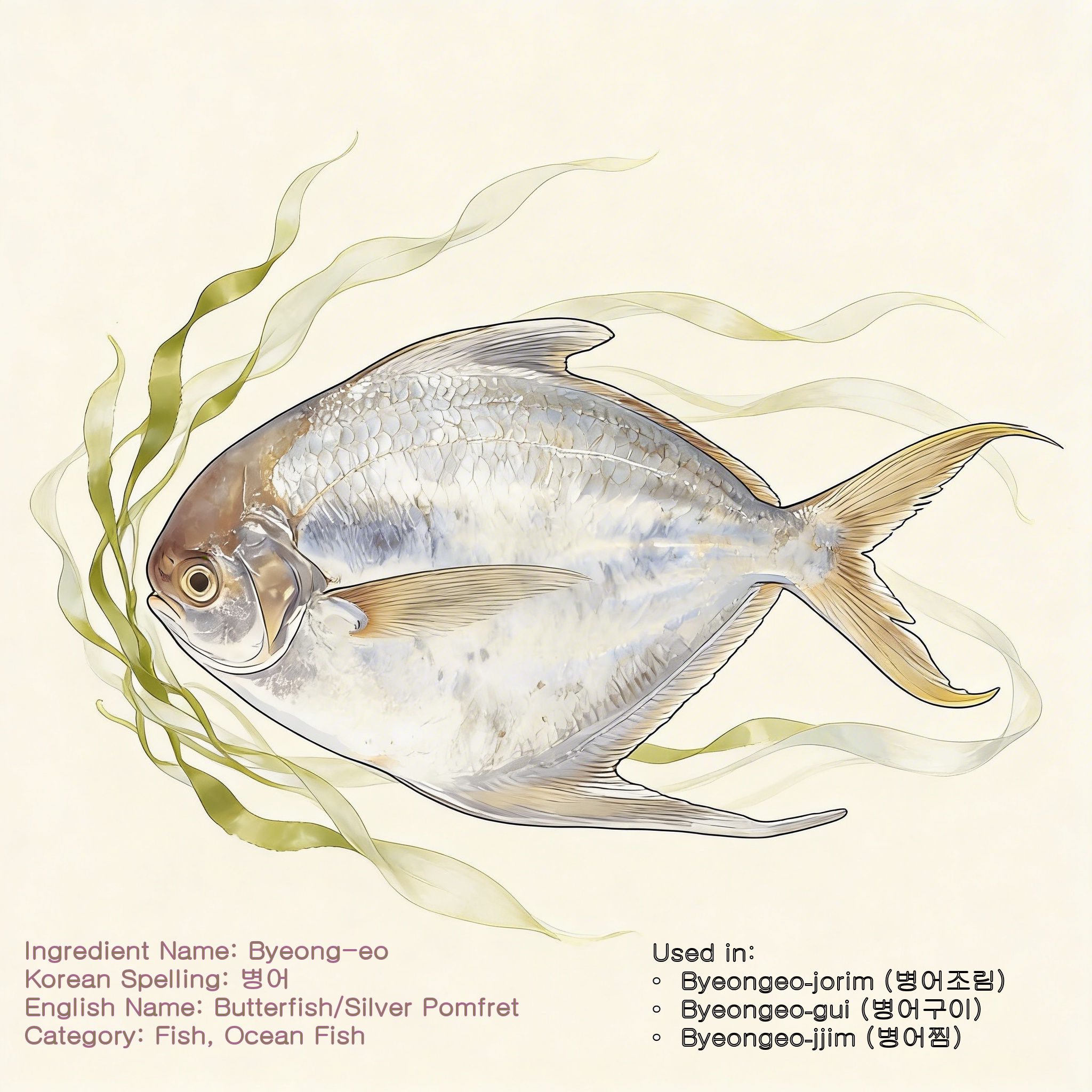
Image: Byeongeo Illustration
Ueong is also considered a strengthening food, often consumed during seasonal transitions to bolster immunity.
Check out Wooltari for Korean food and gifts!
Find it on Amazon! Purchases made through these links help support this site. As an Amazon Associate, we earn from qualifying purchases.