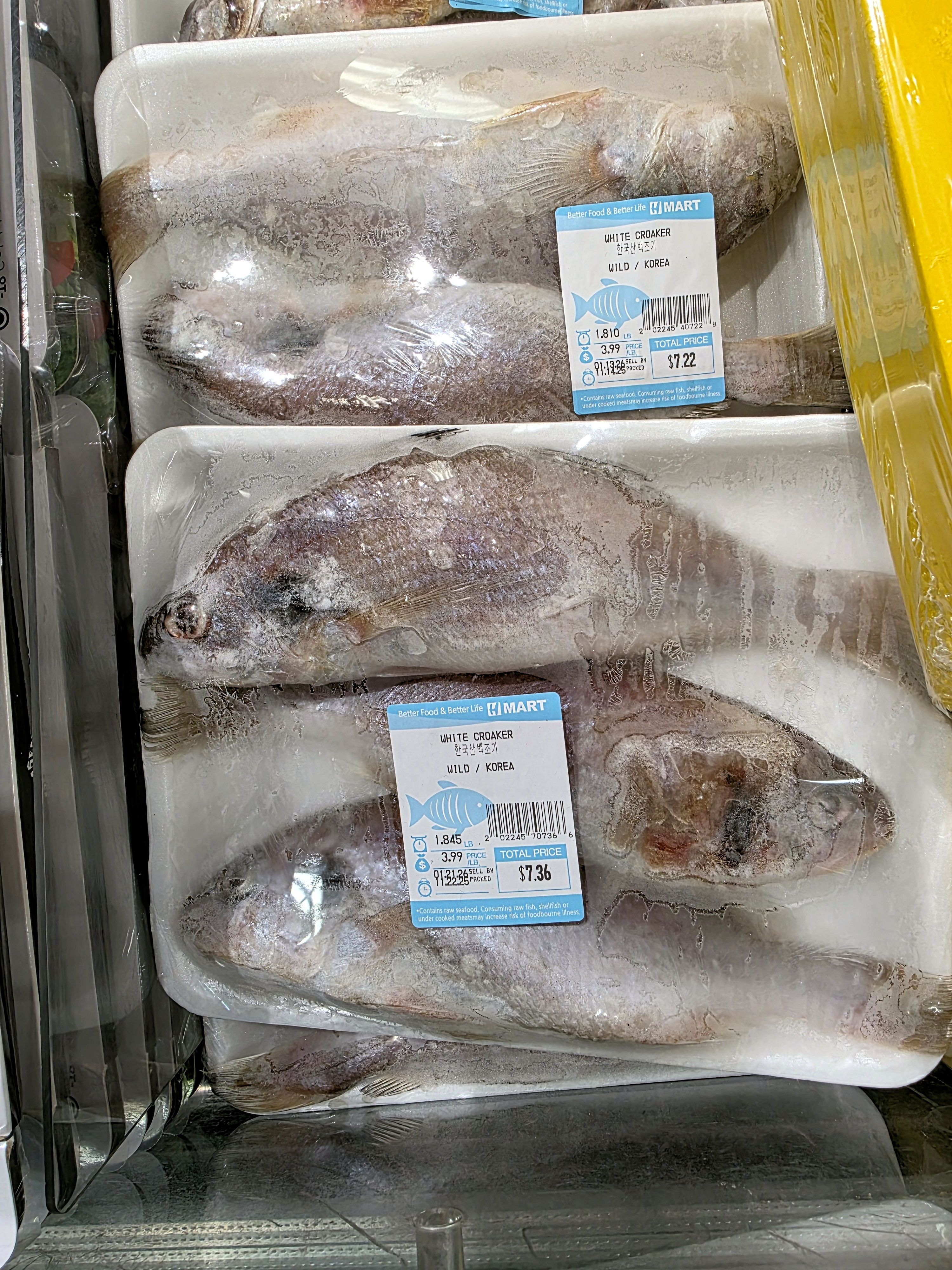
Image by hannaone: Baek-jogi
Baek-jogi White Croaker
Article by Gil "hannaone" © Copyright 2007-2026. All rights reserved.
백조기 | baek-jogi
Baek Jogi (White Croaker)
Korean Spelling: 한국산 백 조기 (hanguksan baek jogi)
English Name: White Croaker
🐟 General Information
Baek jogi, or white croaker, is a prized fish in Korean cuisine, known for its pale, shimmering skin, delicate flavor, and firm yet tender texture. It is often associated with prosperity and celebration, making it a popular choice for ceremonial dishes such as ancestral rites (jesa) and festive meals. Its mild taste allows it to pair well with both subtle and bold seasonings, making it versatile in traditional cooking.
🛒 Shopping and Selecting
- Availability: Found in larger Korean, Japanese, and Chinese markets, both fresh and frozen.
- Freshness Indicators:
- Clear, bright eyes
- Firm flesh that springs back when pressed
- Clean, ocean-like scent (avoid fish with a strong or sour odor)
- Forms Sold: Whole fish, fillets, or pre-cleaned frozen packs.
❄️ Storage
To preserve baek jogi’s delicate flavor and texture:
- Cleaning: Remove internal organs and intestinal tract, rinse thoroughly in cold water.
- Packaging: Wrap tightly in freezer-safe bags or vacuum-sealed packaging. Remove as much air as possible to prevent freezer burn.
- Labeling: Mark the date of freezing to track freshness.
- Temperature: Store at 0^{\circ }F (-18^{\circ }C) or colder.
- Freezing: Freeze promptly after purchase or catch to lock in freshness.
- Shelf Life: Frozen fish can be stored for several months without significant loss of quality.
🍳 Common Preparation
- Scaling & Cleaning: Remove scales, clean thoroughly, and rinse in cold water.
- Cooking Methods:
- Cut into chunks for soups and stews
- Slice into fillets for grilling, pan-frying, or battering for jeon
- Salted and semi-dried for gulbi (a traditional preservation method)
🍲 Used In
- Jogi-gui / Gulbi-gui (Grilled Croaker): Lightly salted and grilled whole fish, often served at ancestral rites.
- Jeon (Pan-fried Fillets): Thinly sliced fillets coated in flour and egg, pan-fried until golden.
- Maeuntang / Jogi-jjigae (Spicy Croaker Stew): A hearty, spicy soup with vegetables, tofu, and chili paste.
🔄 Substitutes
- Yellow Croaker (Hwang Jogi): Similar in flavor and texture, often used interchangeably in recipes.
📝 Other Names
- Korean: 조기 (jogi), 백조기 (baek jogi), 굴비 (gulbi – when salted and semi-dried)
- English: White croaker, croaker fish
- Scientific Name: Pennahia argentata
| |||||||||||||||||||||||||||||||||||||||||||||||||||||||||||||||||||
Baek-jogi White Croaker
📜 Historical and Cultural Notes
Ceremonial Role: Baek jogi is a traditional offering in jesa (ancestral memorial rites), symbolizing purity, prosperity, and respect for ancestors.
Preservation Tradition: Gulbi, a semi-dried salted croaker, originated in the coastal regions of Korea, particularly Yeonggwang. Gulbi was historically considered a luxury gift, often exchanged among families and officials.
Cultural Symbolism: Its pale, clean appearance made it a metaphor for honesty and good fortune in Korean folklore.
Image from Pixabay
Regional Significance: White croaker fisheries along Korea’s west coast have long been tied to local economies and food traditions.
Find it on Amazon! Purchases made through these links help support this site. As an Amazon Associate, we earn from qualifying purchases.