Book of Ingredients
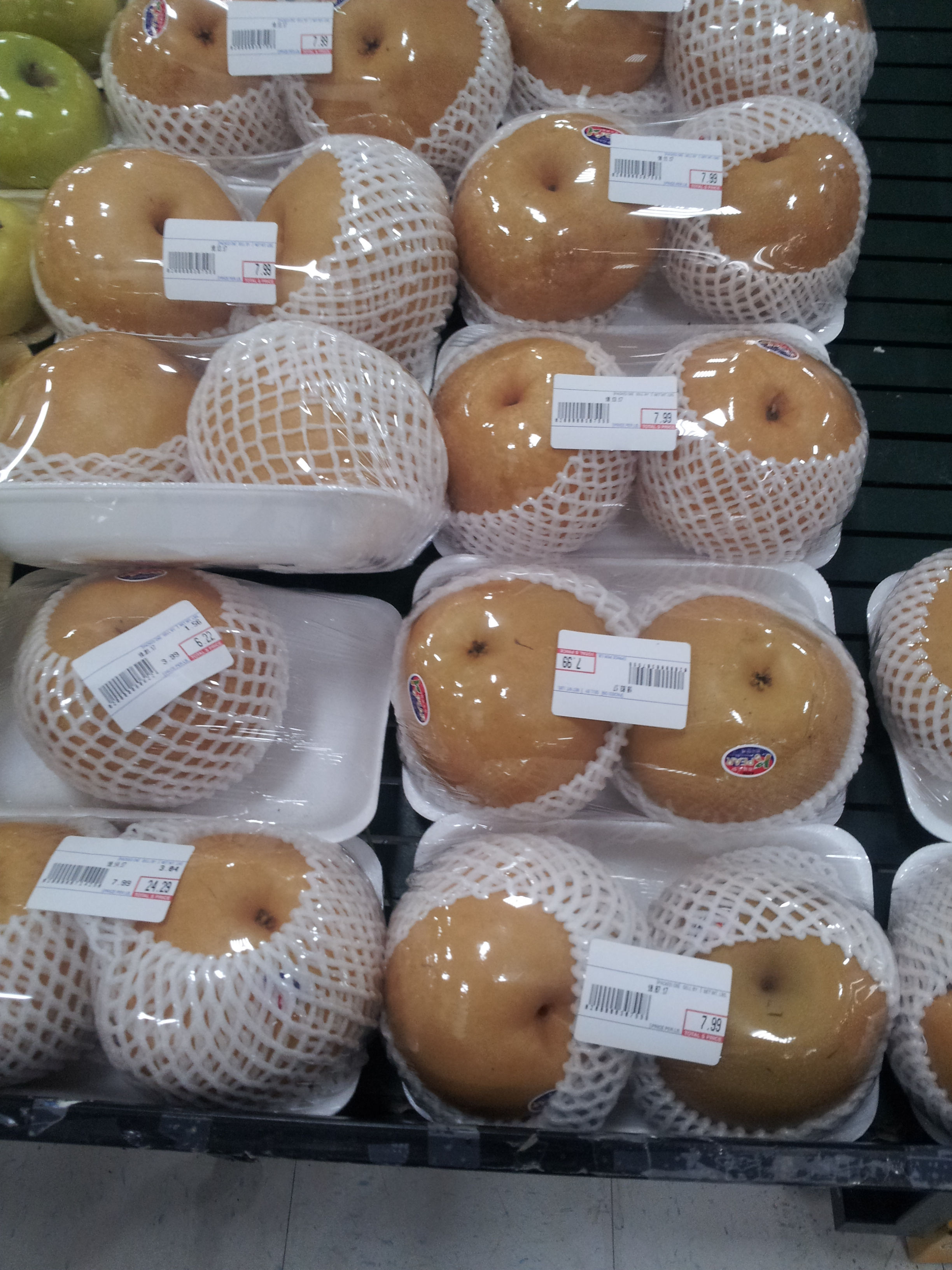
Image by hannaone: Packaged Bae
Bae Korean Pear
Article by Gil "hannaone" © Copyright 2007-2026. All rights reserved.
배 | bae
Ingredient Name: Bae
Korean Spelling: 배
English Name: Korean Pear
Classification: Rose Family • Tree Fruit • Asian Pear
General Information:
The "bae" (배) or Korean pear is known for its uniquely sweet and juicy flavor profile. Often mistaken for a crossbreed between apples and pears, Korean pears stand apart with their firm, crisp texture and balanced blend of sweetness and tang. They are typically allowed to ripen fully on the tree for maximum flavor and quality.
Shopping and Selecting:
Korean pears can be found in most Korean markets when in season, and many larger grocery markets. Some markets will carry a somewhat smaller variety labeled as Asian Pear.
When selecting Korean pears, ensure they are firm and evenly colored, with only slight speckling. Avoid fruits with soft spots, dark brown patches, or overly yellow areas. A well-chosen pear will retain its signature crunch and vibrant flavor.
Common Preparation:
Korean pears are highly versatile and lend themselves to a variety of culinary applications. They can be peeled and eaten raw for a refreshing snack, sliced into salads for added sweetness, or incorporated into traditional dishes.
Used In:
Marinades
Cold Noodle dishes
Some types of kimchi
Dessert like dishes
Fresh fruit salad like dishes
Popular Dishes:
Bulgogi (불고기): Thinly sliced beef or pork marinated with grated Korean pear to achieve a delicate sweetness.
Naengmyeon (냉면): Icy noodle dishes garnished with refreshing pear slices.
Mul Kimchi (물 김치): Thin pear slices added to the liquid base.
Bibim Guksu (비빔국수): Matchstick-cut pears mixed with spicy noodles.
Baesuk (배숙): Steamed pears, often sweetened, served as a comforting dessert.
Substitutes:
Apple - same crispness, different flavor
Pear - Different texture, less crisp, different flavor
| |||||||||||||||||||||||||||||||||||||||||||||||||||
Bae Korean Pear
Beyond its culinary appeal, the Korean pear holds cultural significance. It is frequently used as an offering during ancestral rites and traditional ceremonies, symbolizing longevity and good fortune. In Korean folklore, the fruit is also valued for its medicinal properties, often utilized in remedies for colds, sore throats, and other minor ailments.
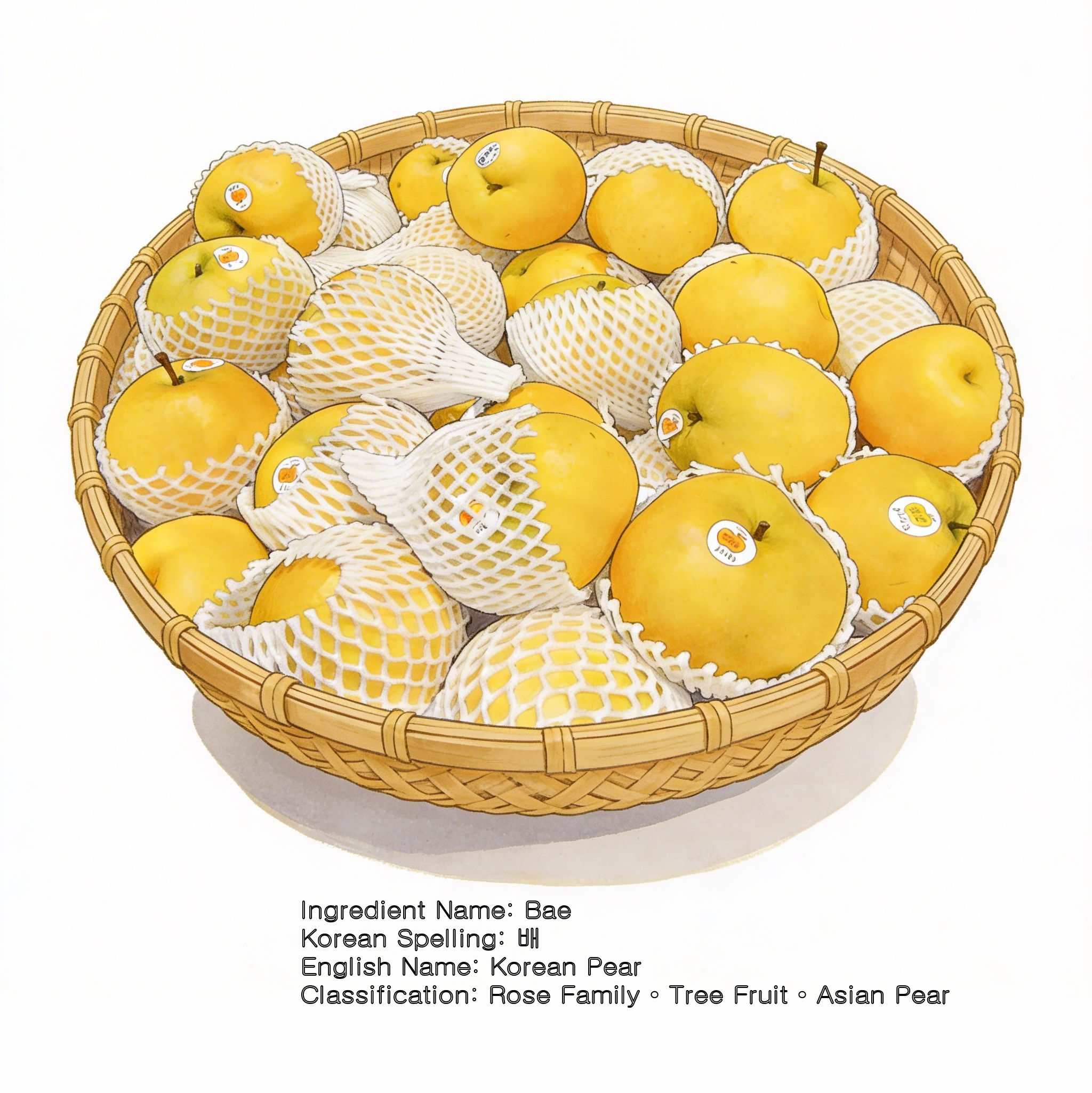
Image by hannaone: packaged Bae
Korean pears are a delicious treat that can be served as a desert, included in salads, used in marinades, or eaten as a snack.
The trees grow quickly and can produce fruit as early as three years from planting.
Our back yard garden was graced with a couple of accidental Korean pear trees when Mother in Law discarded a few seeds from pears she was snacking on.
The trees grew very quickly to about 10 feet in height and by their third year were producing large delicious fruits.
Check out Wooltari for Korean food and gifts!
Find it on Amazon! Purchases made through these links help support this site. As an Amazon Associate, we earn from qualifying purchases.