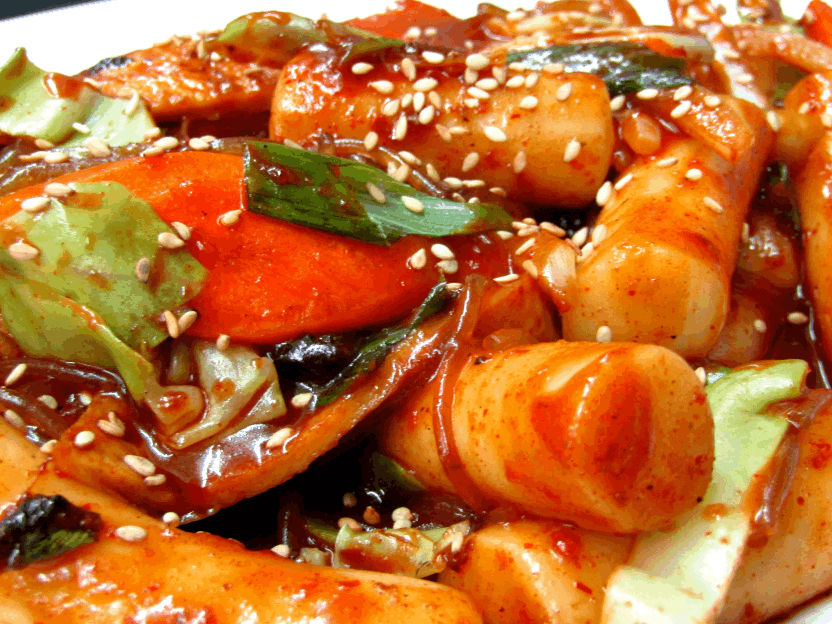
Image by hannaone: Tteokbokki
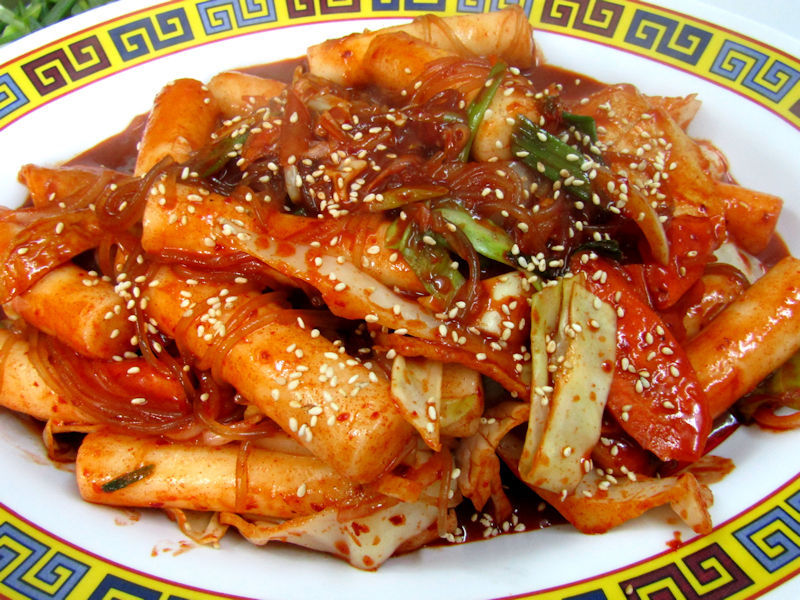
Image by hannaone: Air Fried Samgyeopsal
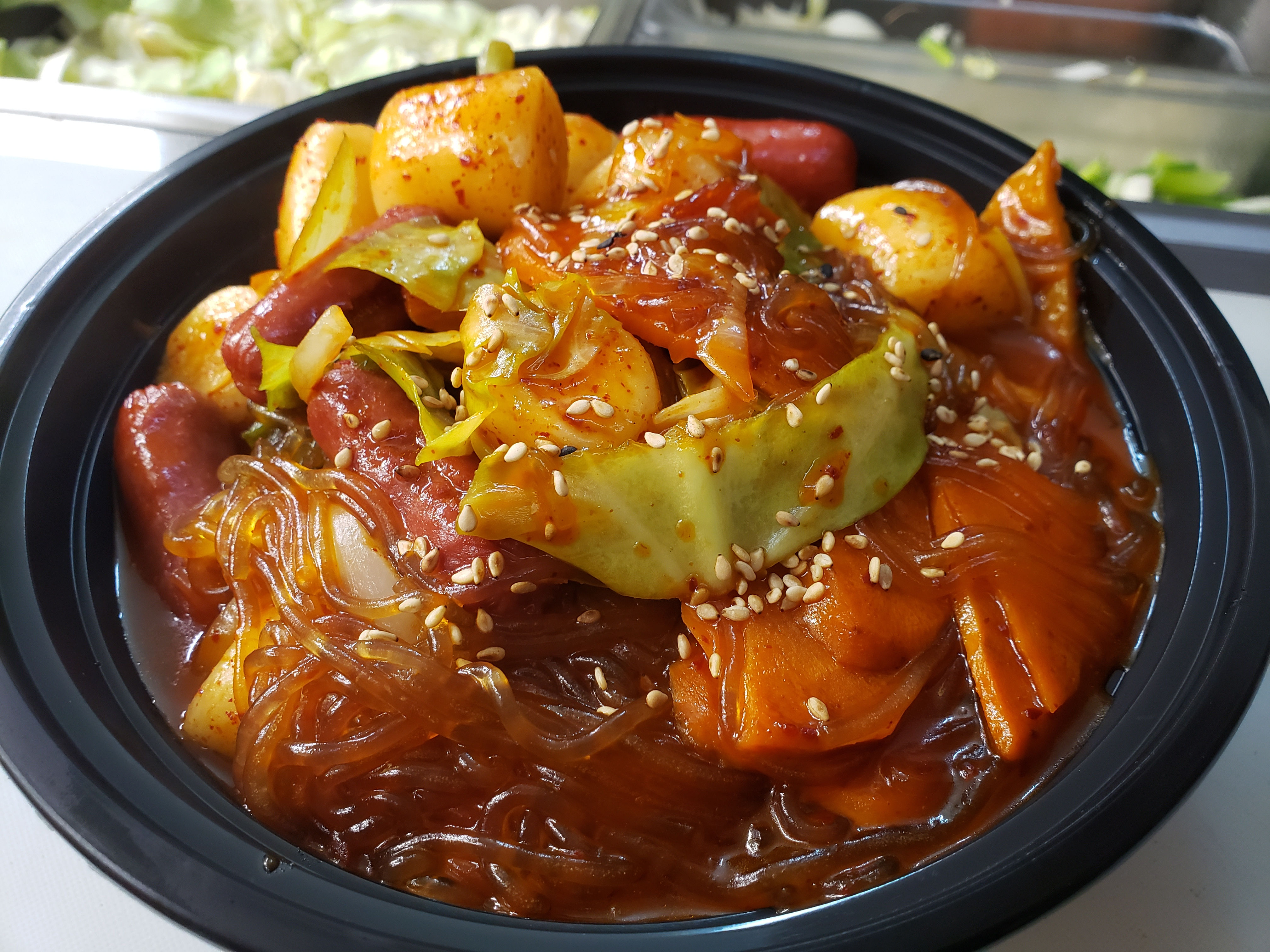
Image by hannaone: Tteokbokki 2 Go
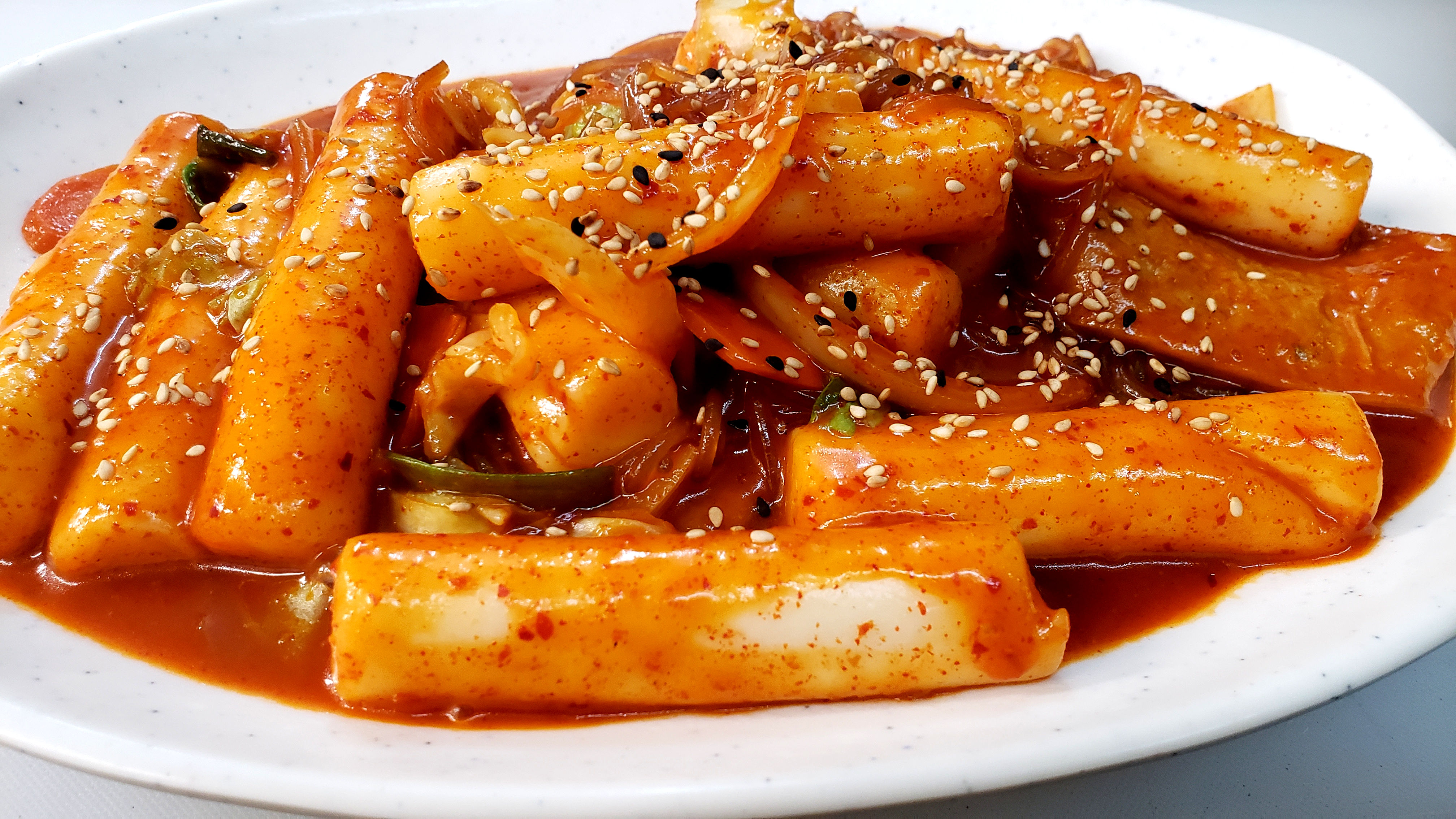
Image by hannaone: Tteokbokki
Tteobokki Stir Fried Rice Cake
Article by Gil "hannaone" © Copyright 2007-2026. All rights reserved.
떡볶이 | tteokbokki
떡볶이
Tteokbokki has been a popular offering in our various restaurant ventures and is gaining popularity in many places around the world.
Tteokbokki is made with garaetteok, which are cylindrical rice cakes, and gochujang, a spicy red pepper paste.
Our take on this highly irresistible dish is presented in this recipe.
Servings: 10
Recipe Type: Appetizer, Korean, Recipe, Snack, Street Food
Ingredients
10 ounces Tteok (cylindrical shaped rice cake/rice pasta)
1 cup water
1 cup anchovy broth
2 Sheets fish cake
1 small onion
1/4 medium Cabbage
1 small carrot
2 large green onions
10 little smokie or similar mini sausages (optional)
Anchovy Broth
5 small dried anchovies
1/2 ounce dried kelp
1 clove garlic
1 cup water
Stir Fry Sauce
2 tablespoons gochujang (Korean chili paste)
1 tablespoon gochugaru (Korean chili powder)
3 cloves garlic
2 teaspoons sugar
1 teaspoon soy sauce
1/2 teaspoon pepper
Garnish
1 small green onion
1 teaspoon sesame seeds
Directions
Stir Fry Ingredients
Peel the onion (Rinse and save the peels)
Rough chop the cabbage and onion.
Cut two green onions into about 1 inch sections.
Cut the fish cake into strips about 1/2 inch wide, then cut the strips into 1 1/4 inch lengths.
Cut the carrot in half lengthwise, then medium slice each half lengthwise. Cut the resulting strips into 1 1/4 inch lengths.
Anchovy Broth
Thin Slice the garlic from top to bottom.
Toast the Kelp and anchovies over low heat for about three minutes.
Add the water, increase heat to medium high, and bring to a slow boil.
Add garlic and simmer for five minutes.
Remove from heat and strain out all solids.
Stir Fry Sauce
Thin slice the garlic from top to bottom, then sliver each slice.
Mix all sauce ingredients together and let stand for fifteen minutes to let flavors develop.
Garnish
Place sesame seeds into a dry pan over low heat and toast until golden brown, stirring often.
Chop the green onion.
Cook
Bring 1 cup water and 1 cup anchovy broth to a full boil over high heat.
Add the ddeok (rice cake), reduce heat to medium, and cook about four minutes.
Add stir fry sauce, return to a simmer, and cook until the rice cake is soft and the sauce thickens somewhat (4 to 8 more minutes).
Add vegetables, return to a simmer, and cook about 3 minutes.
Add fishcake and simmer another minute.
Remove from heat, transfer to a serving plate, garnish, and serve the tteokbokki while hot.
*Tip: Keep your onion peels in a ziplock bag in the fridge or freezer to make onion broth later*
Story Time
Some History
Tteokbokki has a long and interesting history that dates back to the early days of the Joseon Dynasty. Originally known as "gungjung tteokbokki," it was a favorite snack among royalty and aristocrats in the royal court.
Sometime in the 1500s, chili peppers made their way to Korea and were incorporated into Korean cuisine. This resulted in the red spicy tteokbokki that is available today.
Over time, tteokbokki became more widely available to the general public as street vendors began selling it on bustling market streets across Korea. People, having experienced tteokbokki while at market began making tteokbokki at home.
Today, tteokbokki is a beloved comfort food enjoyed by people of all ages around the world. Its spicy yet sweet flavor profile has remained consistent throughout its evolution, making it an enduring staple in Korean cuisine.
Variations and Adaptations
Tteokbokki has evolved over the years, with different regions in Korea adding their own unique twists to the dish. For example, in the coastal city of Busan, seafood is often added to tteokbokki, giving it a more savory flavor.
A tteokbokki-like dish made with ramen noodles is called rabokki, which may or may not incude tteok. Another popular variation is gungjung tteokbokki, which is made with a soy-based sauce instead of the spicy gochujang sauce.
In recent years, tteokbokki has also gained popularity outside of Korea and can now be found in many Korean restaurants around the world. Some variations include adding cheese or other toppings such as fried eggs or sausages.
Tteokbokki can also be adapted to suit various dietary restrictions or preferences. Vegetarians can substitute the beef broth with vegetable broth and omit meat or seafood from their dish. Gluten-free tteok can also be used for those who are gluten intolerant.
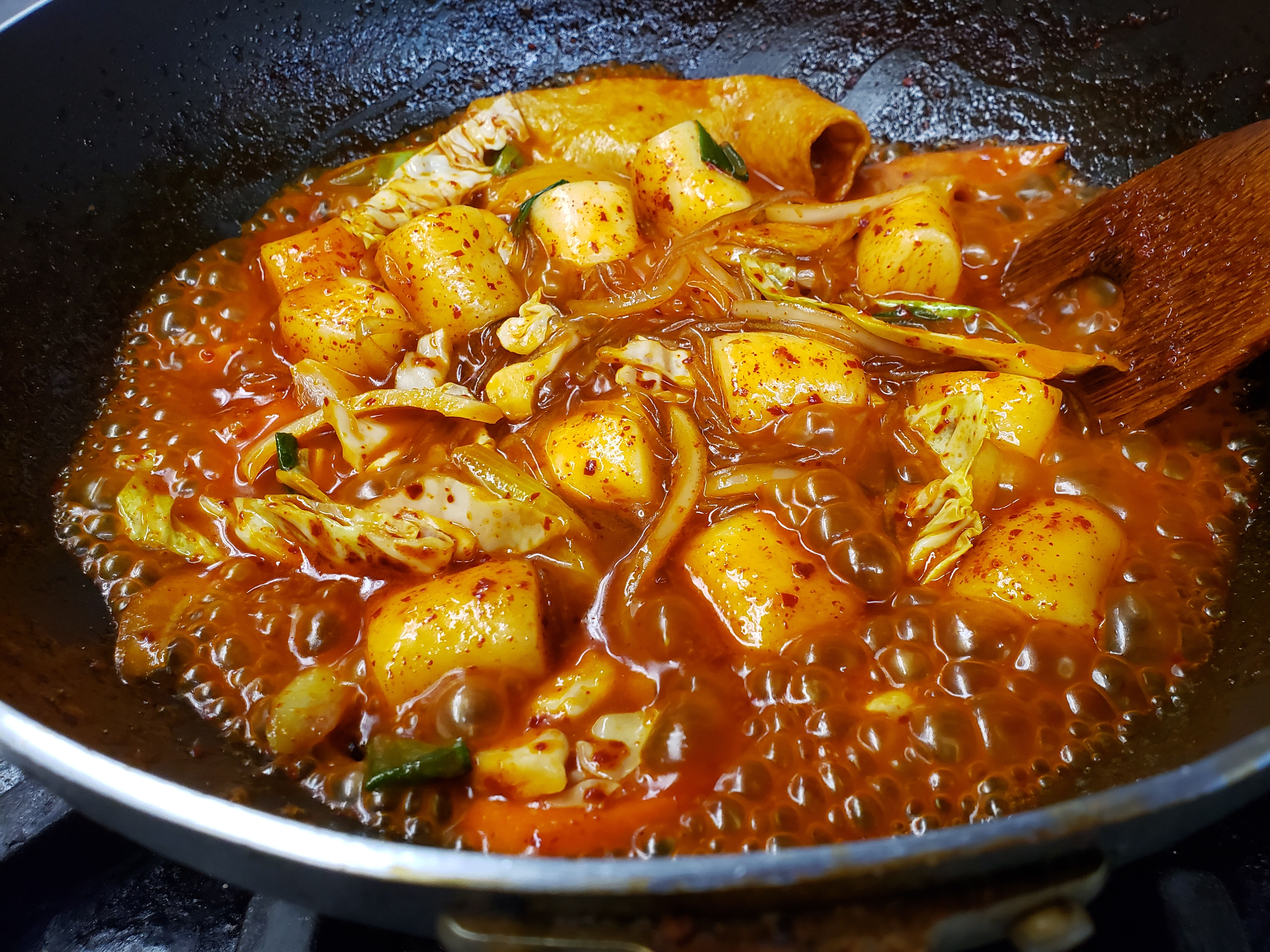
Image by hannaone: Tteokbokki cooking
In addition to regional variations, there are also modern adaptations of tteokbokki that cater to different dietary preferences. Vegetarian versions use vegetable broth instead of anchovy or beef broth, while vegan versions omit any animal products altogether.
Overall, tteokbokki remains a popular and beloved dish in Korea and continues to evolve and adapt to suit different tastes and preferences.
Find it on Amazon! Purchases made through these links help support this site. As an Amazon Associate, we earn from qualifying purchases.

Comment?