Recipes: Seafood - Ojingeo-bokkeum
Article by Gil "hannaone" © Copyright 2007-2025. All rights reserved.
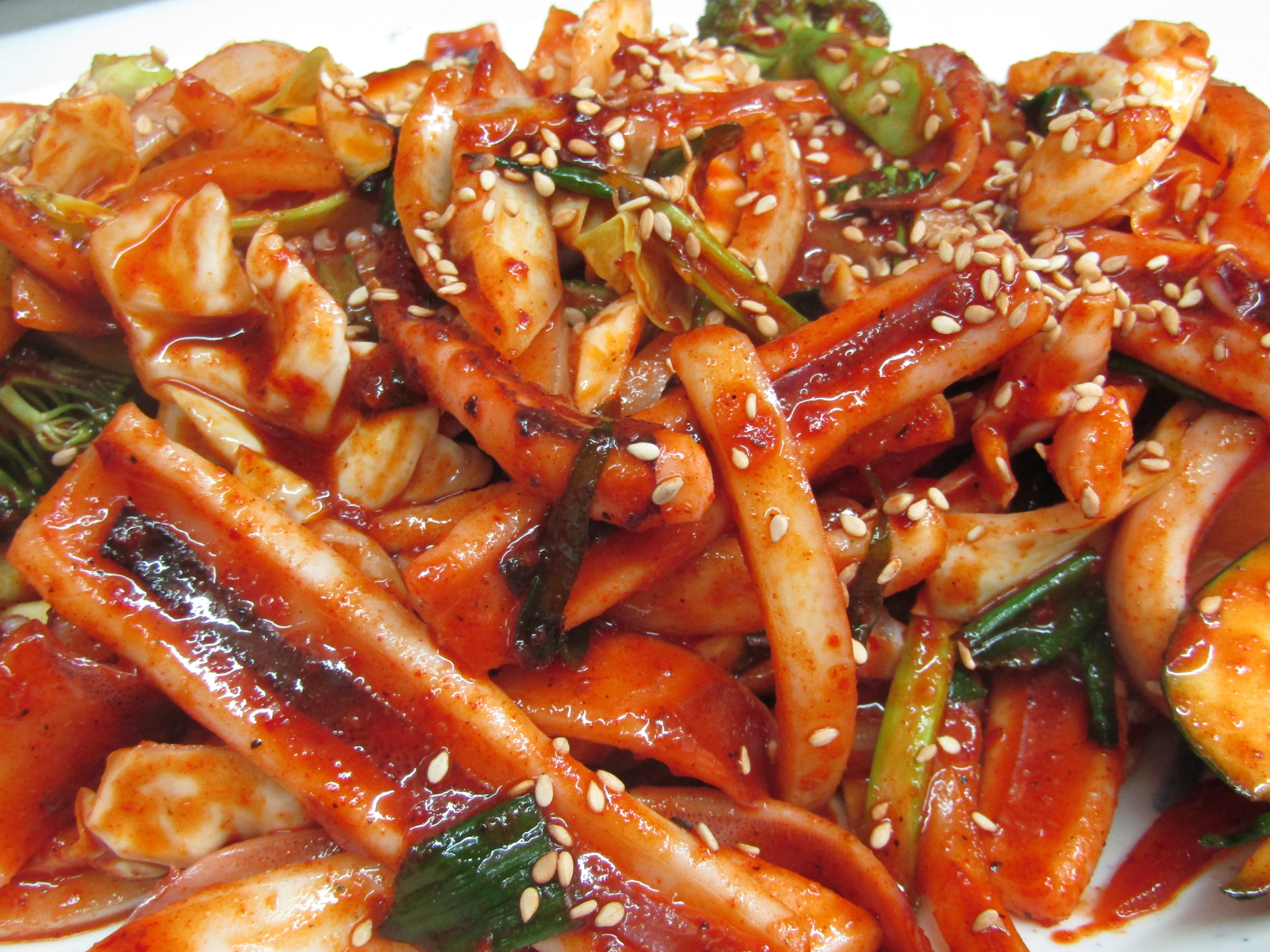
Image by hannaone: Ojingeo-bokkeum
Ojingeo-bokkeum Spicy Stir Fried Squid
오징어볶음 | ojingeo-bokkeum
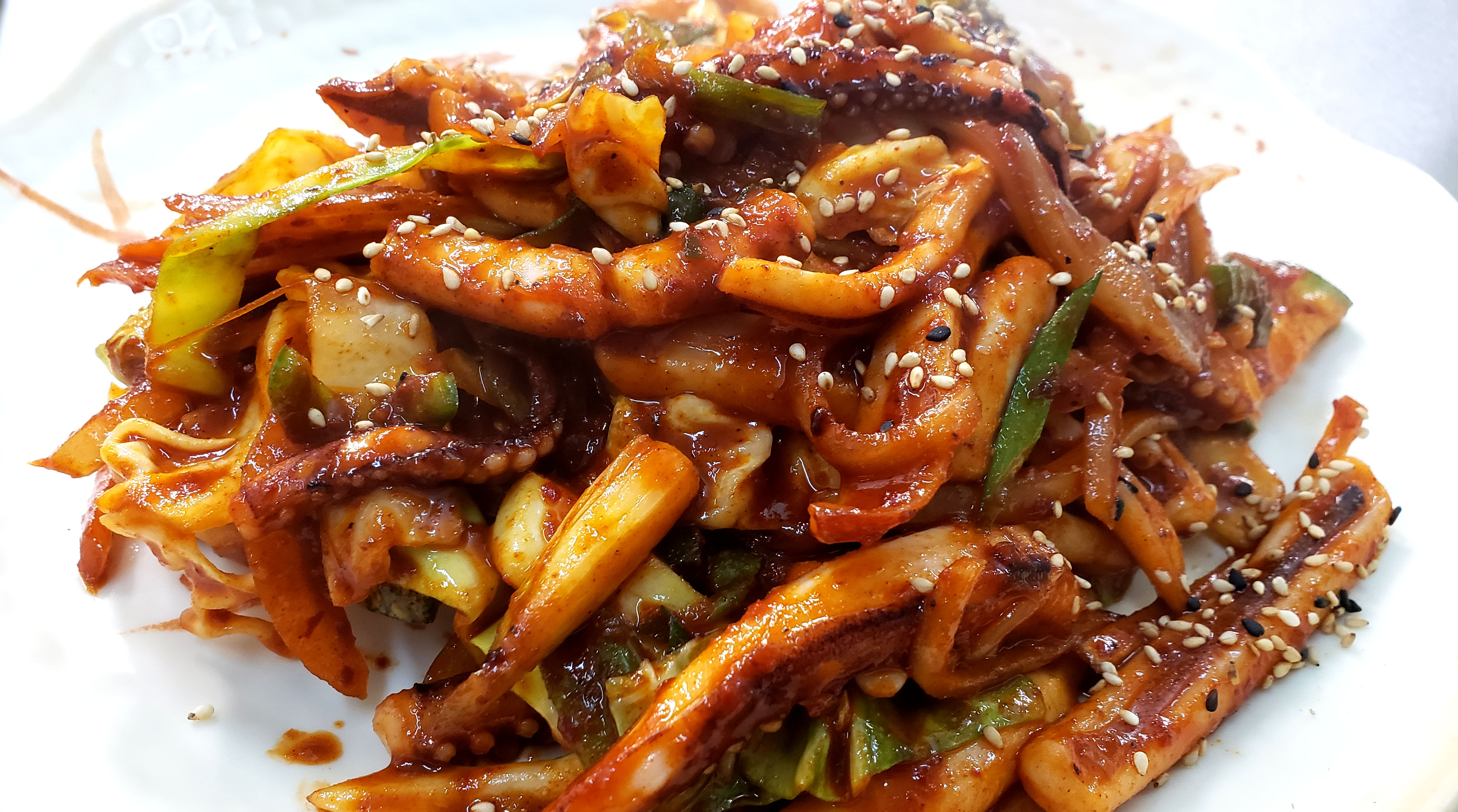
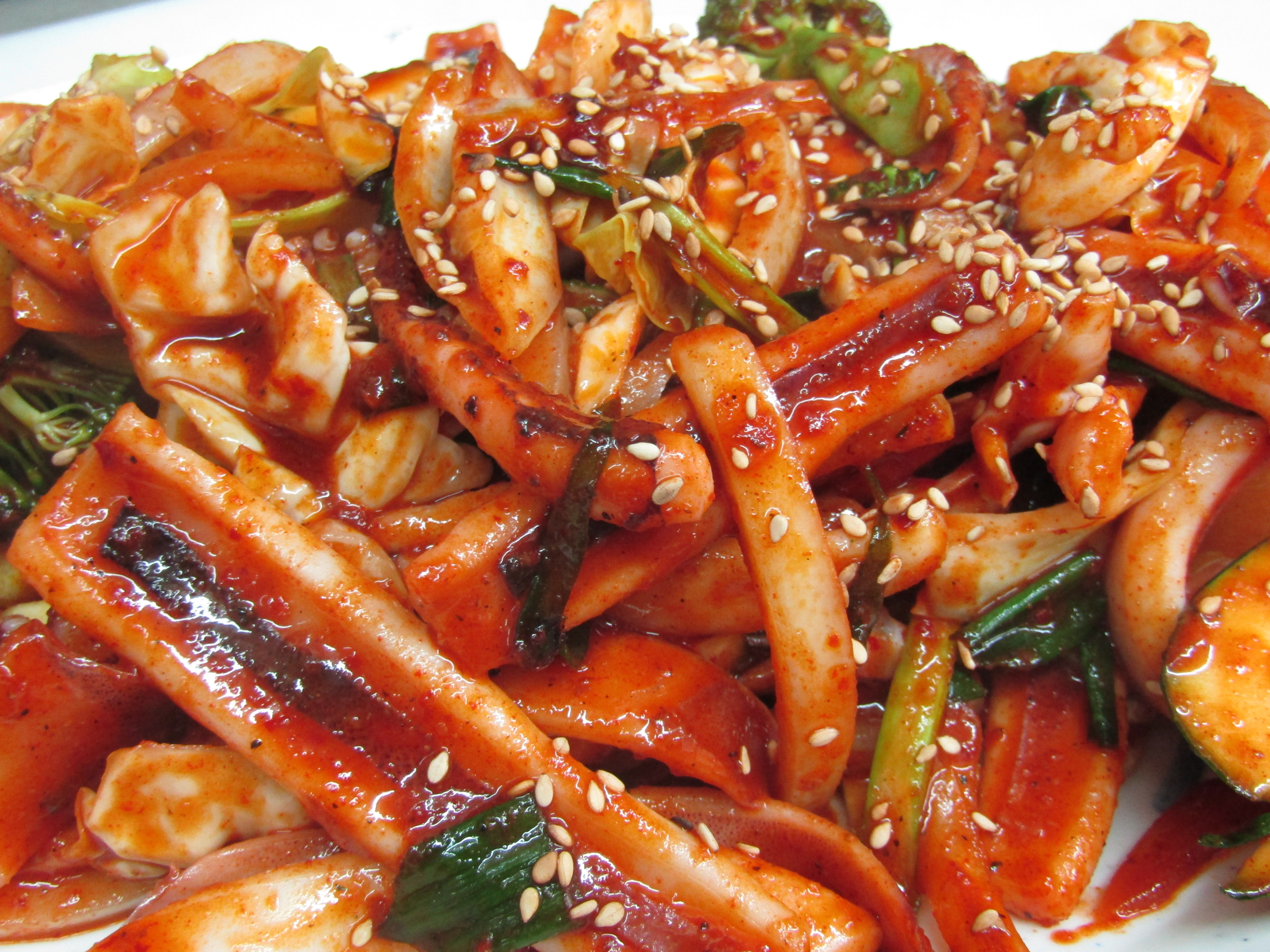
One of our restaurant's most sought-after seafood dishes was the Korean-style calamari stir fry. This flavorful dish consisted of rings, sliced tubes, and tentacles cooked in a spicy sauce alongside a variety of fresh vegetables.
Ojingeo Bokkeum offers a delectable and intense blend of flavors and textures, served with steamed white rice and various banchan sides.
Recipe Type: Seafood, Korean, Spicy, Stir fry
Servings: 4
Ingredients
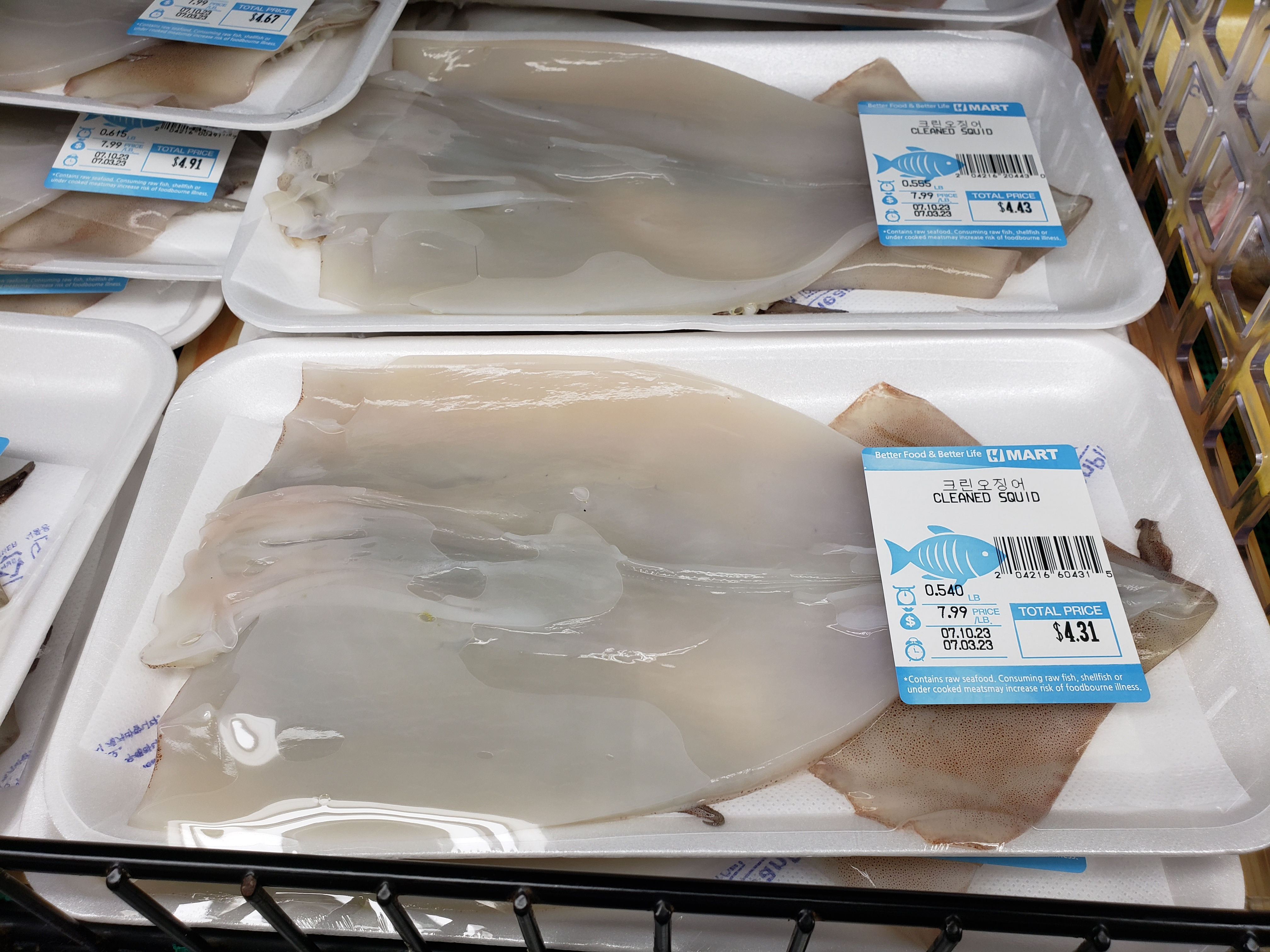
1 large or 2 small whole cleaned squid
3 green onions
3 shiitake mushrooms
1 hot green chili pepper
1 hot red chili pepper
1 small green bell pepper
1 small red bell pepper
1 large carrot
1/2 onion
1/4 small green cabbage
1 broccoli crown
2 tablespoons cooking oil
1 tablespoon pure toasted sesame oil
1 teaspoon sesame seed for garnish
Stir Fry Sauce
1 tablespoon Soy Sauce
1 teaspoon rice wine
2 tablespoons gochujang
1 teaspoon sugar
1 teaspoon fish sauce
6 each cloves fresh garlic, peeled
1/2 teaspoon black pepper
1 ounce fresh ginger, peeled
water as needed
Directions
Stir Fry Sauce
Cut ginger into smaller pieces.
Put ginger, garlic, rice wine, and soy sauce into blender, then blend into smooth paste (add just a bit of water if needed to aid in blending).
Mix blended paste and all other sauce ingredients in a small bowl and let sit for fifteen minutes. Thin with water as needed to make a "pourable" paste
Squid
Wash well in cold water.
Slit the squid body from the triangle (where the "wings" and body meet) to the head cavity, open and flatten.
Cut into 1/4 inch wide strips from the "head" to the "tail".
Cut the strips into about 2 inch sections.
Slit the tentacle ring, flatten, and cut each tentacle free from the others. Cut tentacles into about 2 inch sections.
Peppers and Green Onion
Wash chili peppers in cold water and remove stems. Cut in half from top to bottom, then slice each half into three or four slivers from top to bottom.
Wash bell peppers in cold water, remove stems, and cut in half from top to bottom, then again cross wise. Cut into roughly 1/2 inch by 1 inch pieces.
Trim top and bottom of green onions, wash in cold water, then cut into about 2 inch lengths.
Vegetables
Cut onion in half from to bottom. Slice 1/2 the onion, from top to bottom, into about 1/4 inch wide slices.
Remove and discard outer cabbage leaves, then cut in half from top to bottom. Cut one section in half again, from top to bottom. Slice into about 1/2 inch wide slices.
Trim top and bottom of carrot, and wash in cold water. Cut into strips about the same size as the squid strips.
Wash and thin slice mushrooms.
Separate broccoli florets and wash in cold water.
Cooking
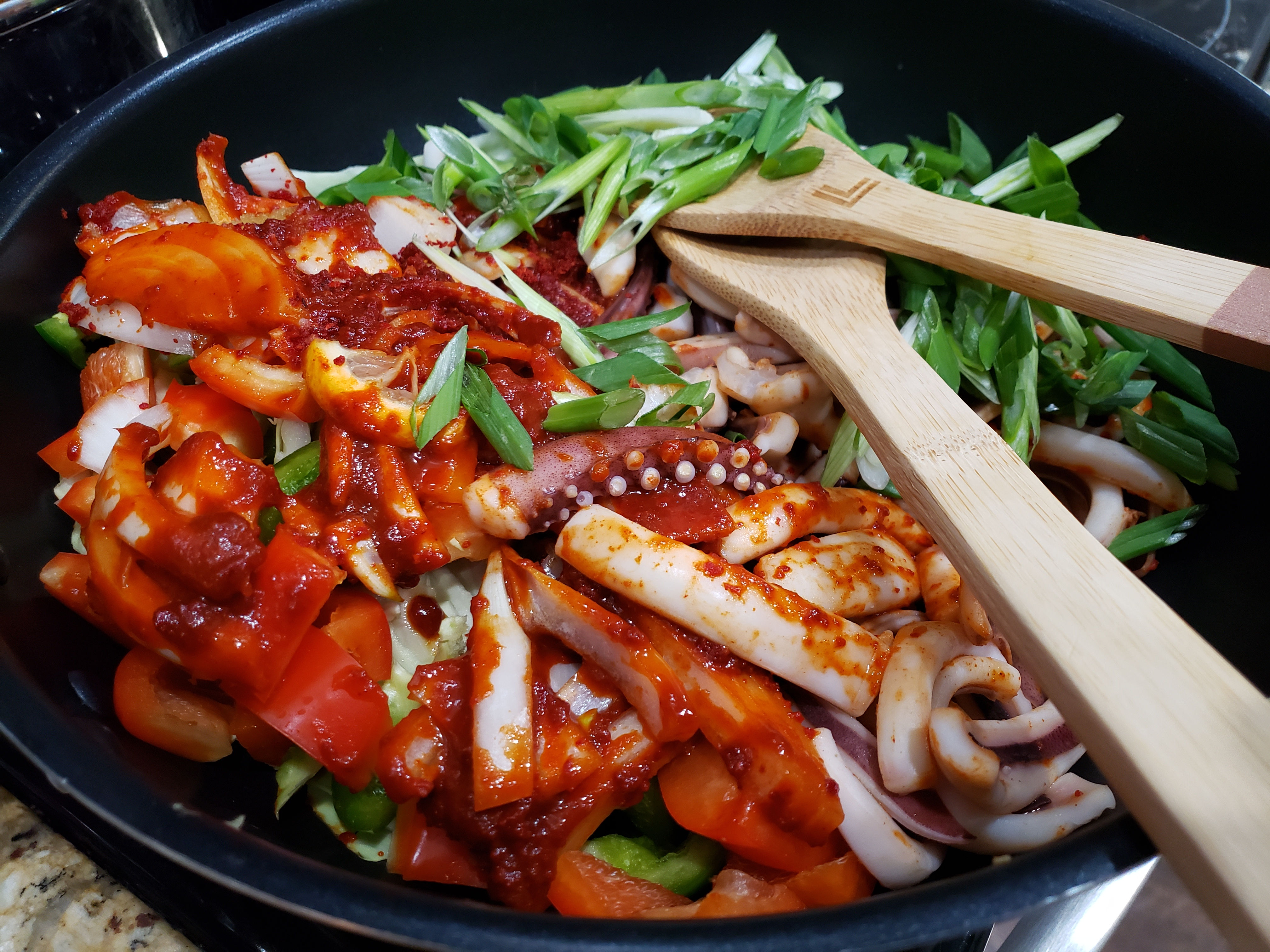
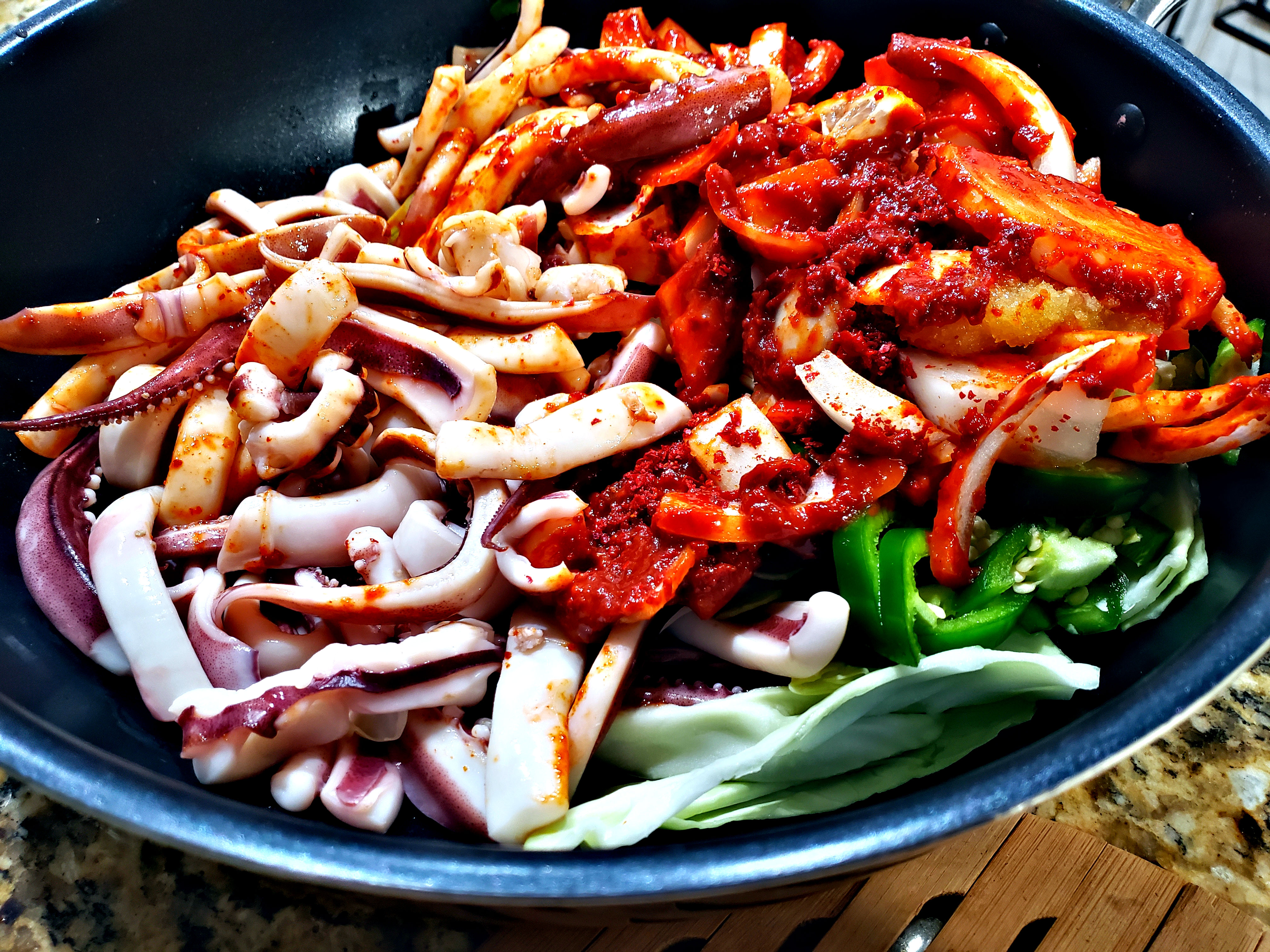
Preheat a large stir fry pan over high heat for about 30 seconds. Add cooking oil then add in the following order;
Broccoli and carrot, stir fry about 3 minutes.
Onion slices, stir fry 2 minutes
Squid, green onion, and cabbage, stir fry about 2 minutes, until the squid changes color.
Sauce and pepper, stir fry about 30 to 45 seconds.
Remove from heat, add sesame oil, and toss well.
Final
Garnish with sesame seed and serve with steamed rice and banchan dishes.




Comment?