Recipes: Kimchi
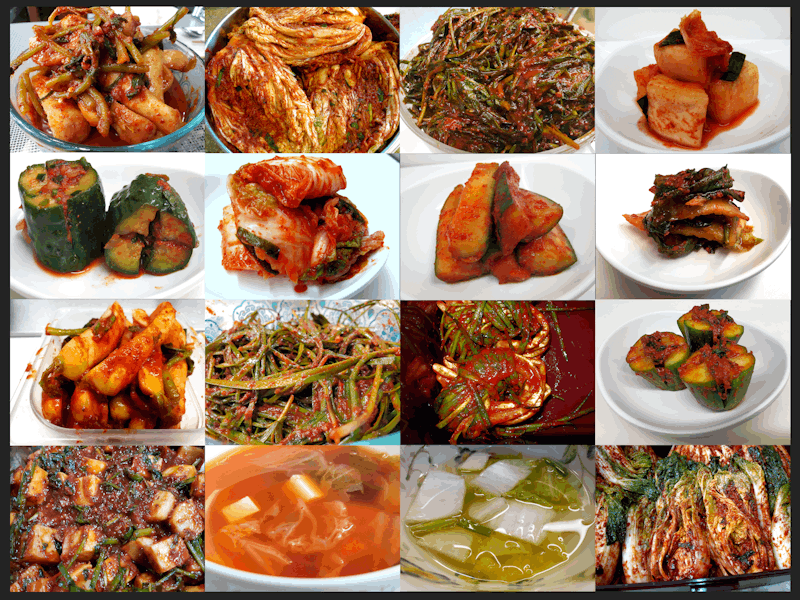
Kimchi Dishes
김치 | kimchi
The term "kimchi" refers to a Korean side dish made from fermented vegetables.
This traditional dish has been a staple in Korean cuisine for centuries and is enjoyed by people all over the world. However, beyond its delicious taste and numerous health benefits, there is a rich history and cultural significance behind kimchi that often goes unnoticed. In fact, kimchi has become such a beloved dish that it has even been honored with its own day in South Korea - November 22nd is officially designated as "Kimchi Day."
Out of the numerous types of kimchi, napa cabbage and daikon radish are the most popular, and while kimchi is typically associated with spiciness, there are also many non-spicy variations that offer a clean, clear, refreshing taste.
Almost any vegetable (cucumber, broccoli, onion, chili peppers, etc.) can be used. The process of making kimchi involves fermenting these vegetables with various seasonings and spices, resulting in a tangy, slightly sour flavor that packs a punch. But beyond its mouth-watering taste, kimchi has a much deeper meaning to Koreans. It is a symbol of their rich cultural heritage and plays a significant role in daily life, from family meals to national celebrations.
During the early Three Kingdoms period (37 BC‒7 AD), Kimchi emerged as a popular dish. This traditional food was comprised of salted fermented vegetables, typically sourced from local farms or gathered from the wild. It was a way to preserve vegetables during the harsh Korean winters when fresh produce was scarce. Over time, kimchi evolved to include more ingredients and variations, becoming a staple dish in every Korean household and an integral part of their cuisine.
Various types of Kimchi were initially made with ingredients such as bean sprouts, Korean radish, and assorted greens and roots. However, as trade expanded and brought new ingredients to Korea, Napa cabbage and chili peppers were introduced, leading to a transformation in Korean cuisine. This resulted in Baechu (cabbage) Kimchi becoming the dominant form of Kimchi.