Recipes: Banchan - Maneuljjong-bokkeum
Article by Gil "hannaone"
© Copyright 2007-2026. All rights reserved.
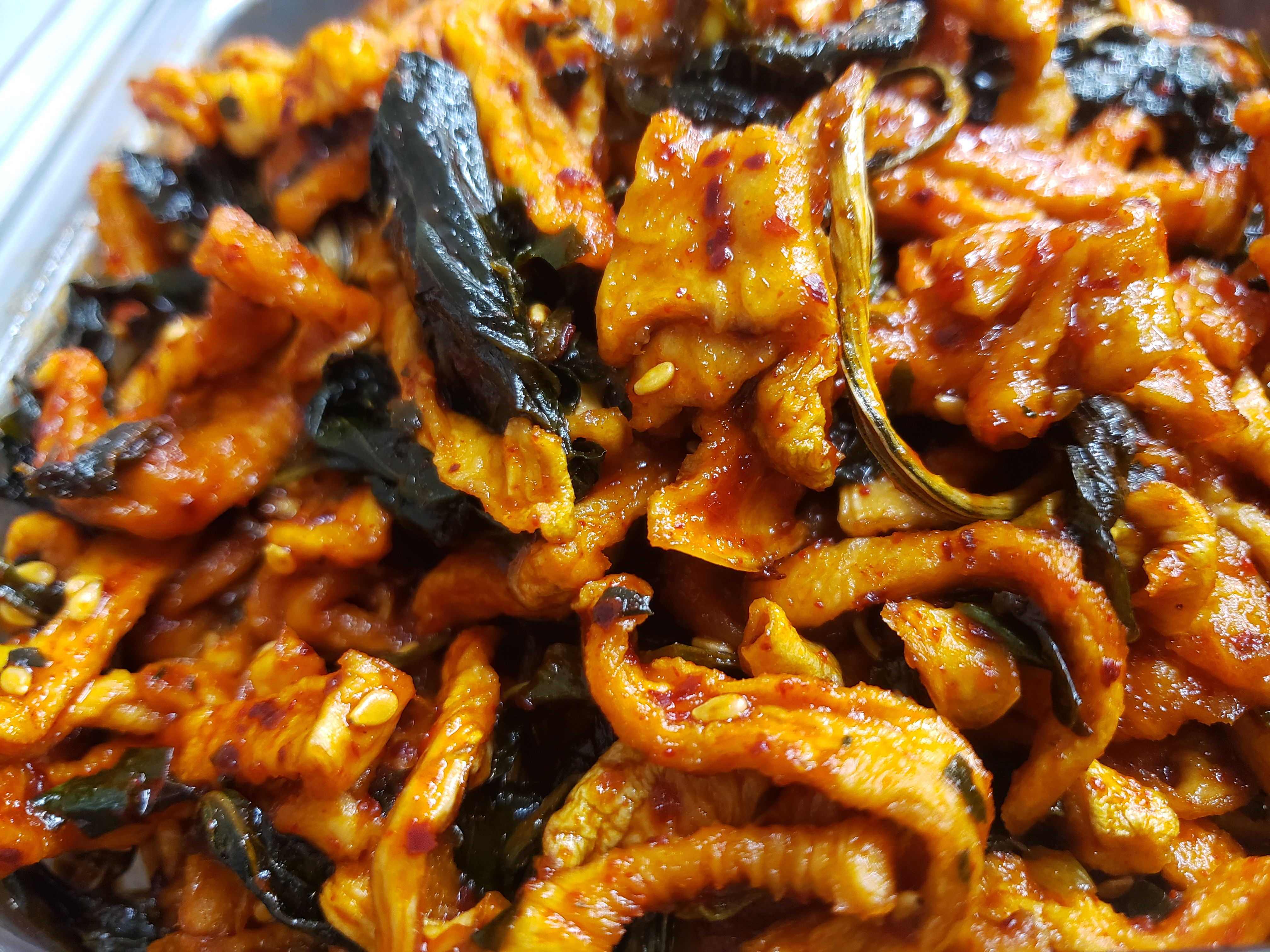
Image by hannaone: Mumallaengi Muchim
Mumallaengi Muchim Dried and Seasoned Korean Radish
무말랭이 무침 | maneuljjong-bokkeum
The Korean radish (mu) can be prepared so many different ways. It can be grilled, fried, boiled in soups, or just eaten raw. Mu is mildly sweet and has a lighter bite than typical red radishes.
Mumallaengi highlights the essential Korean food preservation technique of drying vegetables in the summer sun. This ritual prevents spoilage and allows for consumption throughout the cold winter months. By drying, the radish becomes chewy and its flavor intensifies, providing a more concentrated "radish" taste. The addition of sweet spice takes the flavor profile to new heights. Typically, dried radish strips are made after Kimjang in the fall, when they are enjoyed as a side dish and packed into lunch boxes. Although this dish can be enjoyed year-round, it is most commonly prepared after Kimjang. Leftover radishes from this event were often dried and stored for future use to prevent freezing.
Mumallaengi Muchim is another classic banchan dish that is a perfect addition to a banchan array. It combines sweetness and spice for a flavorful dish.
Ingredients:
3/4 pound fresh garlic stems
1 tablespoon blended sesame/soy bean oil or vegetable oil
1 teaspoon sugar
1 teaspoon soy sauce
1/2 teaspoon salt
3 cloves cloves garlic
1 teaspoon rice wine
1 teaspoon pure toasted sesame oil
1 teaspoon sesame seeds
Directions:
Wash garlic stems in cold water and drain well.
Cut stems into one inch lengths.
Thin slice the garlic cloves from top to bottom
Cooking
Heat a pan over high heat then add oil.
Add garlic stems and stir fry until tender, three to four minutes.
Add soy sauce, sugar, rice wine, and salt and cook for an additional one to two minutes.
Add sliced garlic and sesame oil and cook for 30 seconds to one minute. Transfer to serving dish and garnish with sesame seeds.




Comment?