Recipes: Banchan - Maneuljjong-bokkeum
Article by Gil "hannaone"
© Copyright 2007-2026. All rights reserved.
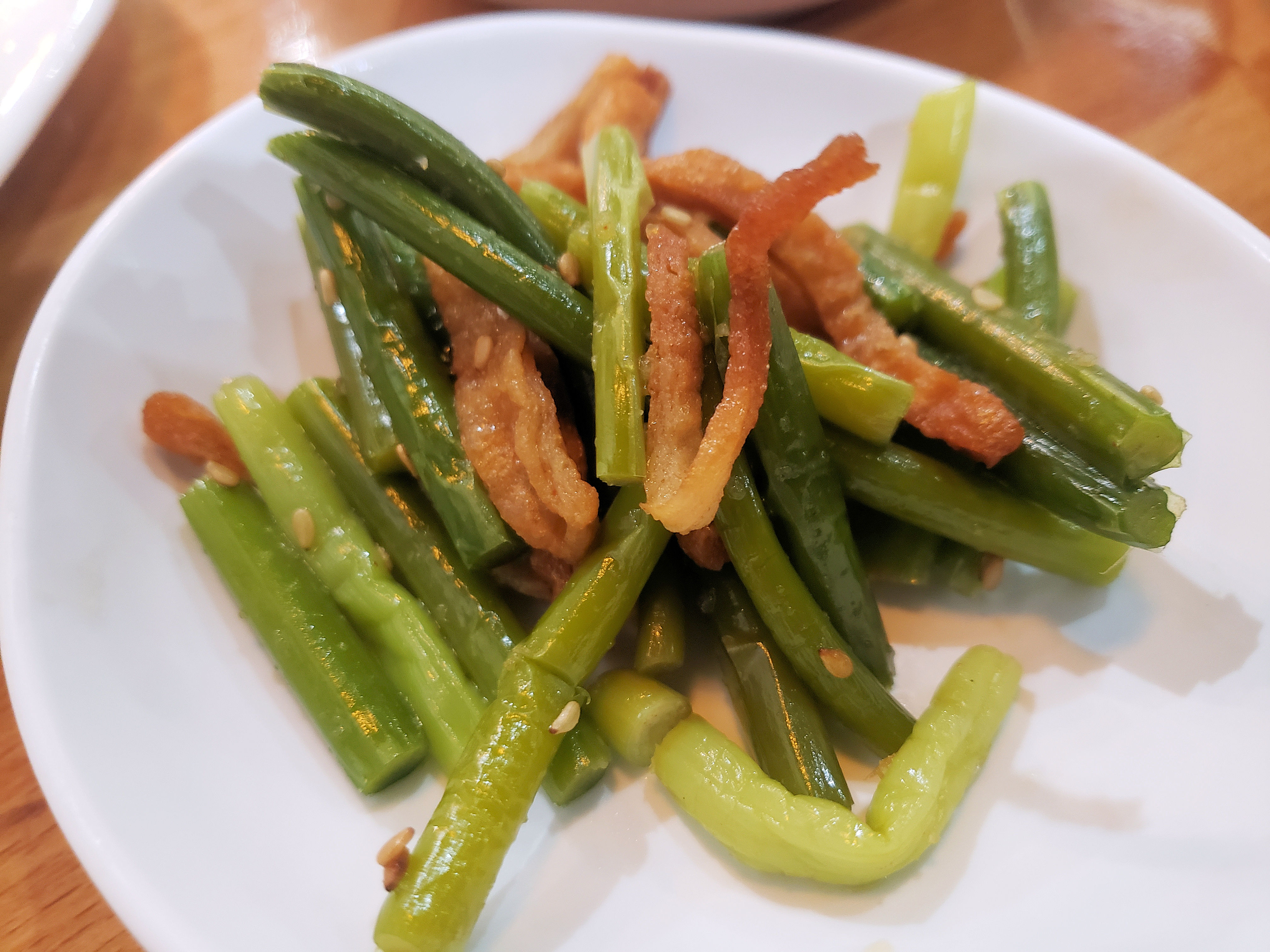
Image by hannaone: Maneuljjong-bokkeum
Maneuljjong-bokkeum Stir Fried Garlic Stems
마늘종볶음 | maneuljjong-bokkeum
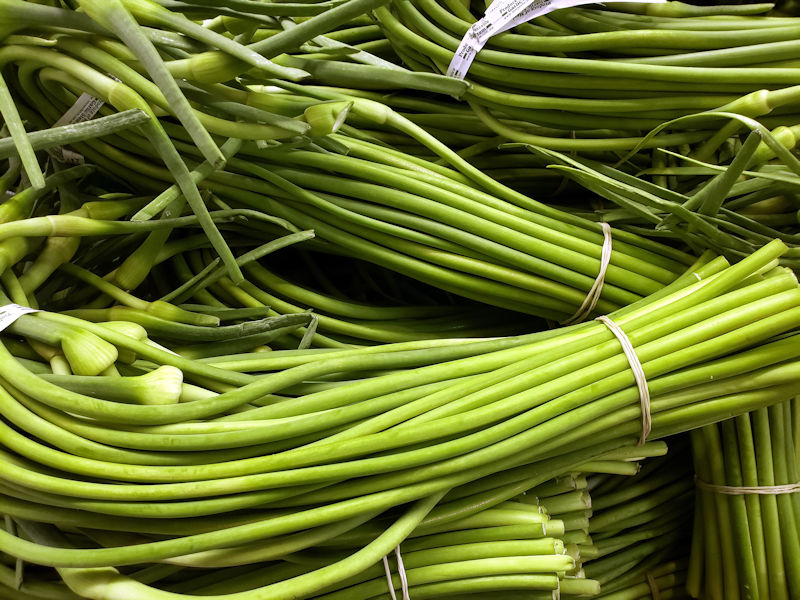
Korean cuisine traditionally utilizes all edible parts of plants and animals, and garlic provides more than its well-known cloves. Maneuljjong-bokkeum features the garlic scape—the long green stem removed in early summer—stir‑fried to highlight its mild heat and crisp texture.
Ingredients:
3/4 pound fresh garlic stems
1 tablespoon blended sesame/soy bean oil or vegetable oil
1 teaspoon sugar
1 teaspoon soy sauce
1/2 teaspoon salt
3 cloves cloves garlic
1 teaspoon rice wine
1 teaspoon pure toasted sesame oil
1 teaspoon sesame seeds
Directions:
Wash garlic stems in cold water and drain well.
Cut stems into one inch lengths.
Thin slice the garlic cloves from top to bottom
Cooking
Heat a pan over high heat then add oil.
Add garlic stems and stir fry until tender, three to four minutes.
Add soy sauce, sugar, rice wine, and salt and cook for an additional one to two minutes.
Add sliced garlic and sesame oil and cook for 30 seconds to one minute. Transfer to serving dish and garnish with sesame seeds.

Comment?