Recipes: Banchan - Maneul-jangajji
Article by Gil "hannaone"
© Copyright 2007-2026. All rights reserved.
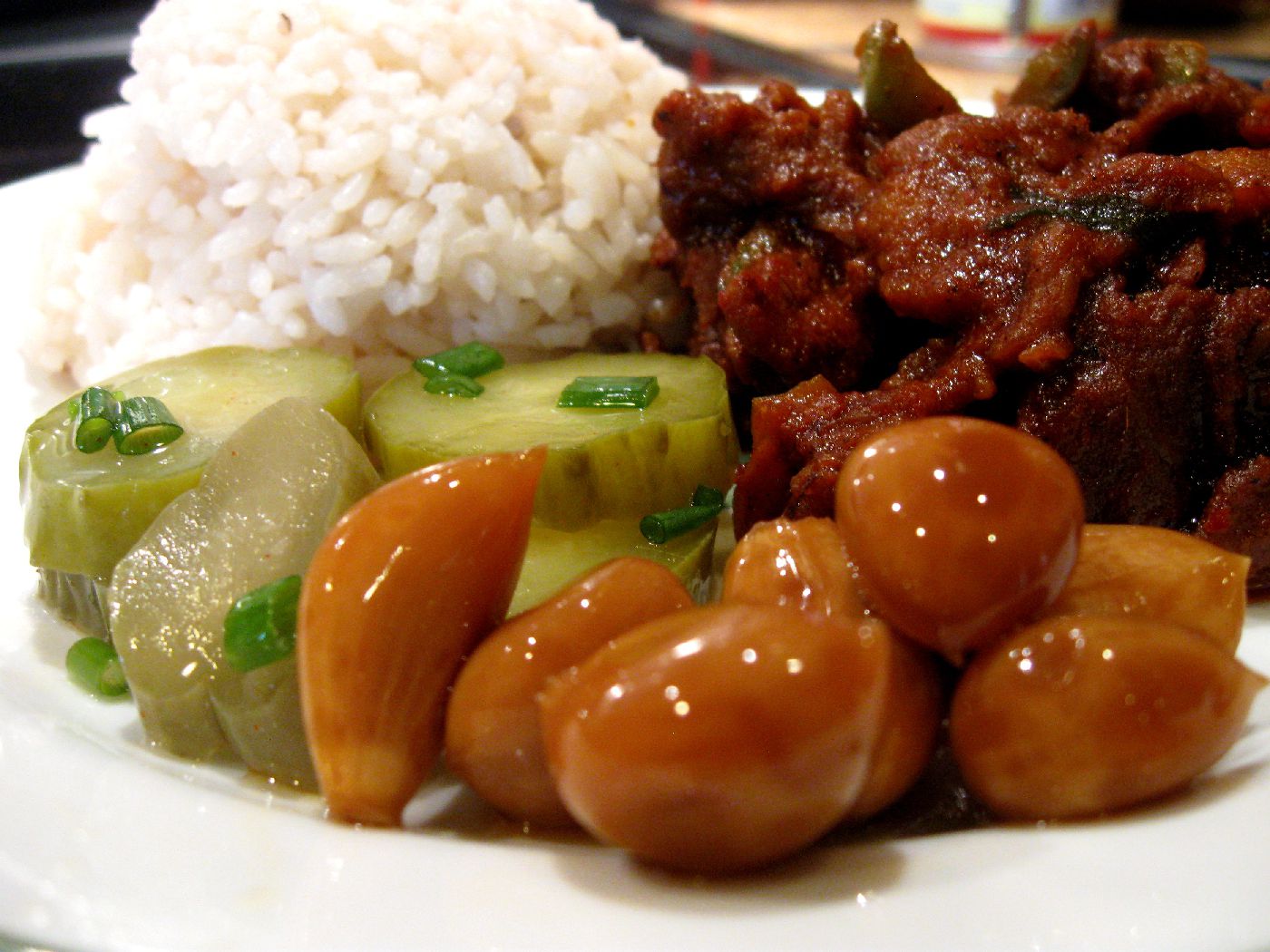
Image by hannaone: Maneul-jangajji with a meal of Jeyuk Bokkeum and rice
Maneul-jangajji Soy Pickled Garlic
마늘장아찌 | maneul-jangajji
🧄 Maneul‑Jangajji (Korean Pickled Garlic)
Maneul‑jangajji is a salty, crunchy, lightly sweet‑and‑sour pickle with a deep soy‑garlic aroma. It keeps beautifully for months and works as a banchan, a palate‑cleansing side, or—if you’re like many of us—a snack eaten straight from the jar.
Ingredients
First Stage
- 10 heads garlic
- 3/4 cup water
- 1 cup soy sauce
- 1 1/4 cups vinegar
- 2 tablespoons salt
Second Stage
- Brine from first stage
- 1/2 cup mulyeot (Korean malt syrup)
Substitutions:
- 1/4 cup sugar, or
- 1/2 cup brown sugar, or
- 1/4 cup honey
Directions
First Stage: Preparing the Garlic
- Remove the outer layers of skin from each garlic head, leaving a thin layer intact.
- Rinse thoroughly and drain.
- Place the garlic heads into a clean jar.
- In a pot, combine water, soy sauce, vinegar, and salt. Stir until the salt dissolves.
- Bring the mixture to a boil and cook for 2–3 minutes.
- Pour the hot brine over the garlic.
- Place a small dish or weight on top to keep the garlic submerged.
- Seal the jar and let it sit in a cool, dark place for 7–10 days.
Second Stage: Sweetening the Brine
- Pour the brine from the jar into a pot.
- Add mulyeot (or your chosen substitute).
- Bring to a boil, skimming off any foam.
- Reduce heat and simmer gently for about 5 minutes.
- Pour the hot brine back over the garlic.
- Seal the jar and refrigerate for 7–14 days.

Comment?