Recipes: Banchan - Kong and Sukju Namul
Article by Gil "hannaone" © Copyright 2007-2026. All rights reserved.
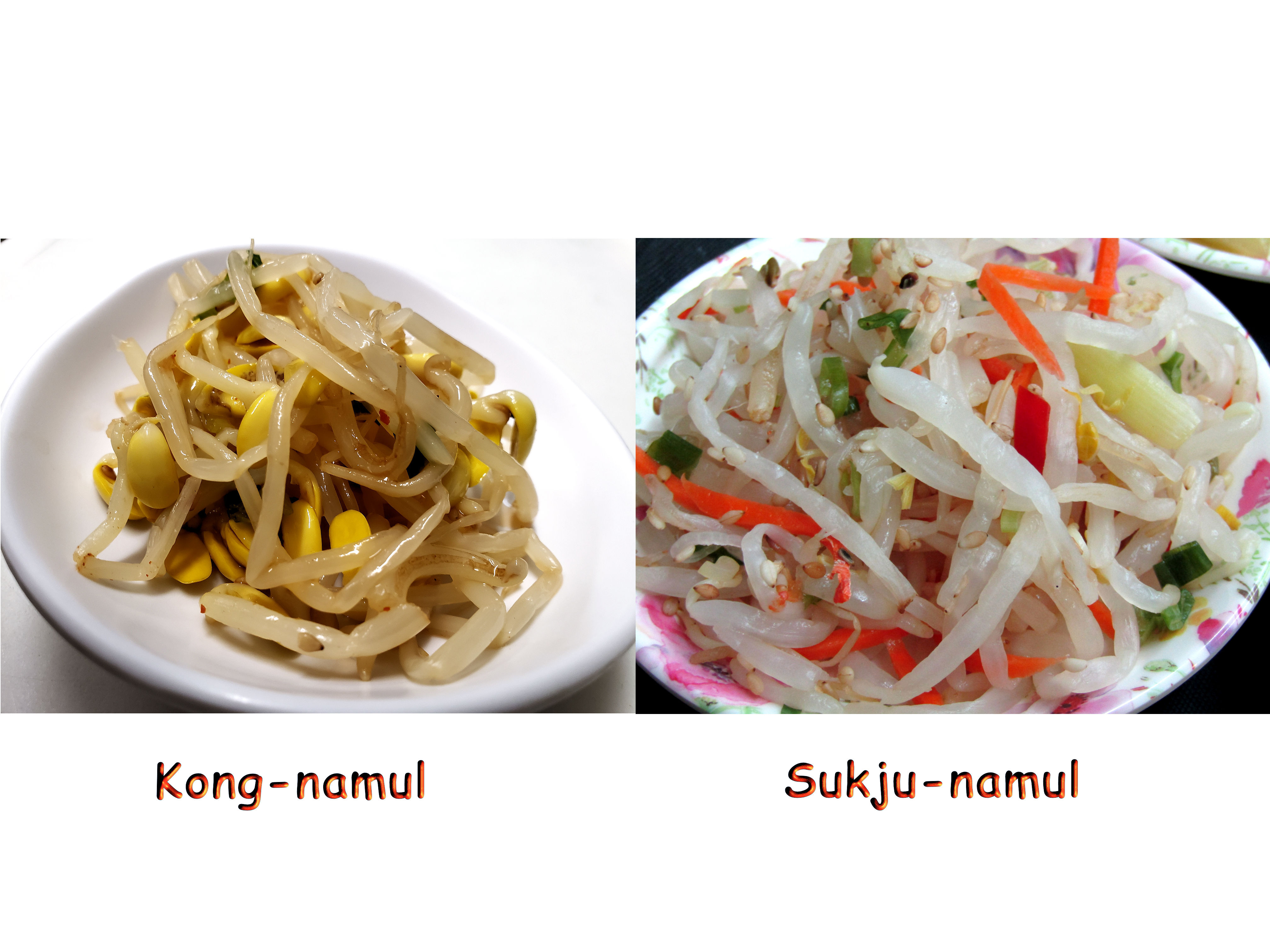
Image by hannaone: Kong and Sukju namul
콩나물 | kong-namul 숙주나물 | sukju-namul
Beansprout Namul (숙주나물 & 콩나물)
For a light, refreshing taste and satisfying crunch, Beansprout Namul is one of the simplest and most beloved Korean side dishes. Whether made with mung bean sprouts (sukju namul) or soybean sprouts (kongnamul), this dish offers versatility, nutrition, and a clean flavor that complements any meal.
There are two common preparation methods:
- Method 1 is typically used for sukju namul (mung bean sprouts), which cook quickly and have a delicate texture.
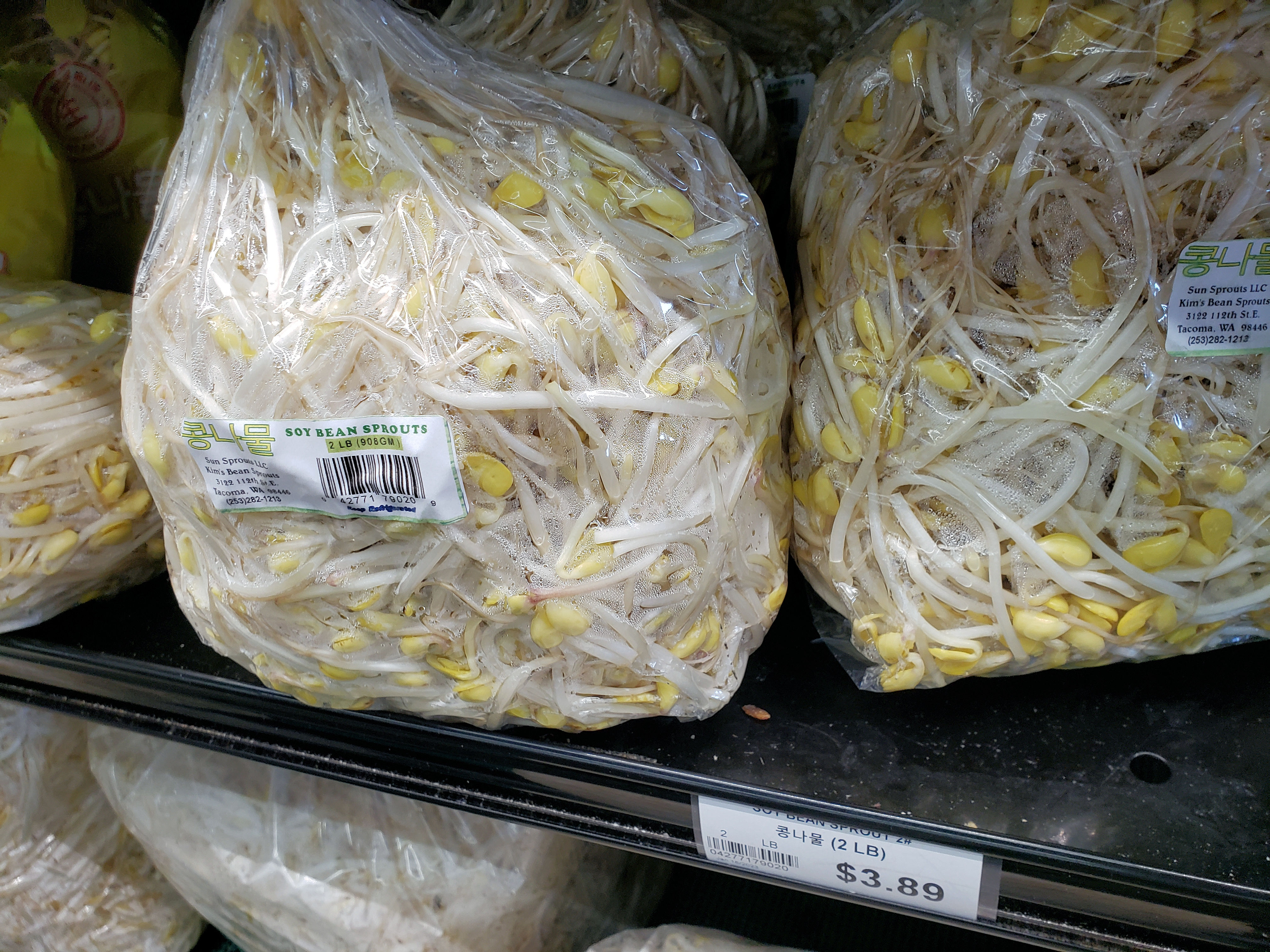
- Method 2 is suited for kongnamul (soybean sprouts), which require slightly longer cooking to soften their thicker stems and nutty heads.
However, both methods are interchangeable depending on what’s available. The key is to keep the seasoning light and let the natural freshness of the sprouts shine.
Method 1
16 ounces fresh mung bean sprouts
1 small carrot, shredded
2 green onions, chopped
1 teaspoon sea salt (more to taste)
1 teaspoon toasted sesame seeds
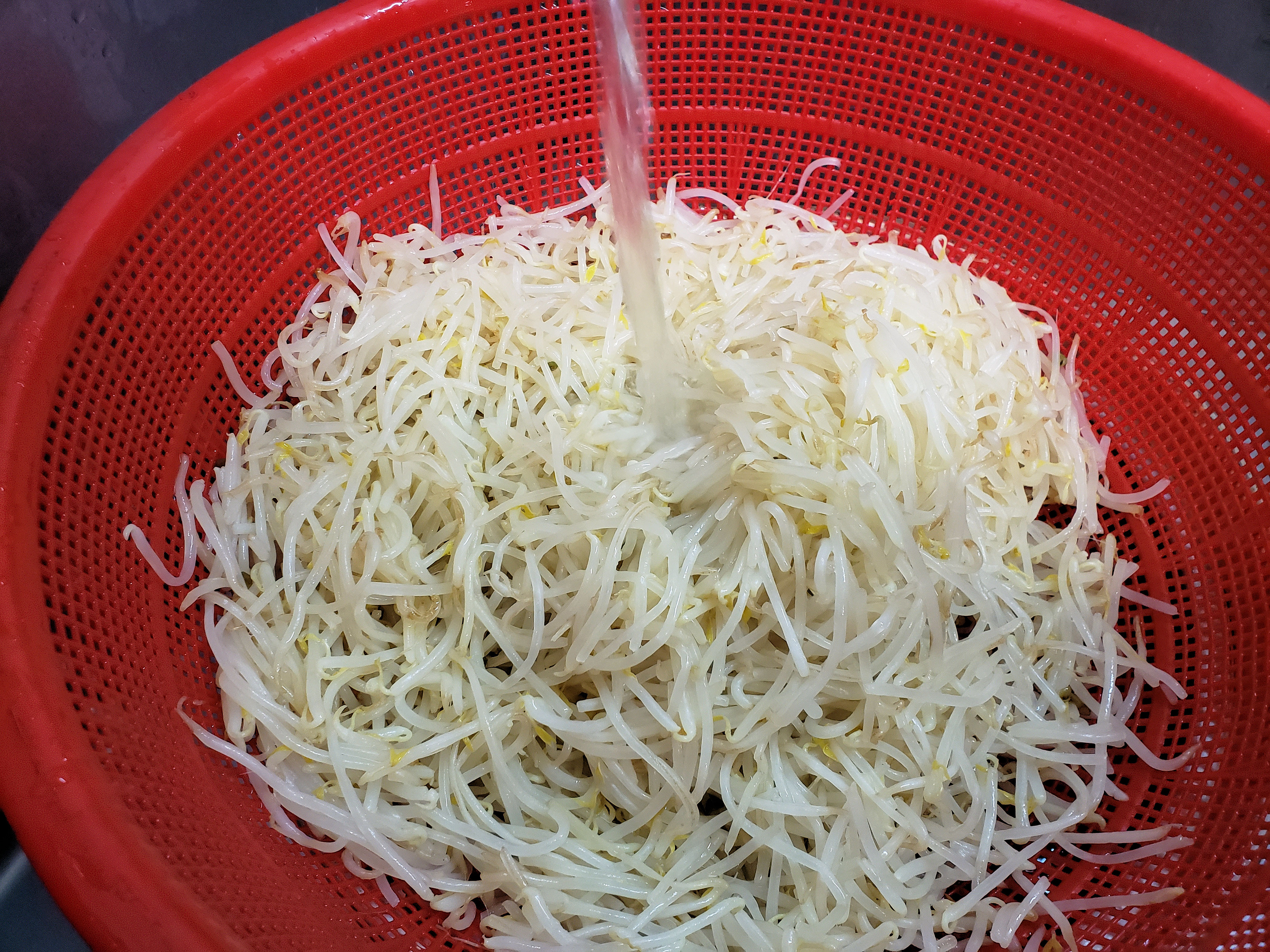
Rinse the bean sprouts in cold water, removing any loose shells from the heads. For aesthetics, you can also pinch off the "tails".
Bring a medium to large pot (big enough to hold the bean sprouts) of water to a full rolling boil.
Add the bean sprouts and the shredded carrot to the pot, stirring/turning to immerse everything. Remove from heat and let stand about one minute.
Pour into a colander or draining basket, and rinse immediately with cold water, then let drain.
Place the beansprout/carrot into a mixing bowl, sprinkle with salt, add the chopped green onions and sesame seeds, then toss until well mixed.
Chill and serve.
Method 2
16 ounces fresh soy bean sprouts
1 green onion, chopped
2 cloves garlic, minced
1 ½ teaspoons sea salt
1 tablespoon roasted sesame oil
2 teaspoons toasted sesame seeds
½ teaspoon red chili flakes
Rinse the bean sprouts in cold water, removing any loose shells from the heads. For aesthetics, you can also pinch off the "tails".
Bring a medium to large pot (big enough to hold the bean sprouts) of water to a full rolling boil.
Add the bean sprouts to the pot and boil about two minutes.
Remove from heat, drain, and rinse immediately with cold water then let drain.
Add all ingredients to a mixing bowl and toss until well mixed.
Chill and serve.
Story Time
Bean sprouts (콩나물, kongnamul) have been part of Korean cuisine since at least the Three Kingdoms period, with records of their use dating back over a thousand years. They were valued both as a food source during famine and as a staple in everyday cooking.
🌱 Early History
- Three Kingdoms of Korea (57 BCE–668 CE): It is assumed that soybean sprouts were already consumed during this era.
- 935 CE (Foundation of Goryeo): A Taebong general, Bae Hyeon-gyeong, reportedly offered soybean sprouts to starving soldiers, highlighting their role as an emergency food.
- 13th Century: The medical text Emergency Folk Medicine Remedies records soybean sprout cultivation, showing their recognized nutritional and medicinal value.
📜 Joseon Dynasty Records
- Farm Management (농사직설): A Joseon-era farming and lifestyle book documented cooking methods for soybean sprout dishes.
- Literary Miscellany of Seongho: Notes that the poor often used sprouts to make juk (rice porridge), a simple survival food.
- Complete Works of Cheongjanggwan: Lists soybean sprouts as one of the main foods consumed during famine, underscoring their importance as a reliable, inexpensive source of nutrition.
🍲 Culinary Role in Korean Culture
- Staple Ingredient: Today, soybean sprouts are one of the most common and basic ingredients in Korean cooking.
- Side Dishes: Kongnamul-muchim (seasoned sprouts) and kongnamul-guk (clear sprout soup) are everyday staples.
- Ceremonial Use: Sprouts are often prepared as namul for ancestral rites (jesa), symbolizing simplicity and sustenance.
- Hangover Cure: Kongnamul-haejangguk (soybean sprout hangover soup) remains a beloved comfort food, especially in Jeonju.
🌍 Cultural Significance
- Symbol of Resilience: Because sprouts grow quickly and thrive in minimal conditions, they became a metaphor for survival and renewal in Korean culture.
- Regional Identity: Jeonju, in particular, is famous for its soybean sprout soup, linking the ingredient to local culinary heritage.
Historical Note:
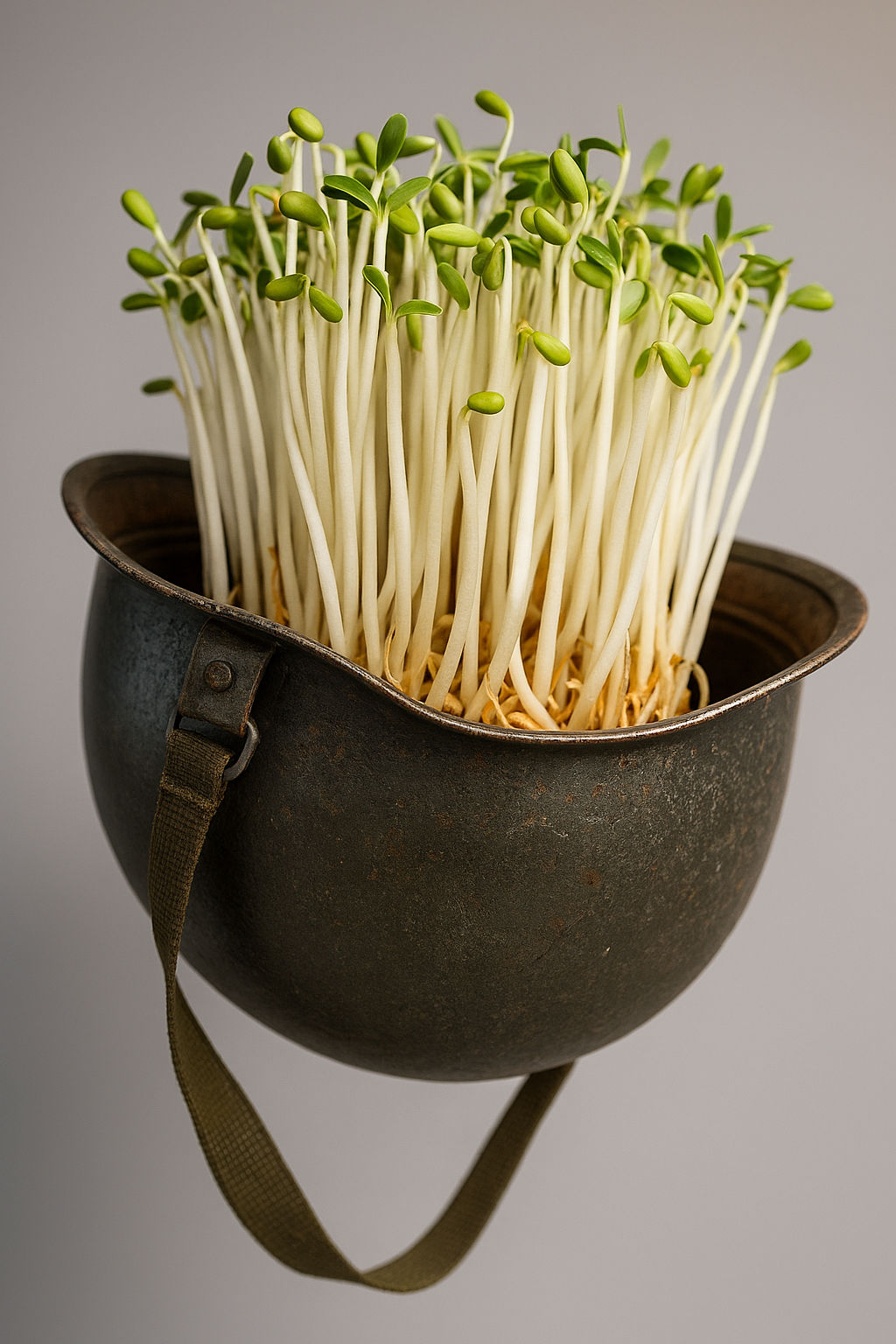
During times of war and hardship, Korean soldiers are said to have grown soybean sprouts (콩나물, kongnamul) inside their helmets to supplement meager rations. The sprouts were ideal because:
- Fast growth: Soybeans sprout in just a few days, even without soil.
- Minimal resources: They only need water and a dark, enclosed space—conditions a helmet could provide.
- Nutritional boost: Sprouts are rich in vitamin C, protein, and fiber, helping prevent deficiencies during long campaigns.
- Symbol of resilience: This practice became a metaphor for Korean ingenuity and survival under pressure.
While it’s difficult to pin down exact documentation, these stories reflect the deep cultural association of bean sprouts with endurance and resourcefulness. They were not only a survival food during famine but also a practical solution in military life.
In short: Bean sprouts in Korea carry a dual legacy—a humble survival food during famine and hardship, and a beloved everyday ingredient that embodies resilience, simplicity, and nourishment.
Comment?