Recipes: Banchan - Kkaennip-jangajji
Article by Gil "hannaone" © Copyright 2007-2026. All rights reserved.
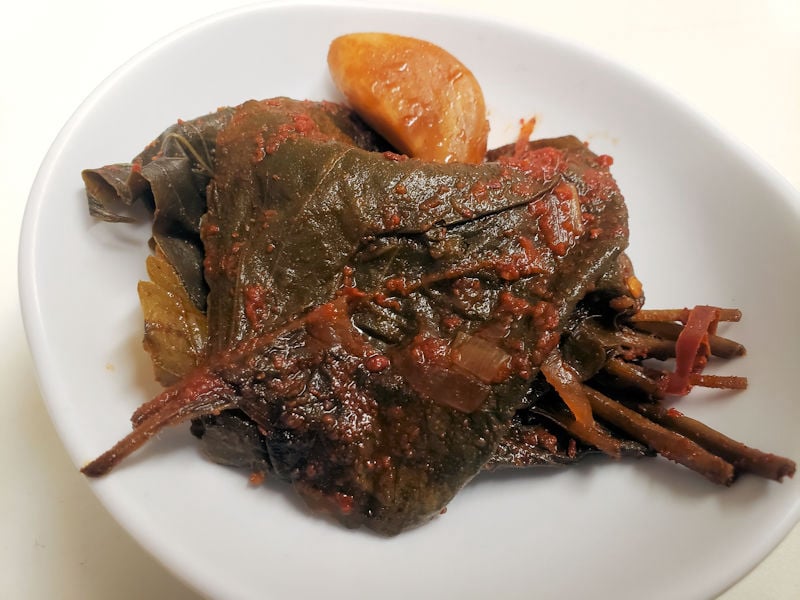
Image by hannaone: Kkaennip-jangajji
깻잎 장아찌 | kkaennip-jangajji
Lightly sweet, garlicky, and salty, with a hint of mint and a touch of spicy heat. Kkaenip Jangajji makes a perfect side dish to accompany Korean grill or Ssam style meals.
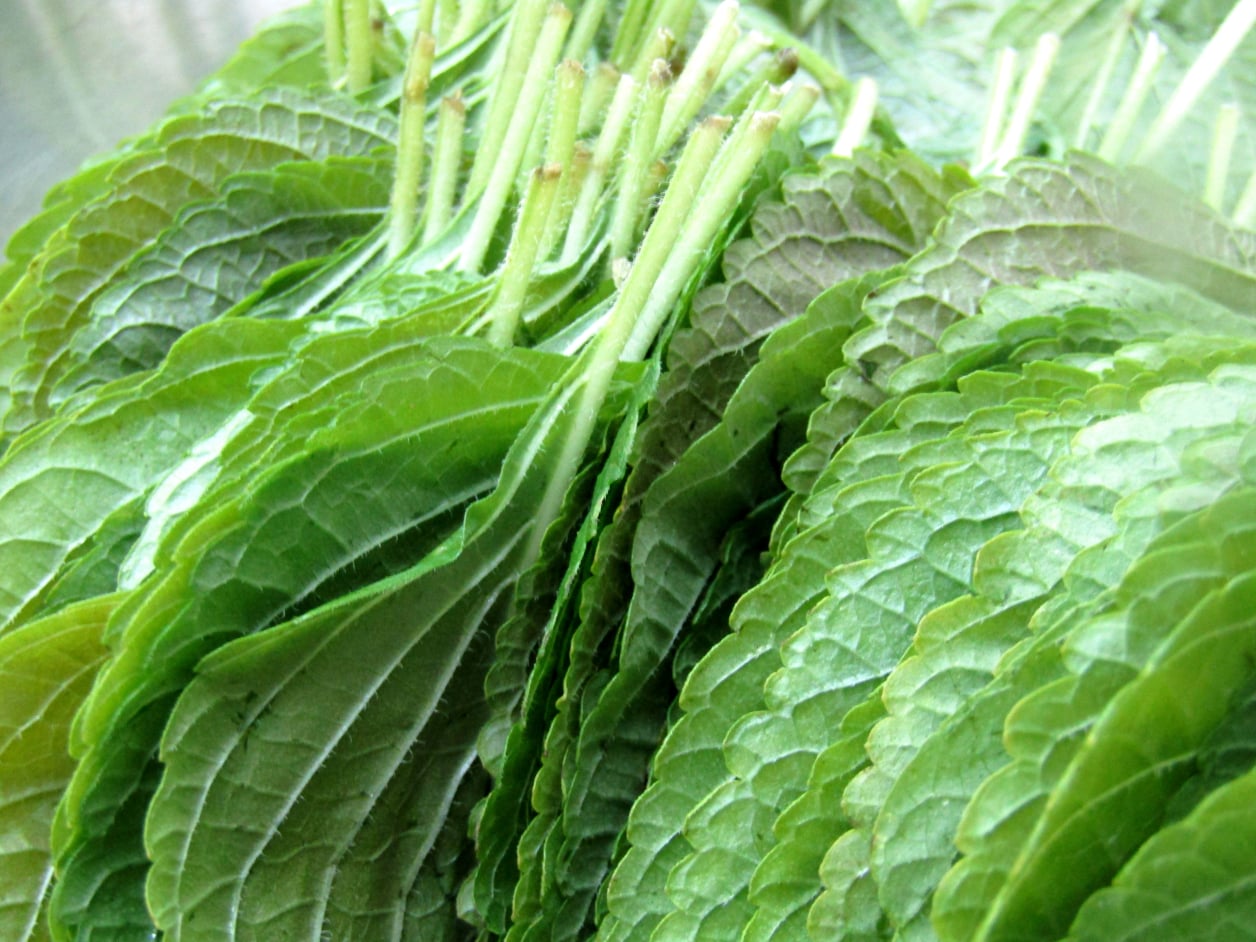
Kkaennip translates literally as "Leaf of Kkae".
Deulkkae is the Korean name for Korean Perilla, a plant in the mint family.
Note: Korean references to kkaennip, (깻잎) and tŭlkkae/deulkkae (들깨) are commonly mis-translated as sesame or wild sesame.
Ingredients
4 bunches perilla leaves
3/4 cup soy sauce
1/4 cup water
1/2 teaspoon sugar
2 cloves fresh garlic, peeled
1 teaspoon fine ground red chile pepper
Optional
1 medium Asian pear or Semi Sweet apple, thin sliced
2 green chili peppers, chopped
Final mix
white sesame seeds
fine ground chili pepper
Directions
Preparation
Rinse the leaves well in cold water, then drain.
Crush or chop the garlic.
Marinate
Place one perilla leaf in a bowl and drizzle with a small amount of the soy sauce. Repeat with each leaf.
Let stand about 45 minutes to one hour.
Remove the leaves from the bowl, pressing or squeezing gently so that the sauce remains in the bowl.
Place the leaves in a lidded bowl or jar.
Cooking
Transfer the soy sauce to a small pot, add the sugar, garlic, and chili pepper (and optional sliced Asian pear or apple) and heat over medium heat until the liquid just begins to boil.
Reduce heat and simmer for three to five minutes.
Remove from heat.
Final Mix
Gently separate the leaves into small bunches (5 to 10 leaves).
Layer the small bunches in a seal able container, lightly sprinkling sesame seed and chili pepper over each layer. Each layer should face a different direction.
Pour the liquid over the leaves and seal the container.
Let stand at room temperature for six hours, then refrigerate.
Serve in small bunches as a side dish with Korean meals.
Story Time
Kkaennip jangajji (깻잎 장아찌), or pickled perilla leaves, is a traditional Korean side dish developed as part of Korea’s long history of food preservation, especially to endure harsh winters. It belongs to the broader category of jangajji (장아찌), non-fermented pickles preserved in soy sauce, vinegar, or brine.
🌿 Historical Background
- Origins in survival needs: Jangajji emerged in ancient Korea as a way to preserve vegetables before refrigeration. Families pickled seasonal produce to ensure food supplies during long winters.
- Difference from kimchi: Unlike kimchi, which ferments, jangajji relies on soy sauce, vinegar, or salt brine for preservation. This keeps vegetables crisp and flavorful rather than sour.
- Perilla leaves (kkaennip): Perilla (Perilla frutescens var. japonica) is a staple herb in Korean cuisine, prized for its aromatic, slightly minty flavor. Pickling them in soy sauce created a dish that could be stored and eaten with rice year-round.
🍚 Cultural Significance
- “Rice stealer” (밥도둑, bap-doduk): Kkaennip jangajji is nicknamed this because its salty, garlicky, umami-rich flavor makes plain rice irresistible.
- Regional variations: Some households prepare it with soy sauce and garlic for a savory profile, while others add chili flakes (gochugaru) for a spicier version, sometimes called kkaennip kimchi.
- Part of banchan tradition: As with other jangajji, it’s served as a small side dish to complement rice and main dishes, reflecting Korea’s emphasis on variety and balance in meals.
🧂 Preparation & Evolution
- Traditional method: Leaves are rinsed, stacked, and layered with soy sauce, garlic, sugar, and sometimes chili. They are left overnight to absorb flavors.
- Preservation role: Historically, jangajji allowed Koreans to enjoy vegetables out of season. Farmers often pickled excess harvests to avoid waste.
- Modern adaptation: Today, kkaennip jangajji is still popular in homes and restaurants, often prepared quickly but rooted in centuries-old preservation practices.
✨ Why It Endures
Kkaennip jangajji embodies Korean culinary resilience—transforming simple leaves into a dish that carries history, practicality, and cultural identity. Its enduring popularity lies in its ability to connect everyday meals with ancestral traditions of survival and flavor
Comment?