Recipes: Banchan - Dwaejigogi Jeon
jeon

Article by Gil "hannaone" © Copyright 2007-2026. All rights reserved.
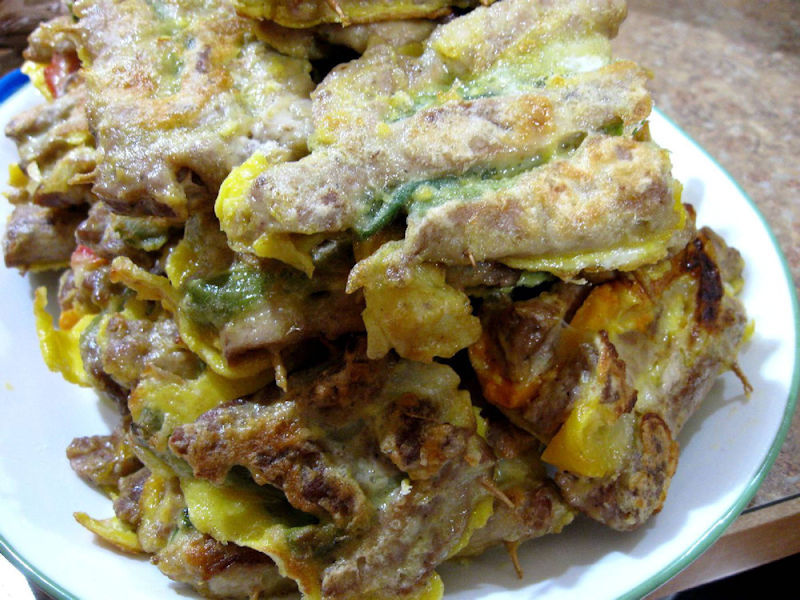
Image by hannaone: Dwaegigogi-jeon

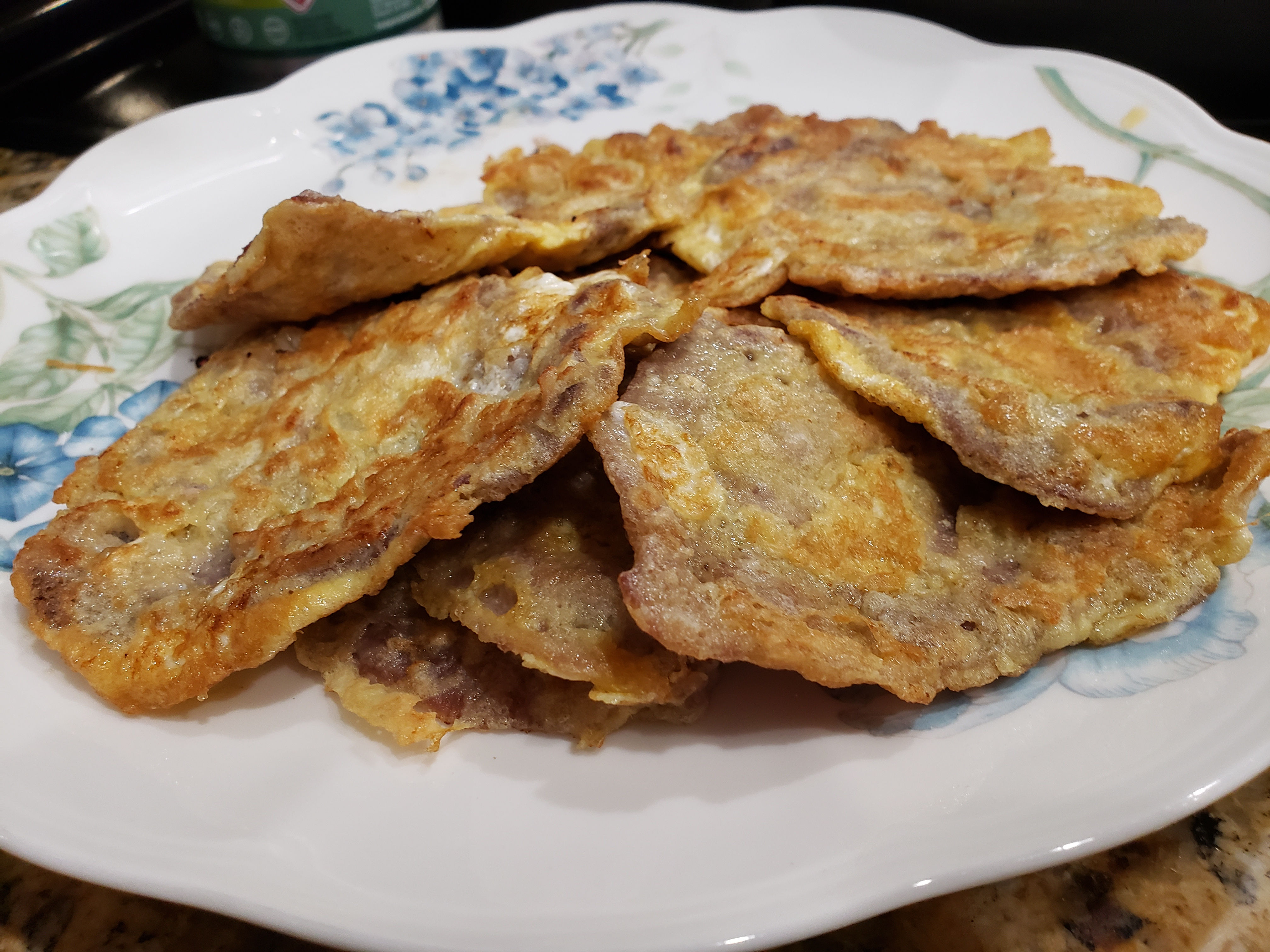
Dwaejigogi Jeon Pan Fried Pork Fillet


두부 전 | dwaejigogi-jeon

Jeon (Pan-fried Delicacies), are a variety of pan-fried meats, seafood, or vegetables which are usually dredged in four and egg before frying. Dwaegigogi-jeon is a common banchan served with Korean meals. The fried meaty flavor is a great counterpoint to many spicy or mild meals.

Ingredients
1 pound pork shoulder
2 medium eggs
3/4 cup flour
1/4 cup potato starch
salt
pepper
vegetable oil to pan fry

Marinade:
2 tablespoons soy sauce
2 tablespoons water
1 ounce ginger, peeled
4 cloves garlic, peeled
2 tablespoons honey
1 teaspoon rice wine
1 teaspoon lemon juice


Directions:

Mix Marinade
Place the first four ingredients in a blender and liquify.
Transfer to a mixing bowl, add the rest of the marinade ingredients and mix well. Let stand 1 hour at room temperature.
Cut meat into roughly 1/2 inch by 1 1/2 inch strips.
Lightly salt & pepper each strip and let stand for ten minutes.
Add meat to marinade and let stand in the refrigerator for 2 hours.

Flour Mix:
Mix the flour, starch, a shake or two salt, and pepper.

Cook:
Pat the meat dry after removing it from the marinade.
Combine flour and starch.
Add 2 to 3 tablespoons cooking oil to a non stick pan over medium heat.
Dip meat in flour mix, dip in beaten egg, and fry for about 2 minutes per side (just lightly browned).
Serve with a soy sauce based dipping sauce.
It can be served as a side dish (Ban Chan), as part of a meal, as a drinking snack with kimchi, or as an appetizer.

Variation:
Place the marinated meat on mini skewers with asparagus stalks, different colored bell pepper, and/or green onion all cut to the same length as the meat.
Dredge through the flour mix and place in a lined steamer tray.
Steam the pork skewers for about five minutes, or until the flour/starch coating sets.
Remove from steam tray and dip in egg, then fry as above.

Story Time

🐖Some History

🌿 1. Jeon as a Culinary Category
To understand dwaejigogi‑jeon, you have to start with jeon itself.
Jeon refers to a wide family of savory, pan‑fried foods—vegetables, meats, seafood, herbs, even flowers—dipped in flour and egg and cooked in oil. Its history stretches back centuries, with documented evolution across 36 cookbooks from the late 1800s to 1999, showing how types and cooking methods changed over time.
Historically, jeon was associated with:
- Banquet tables (진연) in royal courts
- Ritual food (제사) in ancestral rites
- Seasonal celebrations
- Home cooking, especially during holidays like Chuseok and Seollal
It was prized for being both humble and ceremonial—simple ingredients elevated through careful preparation.

🐷 2. The Place of Pork in Jeon
While vegetable and seafood jeon appear more frequently in early records, meat‑based jeon—especially beef and pork—became more common as Korea modernized and meat became more accessible.
Dwaejigogi‑jeon specifically features:
- Thinly sliced pork
- Light flour and egg coating
- Gentle pan‑frying
One source notes that its origins lie in “humble beginnings when ingredients were simple yet flavorful”, emphasizing its roots in everyday home cooking rather than court cuisine.
This tracks with broader food history:
- Pork became a more common household protein in the 20th century.
- Jeon techniques were already well‑established.
- Combining the two was a natural evolution of Korean frying traditions.

🍳 3. Why Dwaejigogi‑jeon Endures
Even though it’s not as famous as donggeurangttaeng or hobak‑jeon, dwaejigogi‑jeon persists because it hits a sweet spot:
- Affordable
- Quick to prepare
- Comforting and familiar
- Flexible (marinated or plain, spicy or mild)
It’s the kind of dish that shows up on home tables, in lunchboxes, and at gatherings where variety is prized.

🧭 4. Cultural Significance
While not tied to a specific ritual, dwaejigogi‑jeon reflects:
- Korea’s shift from agrarian scarcity to modern abundance
- The blending of traditional cooking methods with accessible ingredients
- The way Korean cuisine adapts while preserving its core techniques
It’s a great example of how everyday dishes carry quiet historical stories. 

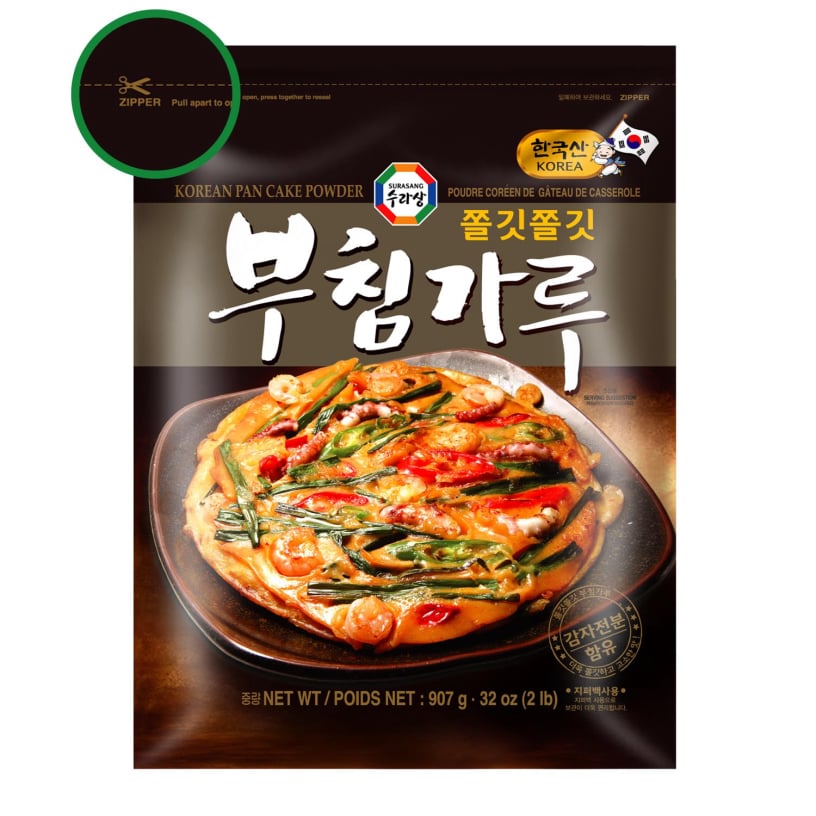
jeon

Find Korean ingredients and more on Amazon, and have them shipped to your door.

Find it on Amazon
Links are to products at Amazon. Purchases made through these links may earn a commission that helps to support this site. 
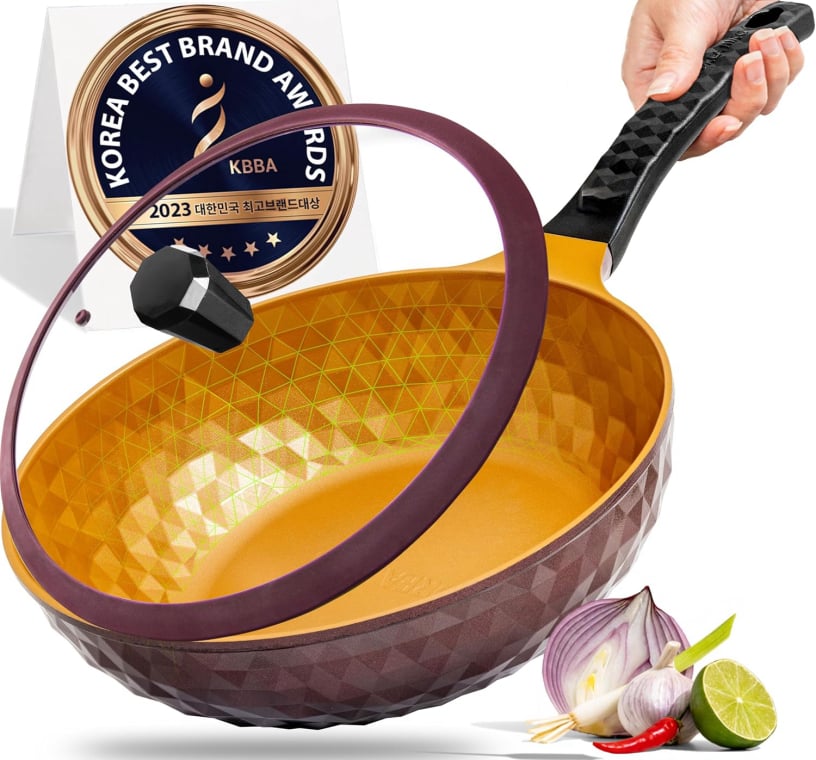
wok
Check Amazon.com (US)

Diamond Stir Fry Hybrid Wok

Check Amazon.ca (Canada)

Comment?

hanna-one.com
The Original hannaone

 © 2007–2026 hanna-one.com℠ — All Rights Reserved
This website reflects the original work of hannaone. Korean recipes featured here have been reproduced without permission by the current registrant of hannaone.com.
Affiliate Disclosure:
hannaonetwo.com / hanna-one.com℠ participates in the Amazon Services LLC Associates Program, an affiliate advertising program designed to earn fees by linking to Amazon.com. Purchases made through these links help support this site. As an Amazon Associate, we earn from qualifying purchases.
Image Credits:
Most of the images/photos on this site are by Gil "hannaone", the owner of this website.
Some images on this site are sourced from contributors to Pixabay.com, a royalty‑free image and stock photo platform.  
Additionally, some images have been created using AI prompts by hannaone.