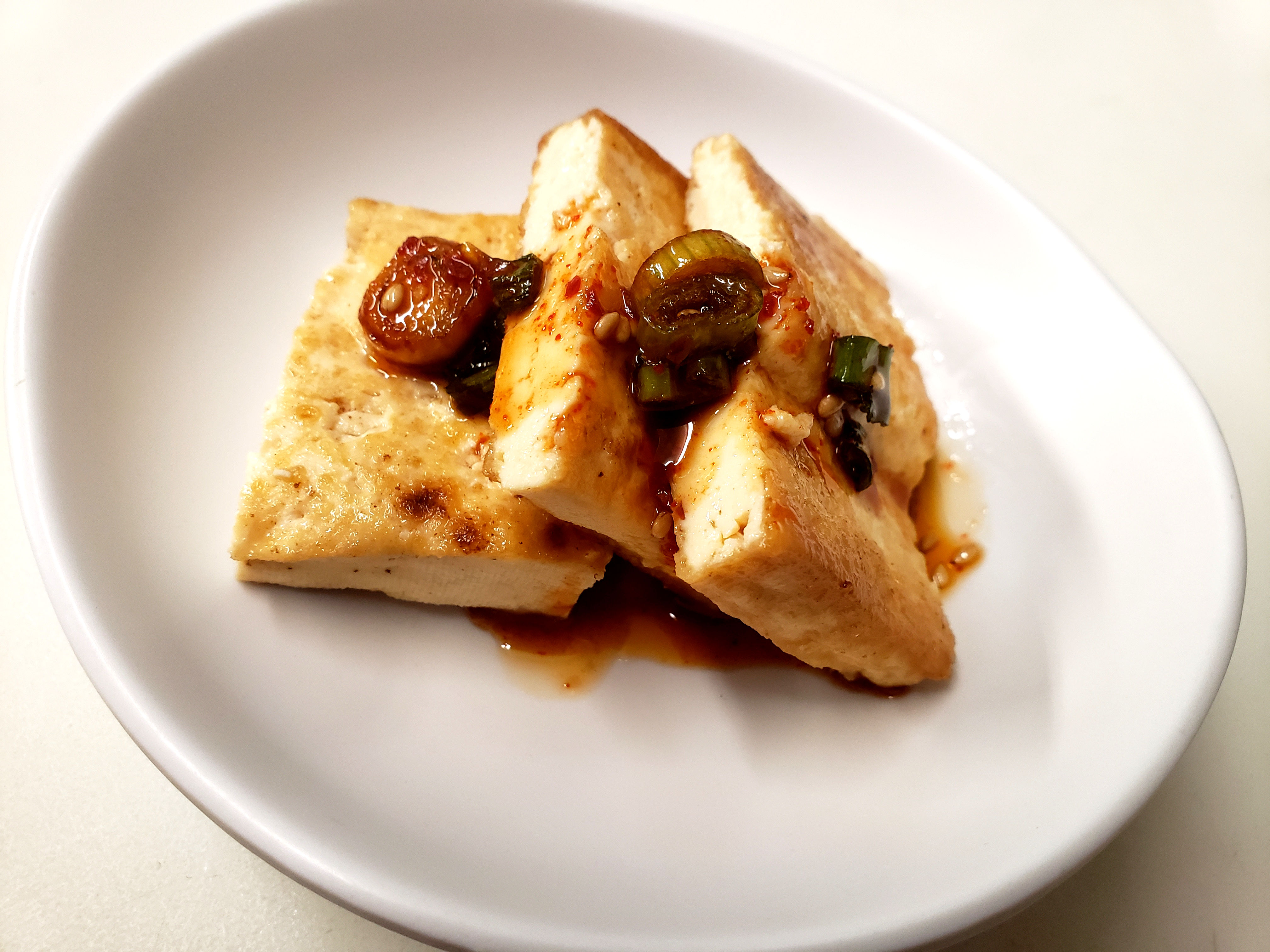
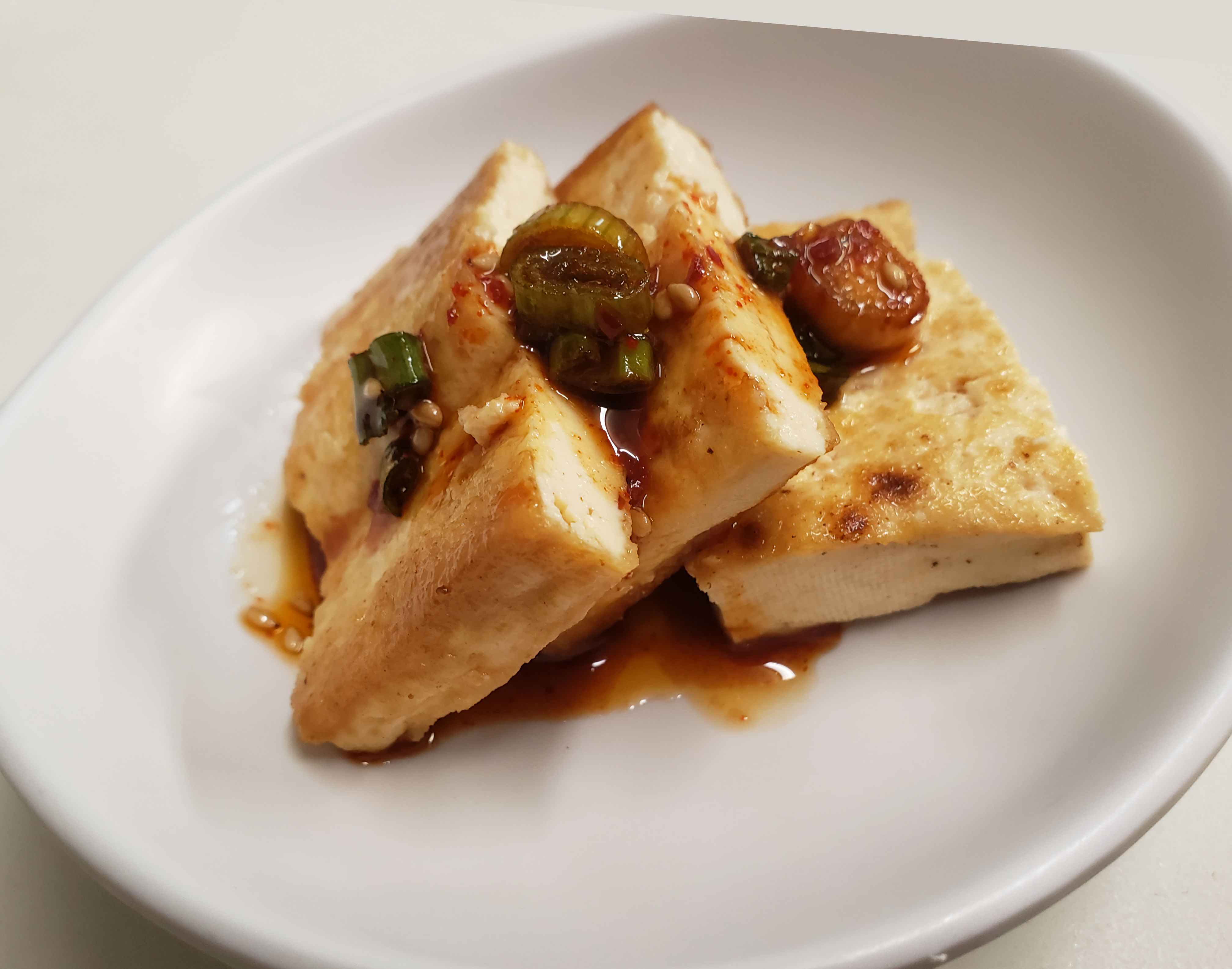
Dubu-buchim (두부부침) is a humble yet beloved Korean side dish of pan-fried tofu, rooted in everyday home cooking traditions. It’s not a ceremonial or festival food, but rather a practical, comforting banchan that reflects how tofu became a staple in Korean households.
🥢 Origins and Cultural Context
- Tofu in Korea: Tofu (dubu) was introduced to Korea from China centuries ago, likely during the Goryeo dynasty (918–1392). It quickly became part of Buddhist temple cuisine, since monks avoided meat and relied on soy-based proteins.
- Everyday Dish: Dubu-buchim emerged as a simple way to prepare tofu—slice, fry, and serve with a soy-based dipping sauce. Unlike elaborate dishes, it was valued for speed and accessibility. Families could make it in minutes when they needed “one more side dish” on the table.
- No Fuss Cooking: Unlike Western tofu preparations that often involve pressing or coating, Koreans traditionally just pat the tofu dry, pan-fry until golden, and drizzle with sauce. This simplicity is part of its charm.
🍲 Evolution of the Dish
- Classic Style: Traditionally, dubu-buchim is served plain with a dipping sauce of soy sauce, garlic, sesame oil, and gochugaru (chili flakes).
- Modern Variations: Over time, cooks began layering flavors—leading to dishes like dubu-jorim (braised tofu), where fried tofu is simmered in a savory-spicy sauce.
- Restaurant & Home: While it’s common in restaurants, dubu-buchim is most closely tied to home kitchens. It’s the kind of dish mothers and grandmothers made regularly, reinforcing its identity as comfort food.
🌱 Symbolism and Everyday Role
- Accessibility: Tofu was inexpensive and widely available, making dubu-buchim a democratic dish across social classes.
- Comfort Food: Many Koreans recall it as a nostalgic taste of childhood—crispy outside, soft inside, with a sauce that balances salty, spicy, and nutty flavors.
- Health & Balance: In Korean food philosophy, tofu represents balance—light, clean, and protein-rich, often paired with stronger-flavored dishes to round out a meal.
✨ Why It Endures
- Quick & Versatile: Ready in 10 minutes, it fits seamlessly into the banchan tradition where multiple small sides accompany rice and soup.
- Cultural Continuity: Even as Korean cuisine globalizes, dubu-buchim remains a staple because it embodies the everyday Korean table—simple, nourishing, and communal.
So, dubu-buchim isn’t about grand history or royal banquets—it’s about the daily rhythm of Korean households, a dish that has carried tofu from temple kitchens into modern family dining tables, always offering comfort in its crisp, golden slices.
Would you like me to trace how tofu itself traveled into Korea and became integrated into temple and home cooking? That could give us a deeper historical arc beyond just the dish.

Comment?