Recipes: Banchan - Doraji-namul
Article by Gil "hannaone" © Copyright 2007-2026. All rights reserved.
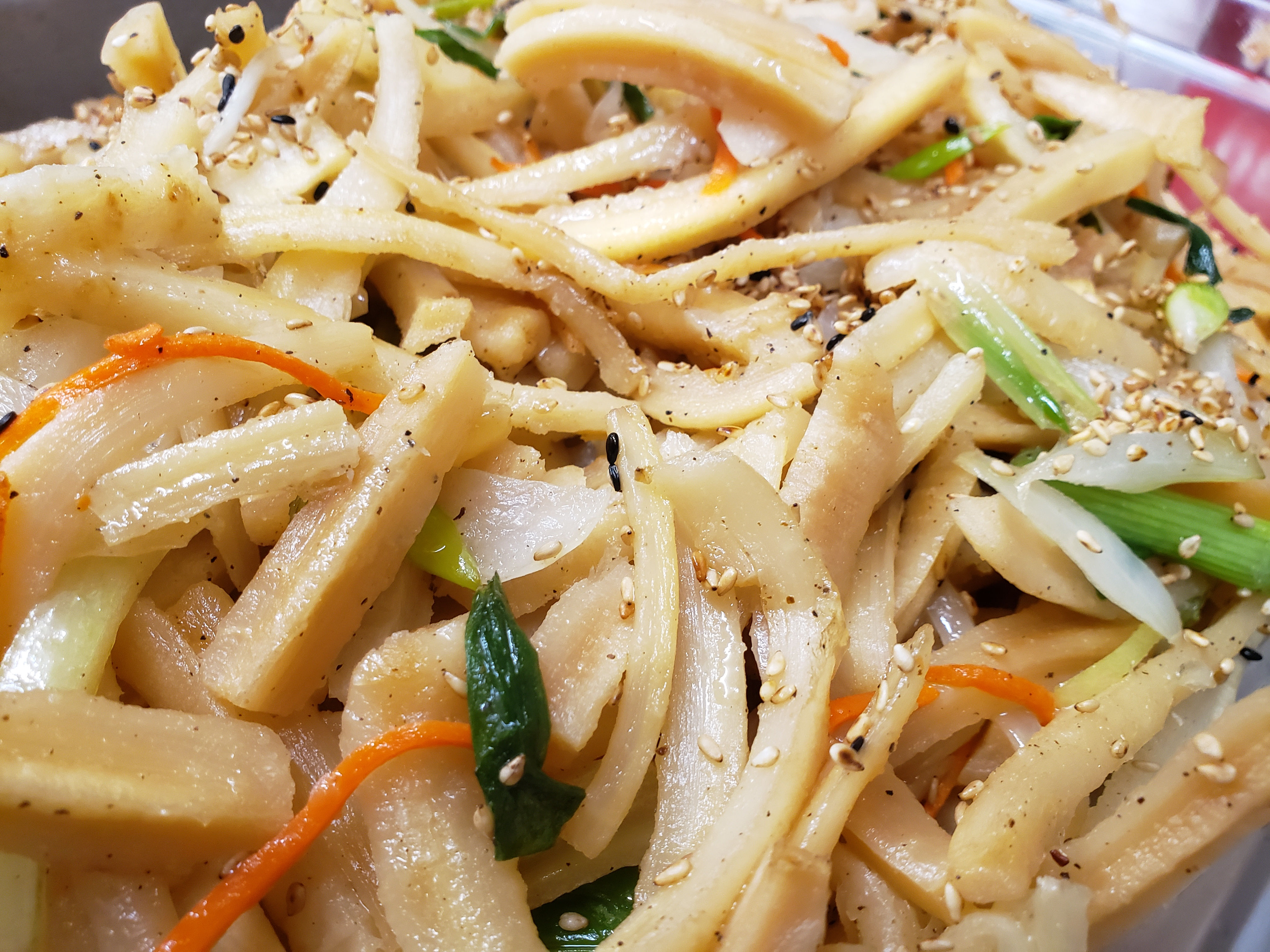
Image by hannaone: Doraji-namul
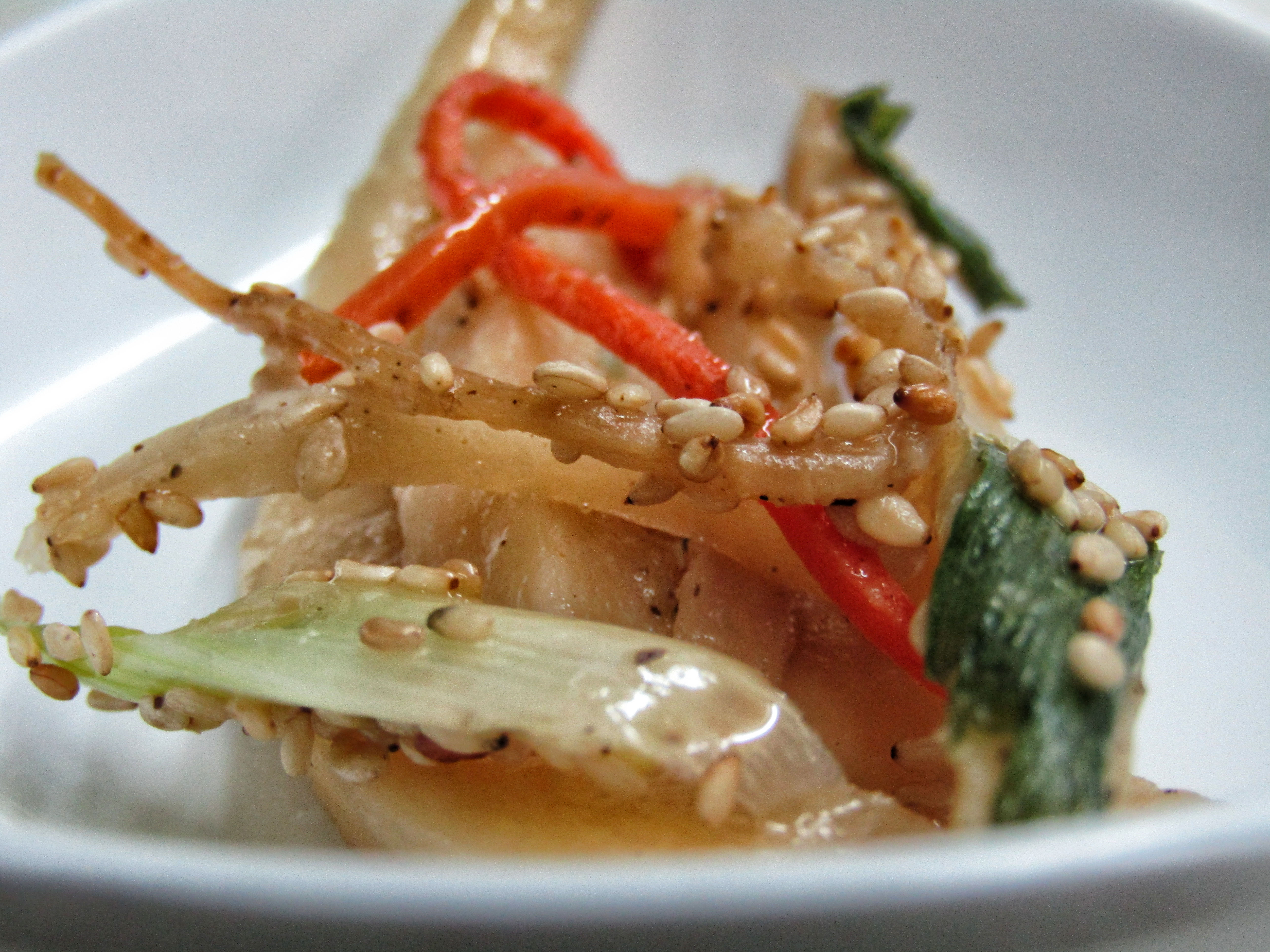
Doraji-namul Sauteed Bellflower Root
도라지 나물 | doraji namul
Doraji namul is a traditional Korean side dish made from the root of the bellflower plant, known as doraji. The dish has a crunchy texture and a slightly bitter taste and is often served in three colors, known as samsaek namul, alongside other vegetable sides like spinach and fernbrake.
A staple in Korean meals, doraji namul is also used in traditional ceremonies and provides a contrasting color and texture to bibimbap.
Ingredients
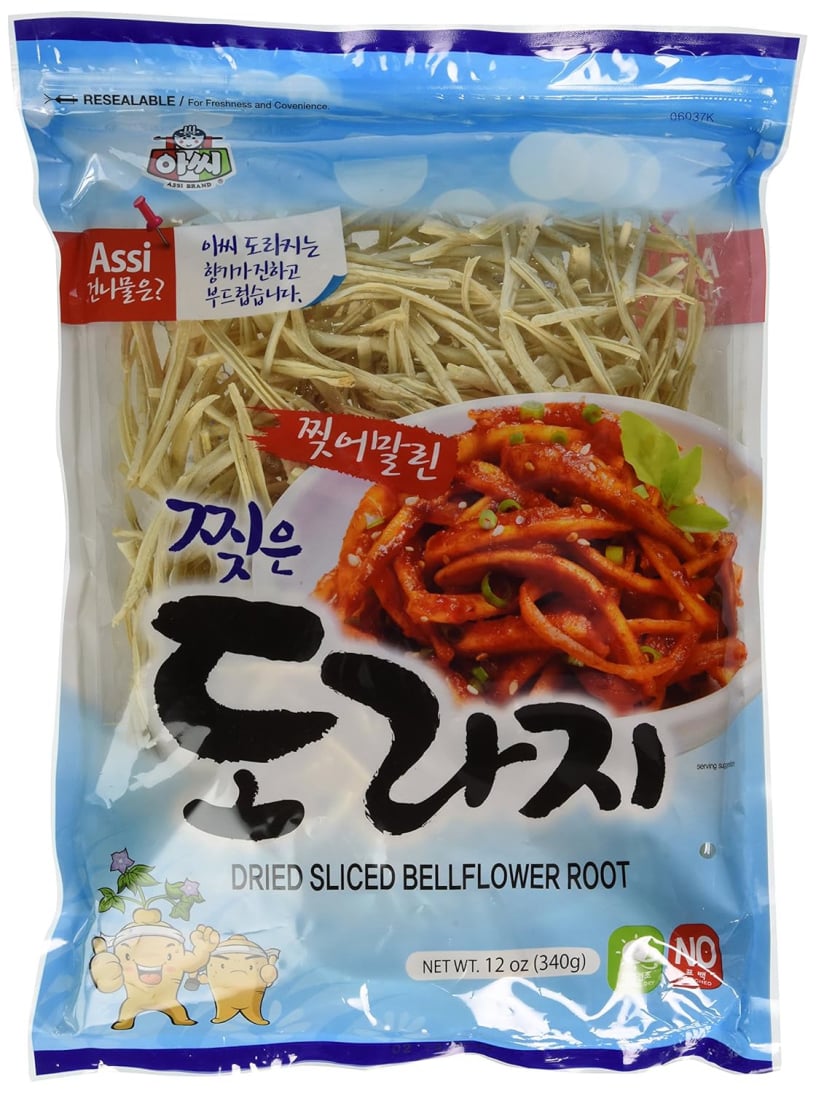
6 ounces Dried Bellflower Roots
2 teaspoons coarse salt
1 small Carrot
1 tablespoon vegetable oil
Seasoning
3 tablespoons Sugar
2 cloves Fresh Garlic, minced
½ to ¾ teaspoon Salt
1 teaspoon Sesame Oil
Garnish
½ tablespoon Chopped Green Onions
1 teaspoon Sesame Seeds
Directions
Place doraji strips into a bowl and cover with water.
Soak doraji overnight then drain.
Add the coarse salt and rub the doraji as if washing.
Rinse well in cold water.
Bring a pot of water to a full boil
Drop doraji in boiling water and boil for 2 to 5 minutes (desired tenderness).
Remove from heat, drain, cool, and squeeze out excess water.
Create carrot "Matchsticks" or "Threads"
A mandolin or benrinner produce the most consistent results, but a coarse shredder may also be used. Cut the carrot into 2 inch sections and shred lengthwise.
If using a knife cut the carrot into 2 inch sections, then trim the outer edges to make a rectangular shape. Cut the carrot into thin slices (about 1/8 of an inch or a little less). Stack the slices then cut each into strips about 1/8 inch thick.
Garlic and Green Onion
Mince the garlic.
Fine chop the green onion.
Final
Mix seasoning ingredients in a bowl large enough to hold the doraji.
Add doraji and carrot and mix well.
Heat a skillet over medium heat.
Add vegetable oil to skillet.
Add seasoned doraji/carrot mix to the skillet and stir fry for one to two minutes. Remove from heat and move to a bowl.
Add sesame seed and chopped green onion and toss to mix.

Comment?