Articles
Article: Just What is Namul?
나물 | namul
Namul (나물): Korean Seasoned Vegetables
In Korean cuisine, namul refers to a wide range of seasoned vegetable dishes made from blanched, sautéed, or raw greens, roots, sprouts, and herbs. They’re typically flavored with familiar Korean pantry staples such as sesame oil, garlic, soy sauce, salt, and sesame seeds. Namul appears across everyday meals—served as banchan or used as components in dishes like bibimbap.
History and Cultural Role
Namul has deep roots in Korea’s relationship with the land. Historically, people gathered wild mountain greens and herbs, preserving and seasoning them to enjoy throughout the year. Over time, namul became a defining part of Korean home cooking—valued not for extravagance but for balance, nutrition, and the idea that simple ingredients can create satisfying food.
In a traditional Korean meal, namul provides contrast in texture, color, and flavor, rounding out rice and soup with something fresh, earthy, or lightly seasoned.
Ingredients and Varieties
Namul isn’t one dish—it’s a category. Common ingredients include:
- Spinach (시금치)
- Soybean sprouts (콩나물)
- Fernbrake/bracken (고사리)
- Radish greens (무청)
- Zucchini (애호박)
- Bellflower root (도라지)
Most namul follow a simple pattern: blanch or sauté the vegetable, squeeze out excess moisture if needed, then season with a small set of ingredients—usually sesame oil, garlic, soy sauce or salt, and sesame seeds. Some versions are mild and clean-tasting; others incorporate chili flakes, doenjang, or vinegar.
Because namul relies on what’s available, it naturally shifts with the seasons.
Nutritional Benefits
Namul dishes are nutrient-dense without being heavy. Depending on the vegetable, they can offer:
- Vitamins A, C, and K
- Iron and folate (spinach namul)
- Antioxidants and plant protein (soybean sprouts)
- Dietary fiber from roots and leafy greens
Their light seasoning keeps calories low while enhancing natural flavors. This aligns with the Korean idea of food supporting overall well‑being—eum-yang (음양) balance and the broader “food as medicine” philosophy.
How Namul Is Prepared and Served
Preparing namul is straightforward:
- Clean and prep the vegetables.
- Blanch, sauté, or leave raw, depending on the ingredient.
- Season lightly with sesame oil, garlic, soy sauce or salt, and sesame seeds.
- Taste and adjust, keeping the flavor balanced rather than overpowering.
Namul is usually served at room temperature as part of a spread of banchan. Because each dish is small, a typical meal might include several namul at once, each offering a different texture or flavor.
Popular Namul Dishes
A few well‑known examples include:
- Sigeumchi-namul (시금치나물): Blanched spinach seasoned simply with garlic, sesame oil, and salt.
- Kongnamul (콩나물무침): Soybean sprouts tossed with sesame oil, garlic, and sometimes a touch of chili.
- Hobak-namul (호박나물): Sautéed zucchini with a mild, slightly sweet flavor.
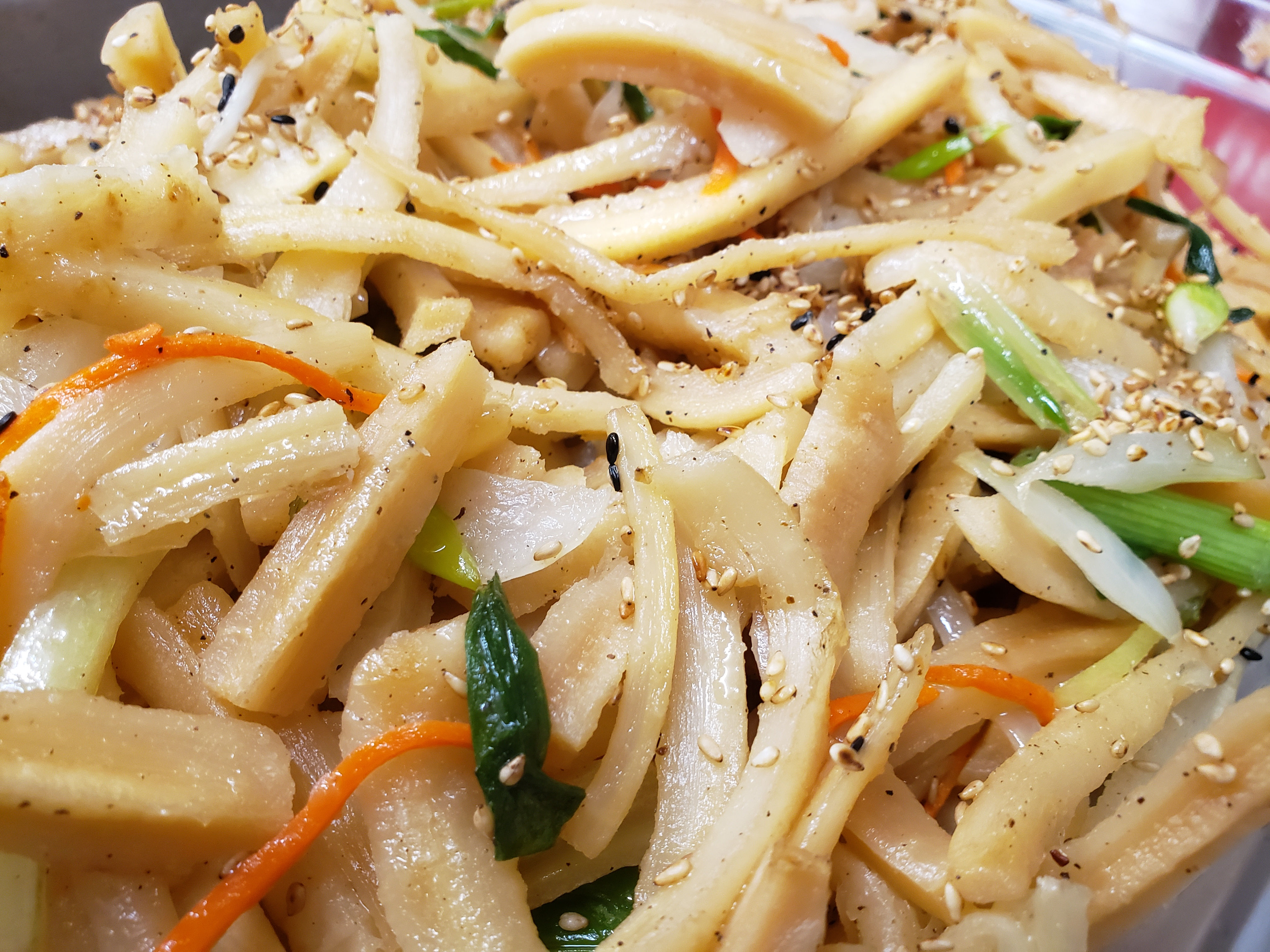
- Doraji-namul (도라지나물): Bellflower root, often stir-fried and seasoned for a crunchy, slightly bitter bite.
- Gochu-nip namul (고추잎나물): Pepper leaves sautéed and seasoned, reflecting Korea’s tradition of using every edible part of a plant.
Each dish highlights a different aspect of Korean cooking—minimal seasoning, respect for the ingredient, and an emphasis on everyday nourishment.
Where to Find Namul Ingredients
Most namul ingredients are easy to source:
- Spinach and soybean sprouts are widely available in Asian grocery stores.
- Zucchini, radish, and cucumbers can be found in any produce section.
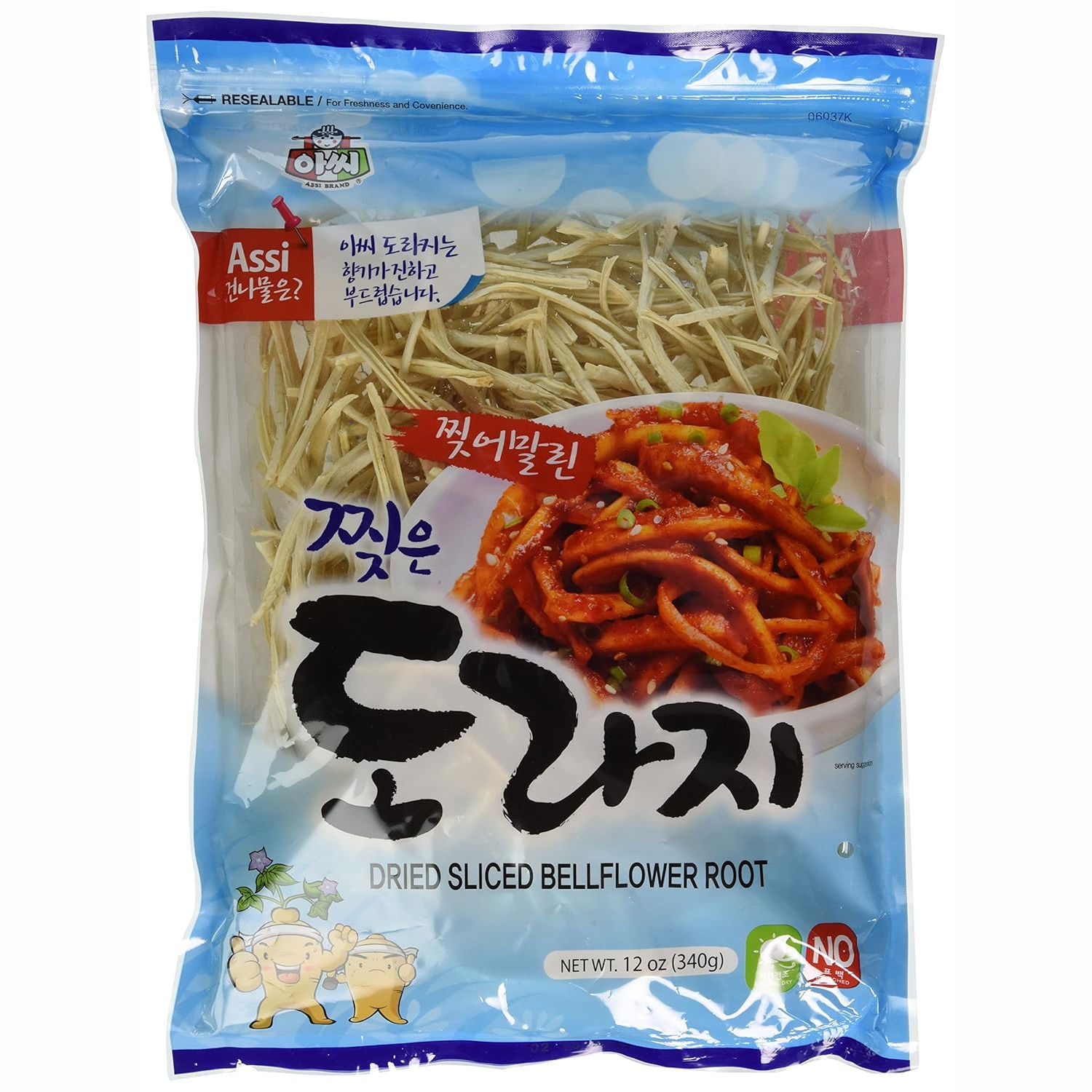
- Fernbrake (gosari) and bellflower root (doraji) are often sold dried or pre-soaked at Korean markets.
- Seasonings like sesame oil, soy sauce, garlic, and sesame seeds are pantry staples in Korean cooking and readily available.
With just a few ingredients, you can prepare several types of namul at home.
Namul in Korean Food Culture
Namul represents the heart of Korean home cooking: resourceful, seasonal, and rooted in the belief that food should nourish both body and daily life. It’s a reminder that even the simplest vegetables, prepared thoughtfully, can carry history, nutrition, and tradition to the table
Article by Gil "hannaone" © Copyright 2025-2026. All rights reserved.
Image: Doraji namul
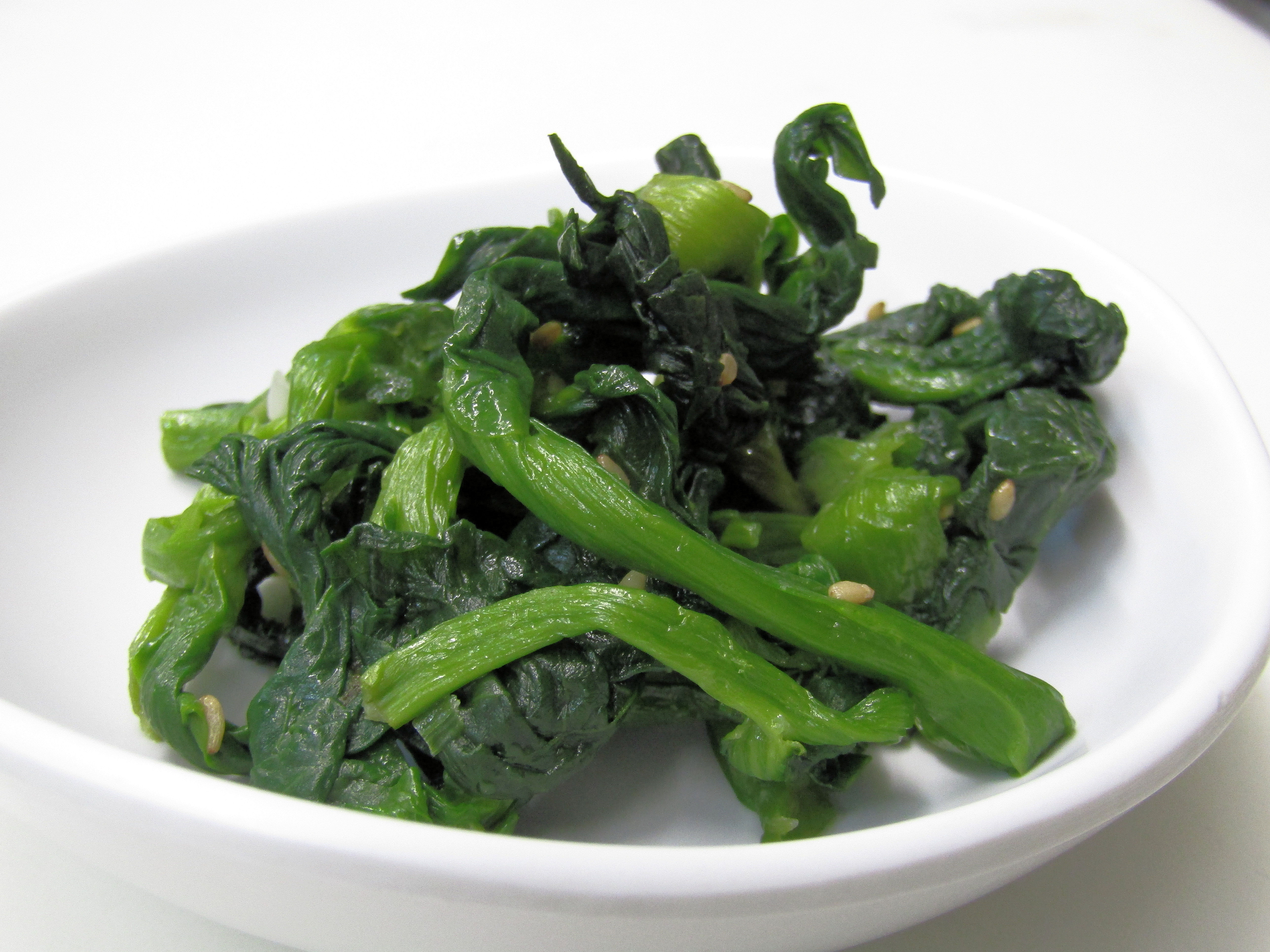
Image by hannaone: Yuchae-namul
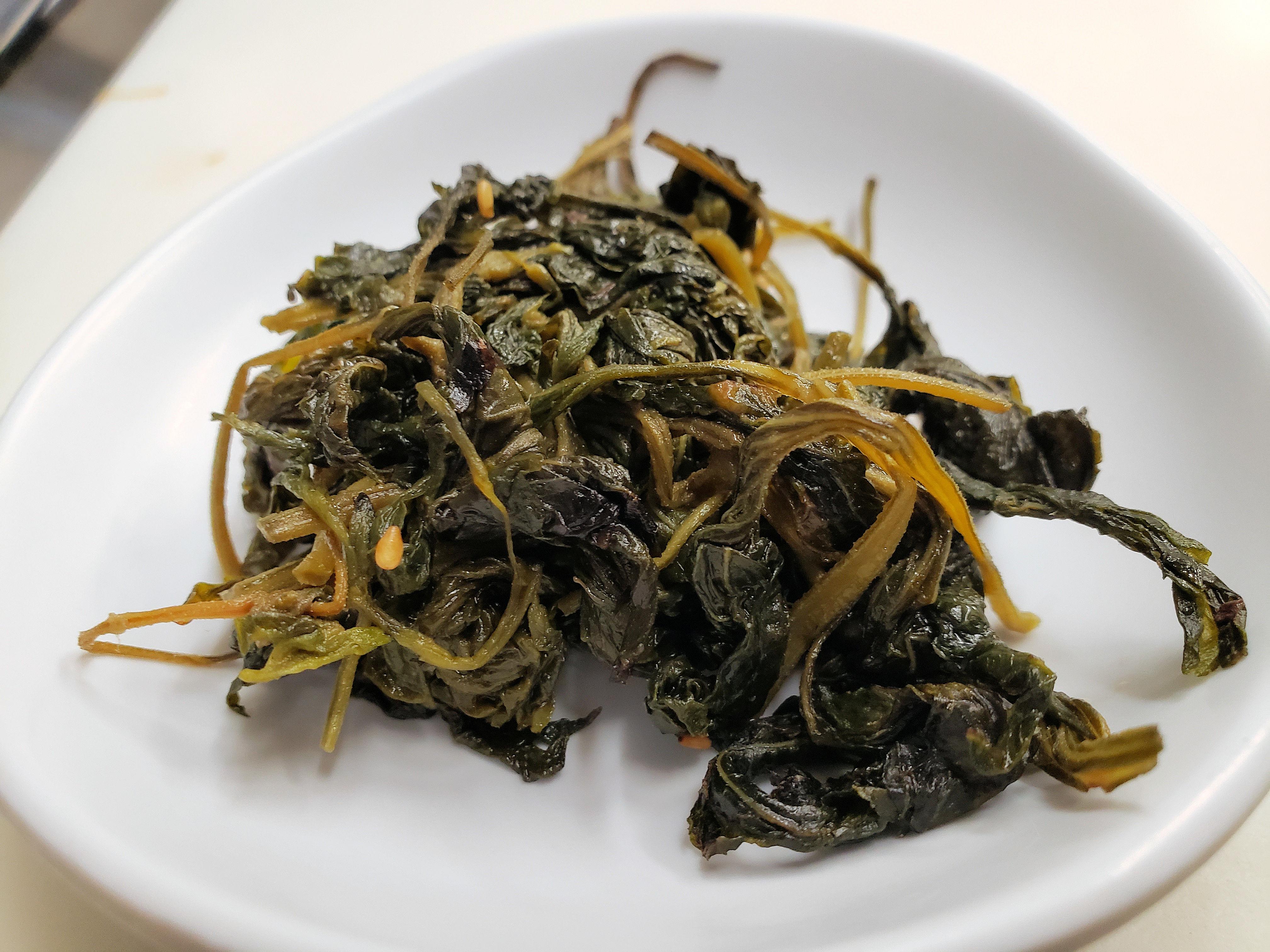
Image by hannaone: Gochunnip-namul
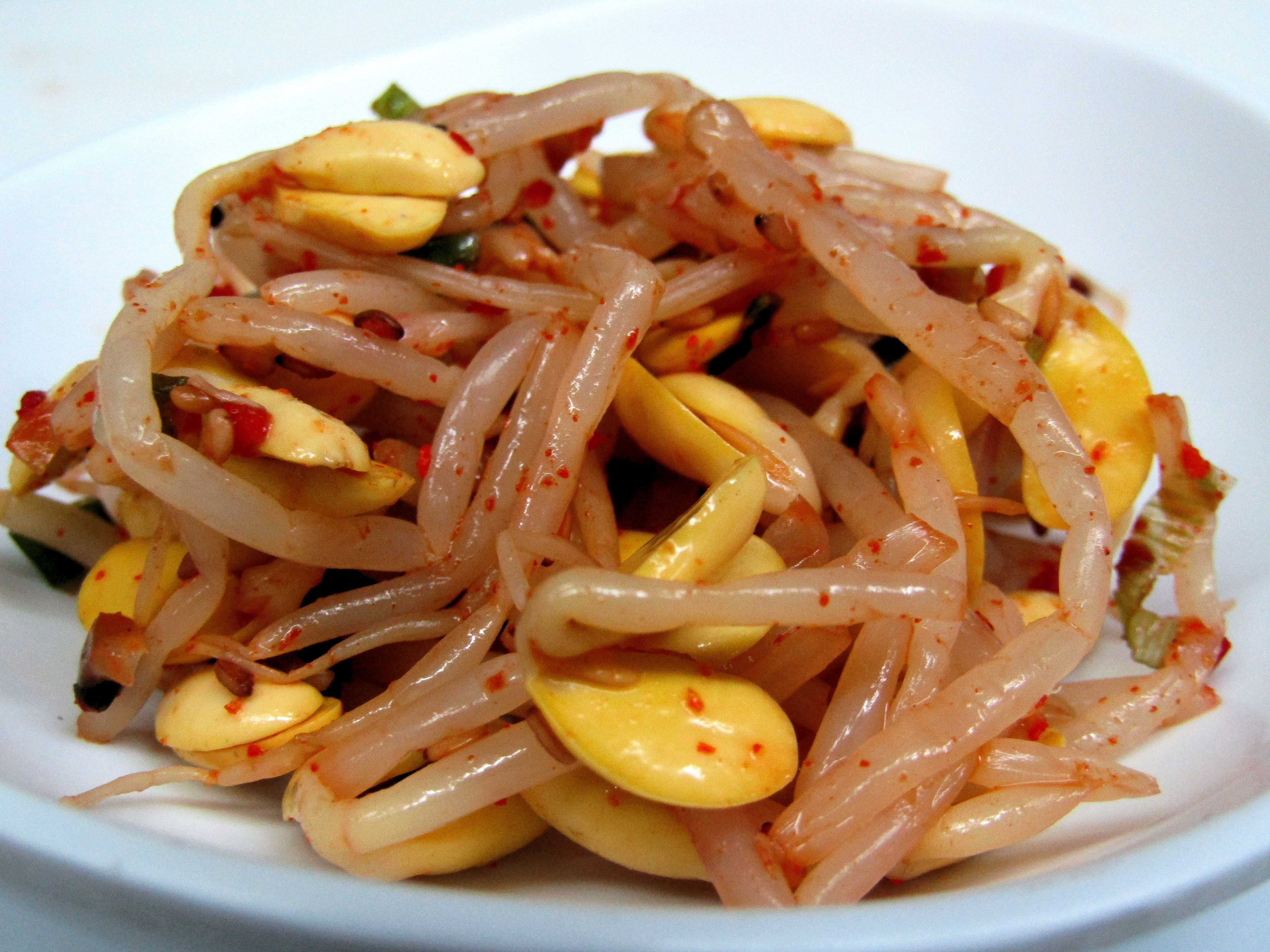
Image by hannaone: Nokdu-namul
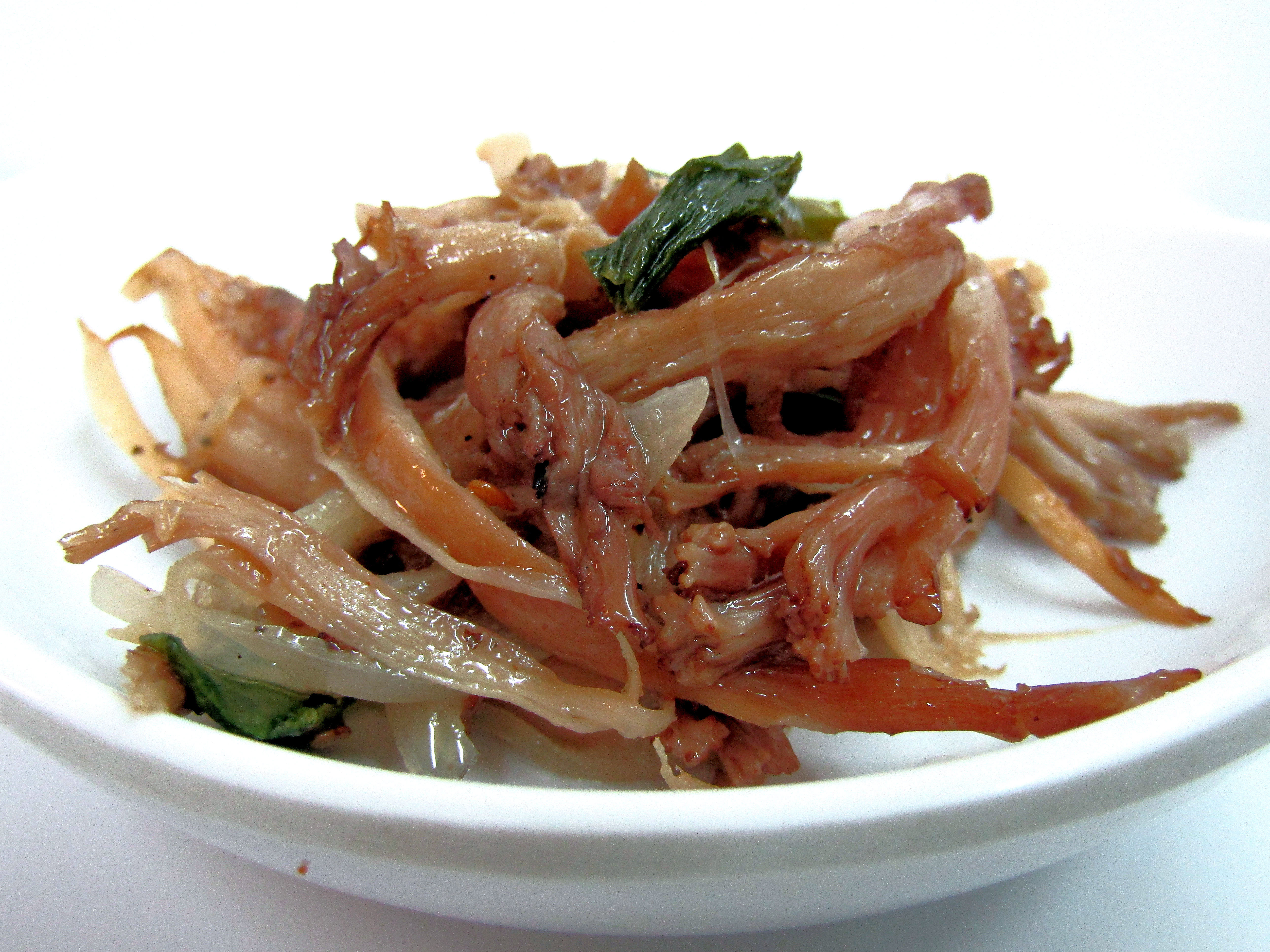
Image by hannaone: Ssari beoseot namul



Comment?