Articles
Article: Joseon-mu or Korean Radish
조선 무 | joseon-mu
Korean Radish (Joseon‑mu): History, Uses, and Cultural Role
Korean radish—mu (무), or more specifically Joseon‑mu—is one of the quiet workhorses of Korean cooking. It’s crisp, dense, slightly sweet, and peppery, and it shows up everywhere: in kimchi, soups, stews, pickles, and even as dried greens. It’s the kind of ingredient that doesn’t call attention to itself but forms the backbone of countless dishes.
Origins and Historical Background
Radishes as a species likely originated in Southeast Asia before spreading across China and Central Asia. As they moved through East Asia, different regional varieties developed. The long, mild white radish familiar in Japan (daikon) and China (luobo) eventually reached the Korean peninsula, where it adapted into something distinct.
By the Three Kingdoms period (57 BCE–668 CE), radishes were already cultivated in Korea. Over centuries—especially by the Goryeo era (918–1392)—the Korean variety evolved into the short, stout, green‑topped radish now recognized as Joseon‑mu. Its dense flesh and balanced flavor made it ideal for fermentation and long winter storage, two pillars of traditional Korean food culture.
The name is straightforward: mu simply means “radish,” while Joseon‑mu refers to the native Korean type.
Cultural Significance
Korean radish isn’t just another vegetable—it’s a foundational ingredient woven into everyday cooking:
- Kimchi: Cubed radish kimchi (kkakdugi) and radish strips in napa cabbage kimchi rely on mu’s firm texture.
- Broths and soups: Radish is simmered to create clean, slightly sweet stock bases.
- Pickles: From the crisp cubes served with fried chicken (chicken‑mu) to thin sheets of ssammu for wrapping grilled meats.
- Greens: The leaves, mucheong, are used fresh or dried into siraegi, a traditional winter ingredient.
Its versatility and reliability made it one of Korea’s most important crops for centuries.
Nutritional Profile
Korean radish is low in calories and high in water, making it refreshing and hydrating. It provides:
- Vitamin C
- Dietary fiber
- Potassium
- Antioxidants
These nutrients support digestion and overall health. Like many cruciferous vegetables, radish contains compounds studied for potential anti‑inflammatory and immune‑supporting effects.
Culinary Characteristics and Uses
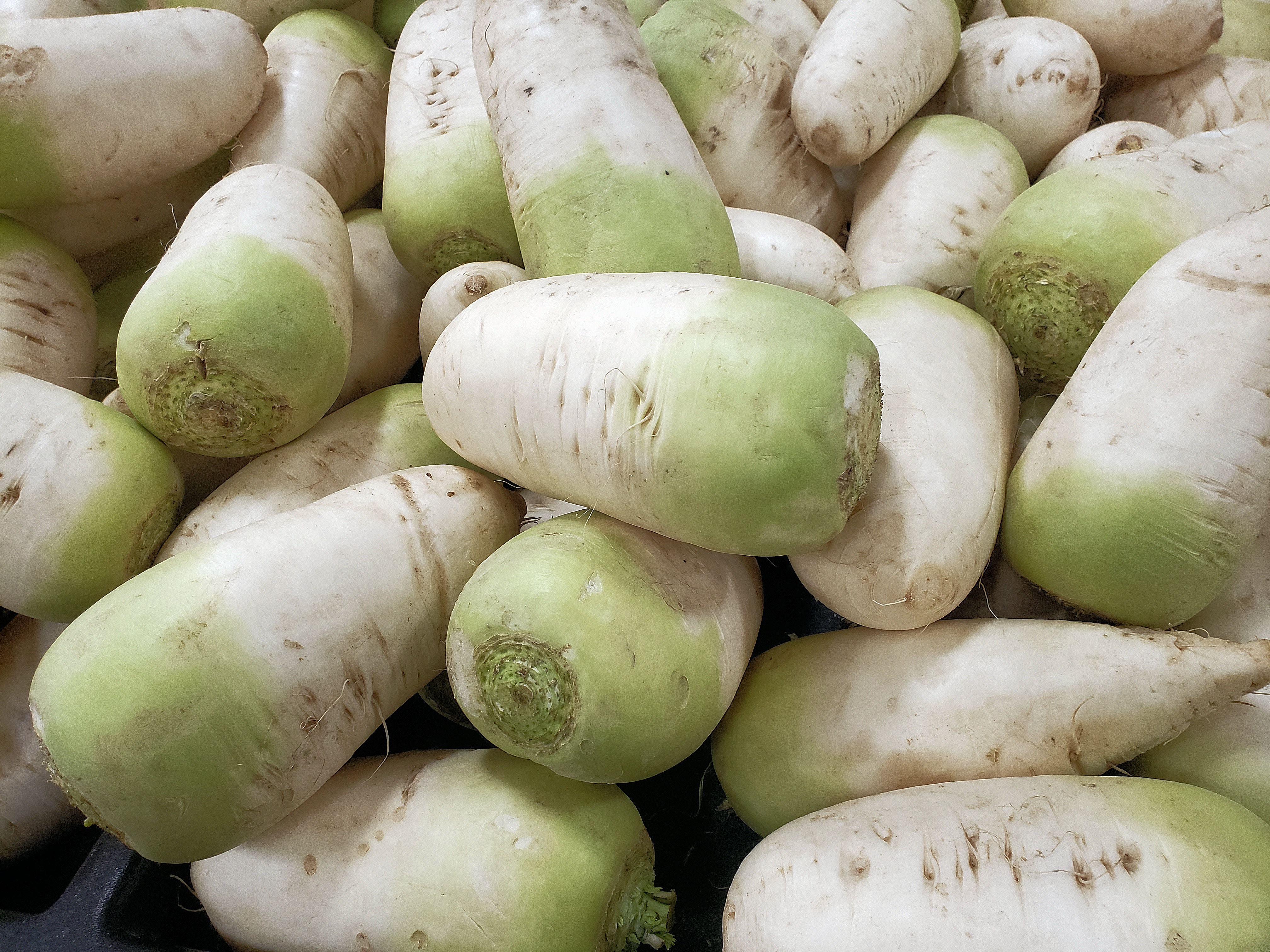
Joseon‑mu is easy to recognize: short, heavy, and firm, with a green shoulder fading into white. Its dense texture holds up well to long cooking, and its mild sweetness balances the heat and saltiness common in Korean dishes.
Every part of the plant is used:
- Root: Soups (mu guk), stews, kimchi, braises, and stock bases
- Greens (mucheong): Fresh in soups or dried into siraegi
- Sprouts: Eaten raw
- Dried radish (mu‑mallaengi): Julienned and sun‑dried for winter storage
Common preparations include:
- Kkakdugi – cubed radish kimchi
- Mu saengchae – spicy shredded radish salad
- Mu namul – seasoned radish side dish
- Ssammu – thin pickled radish sheets for wraps
Its ability to absorb flavors while keeping its crunch makes it indispensable.
Growing Korean Radish
Growing mu is similar to growing other radishes, but the Korean variety needs more space and time to mature.
Conditions:
- Full sun to partial shade
- Consistent moisture (drip irrigation and mulch help)
- Cooler temperatures—ideally below 80°F (27°C)
Planting:
- Sow seeds ¾ inch (2 cm) deep
- Space plants about 6 inches (15 cm) apart
- Leave roughly 3 feet (91 cm) between rows
- Successive plantings every 10–14 days extend the harvest
- Maturity takes about 60–75 days
Mu grows well in beds that will later host warm‑season crops like peppers or tomatoes.
Selecting and Storing Korean Radish
When choosing radishes:
- Look for firm, heavy roots
- Skin should be smooth and unblemished
- Medium‑sized radishes tend to have the best texture
- Avoid cracks, soft spots, or limp greens
For storage:
- Wrap in a damp paper towel
- Place in a plastic bag in the refrigerator’s crisper
- Properly stored, mu keeps its crunch for weeks
Recipes Featuring Korean Radish
A few classic dishes that highlight its character:
Kkakdugi (Cubed Radish Kimchi)
Crunchy cubes fermented with garlic, ginger, and gochugaru. A staple alongside soups and grilled meats.
Mu Guk (Korean Radish Soup)
A clear, comforting soup made with beef, radish, and sometimes seaweed. Simple, clean, and deeply satisfying.
Mu‑mallaengi Muchim (Dried Radish Salad)
Rehydrated dried radish tossed with a tangy, spicy dressing. Chewy, bright, and full of flavor.
Article by Gil "hannaone" © Copyright 2025-2026. All rights reserved.
Image: Korean Radish
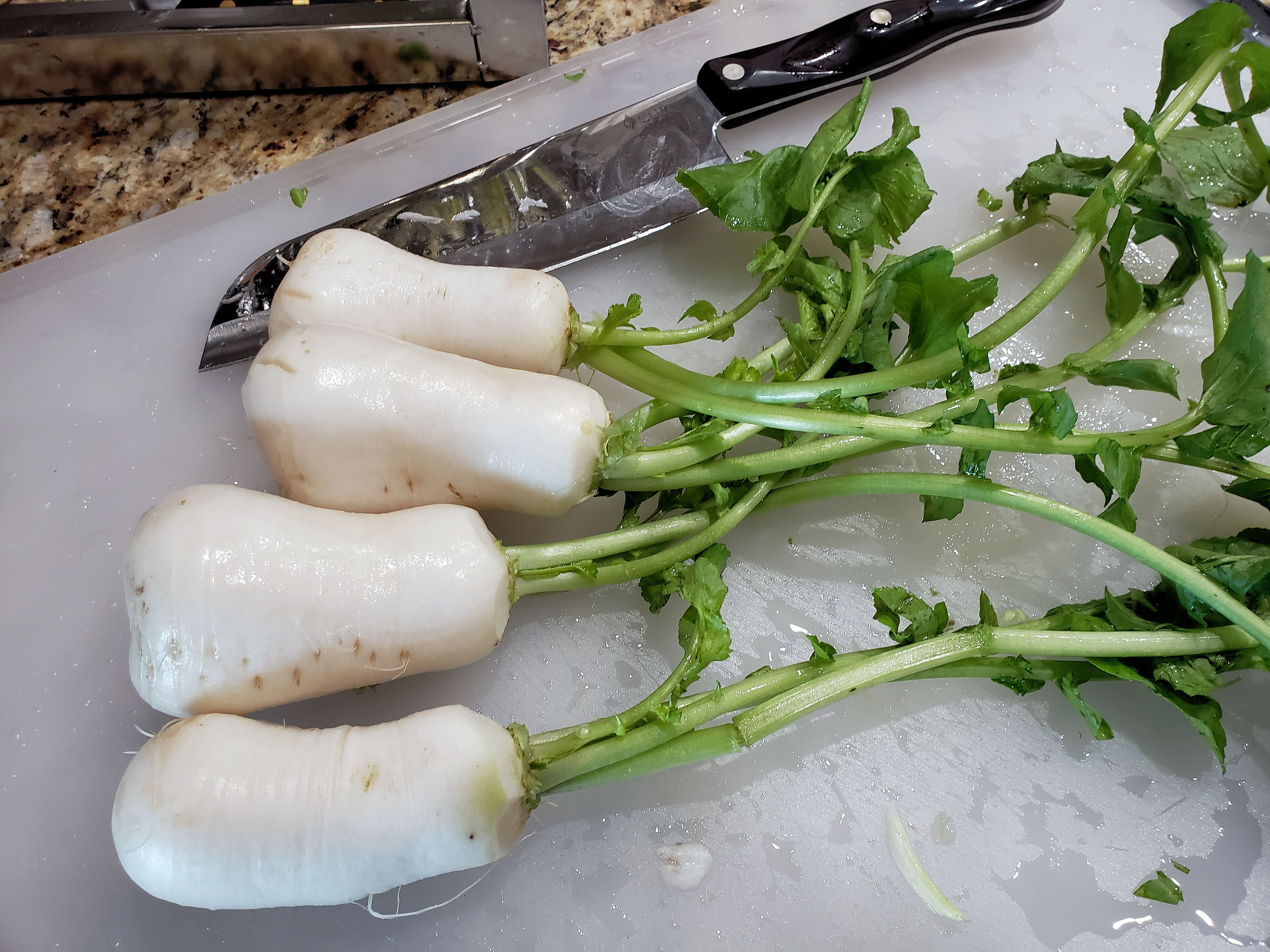
Image by hannaone: Chonggak-mu
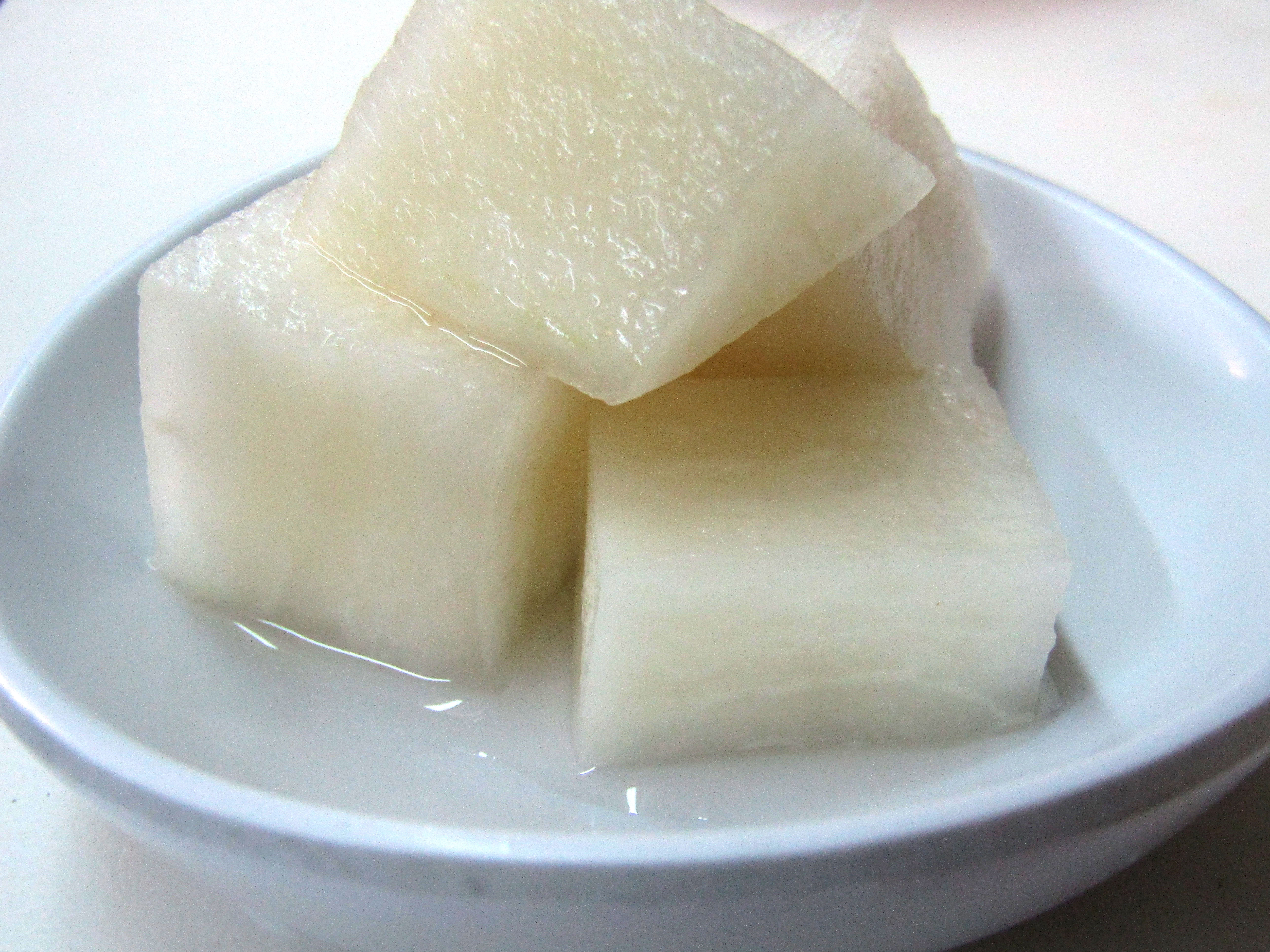
Image by hannaone: Pickled mu
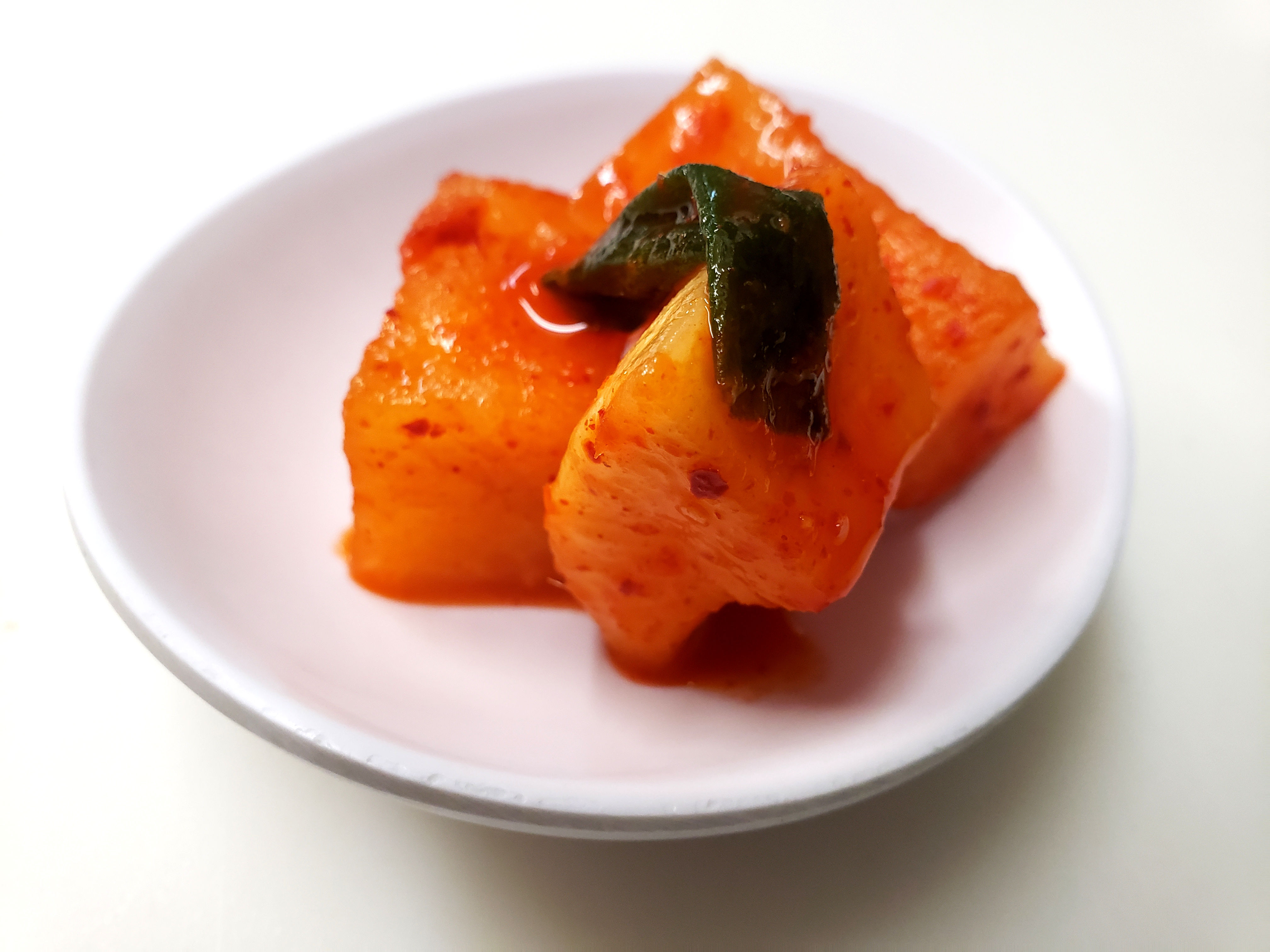
Image by hannaone: gakdugi
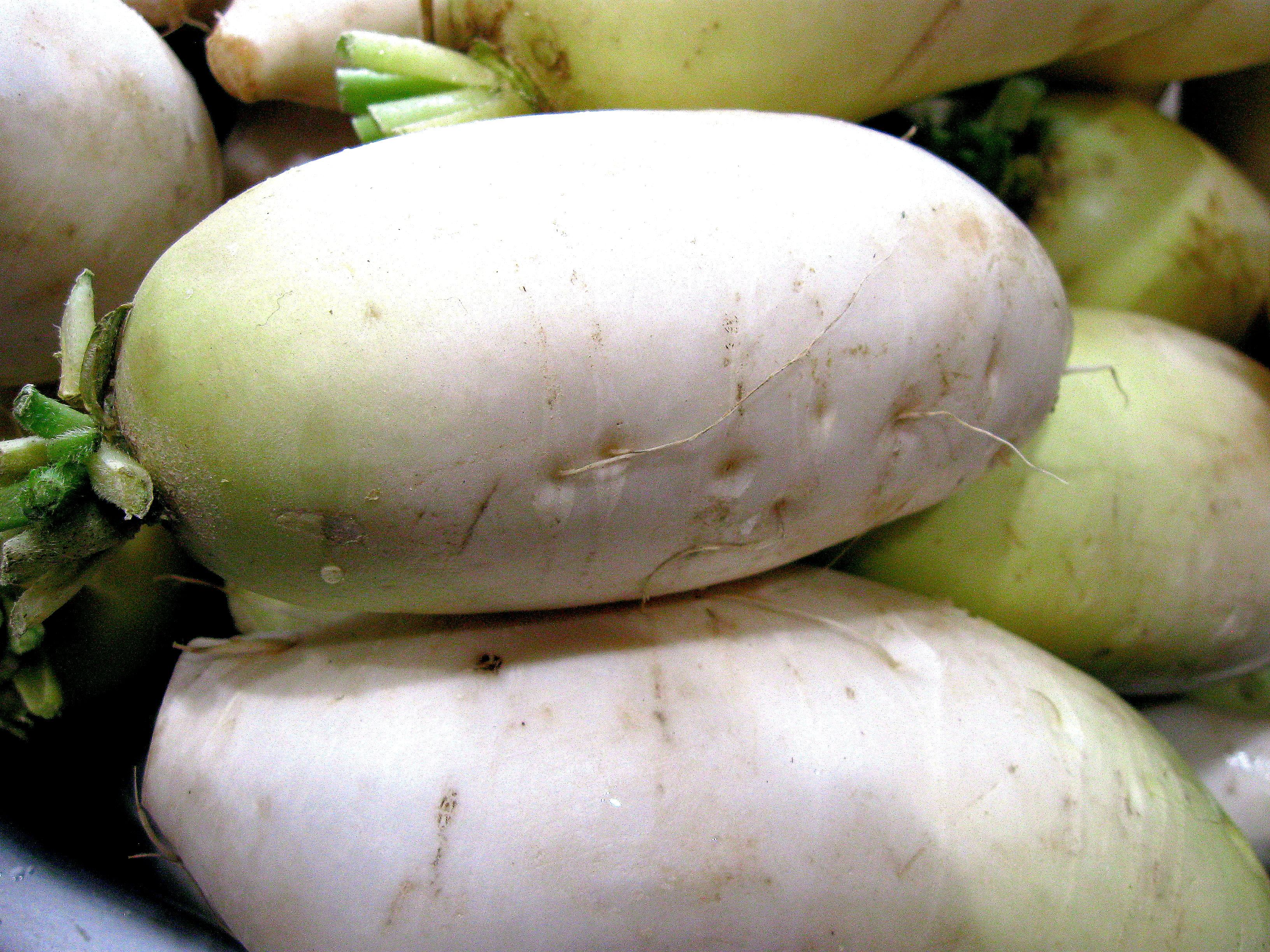
Image by hannaone: Mu


Comment?