Articles
Article: Kimchi - It's Much More Than Just Cabbage
김치 | kimchi
Kimchi is more than a side dish in Korea — it’s a basic part of daily eating. It appears at almost every meal, and its role is as much practical as it is cultural. At its core, kimchi is simply fermented vegetables seasoned with salt and spices, but its variations and history run deep.
Early History
The earliest forms of kimchi go back to the Three Kingdoms Period (57 BCE–668 CE). These early versions were not spicy and didn’t include napa cabbage. They were usually radishes or leafy greens preserved in salt or brine to last through winter.
Chili peppers didn’t arrive on the Korean peninsula until the late 16th century, so the red, spicy kimchi we recognize today developed much later, especially during the Joseon Dynasty (1392–1897). Over time, regional ingredients and household preferences created the wide range of kimchi styles found today.
Cultural Role
Kimchi is tied closely to Korean identity. It shows up in seasonal traditions like gimjang, the annual winter kimchi‑making period, and it’s a standard part of everyday meals. Its importance comes from both necessity (preservation) and continuity (family and regional recipes passed down over generations).
Common Types of Kimchi
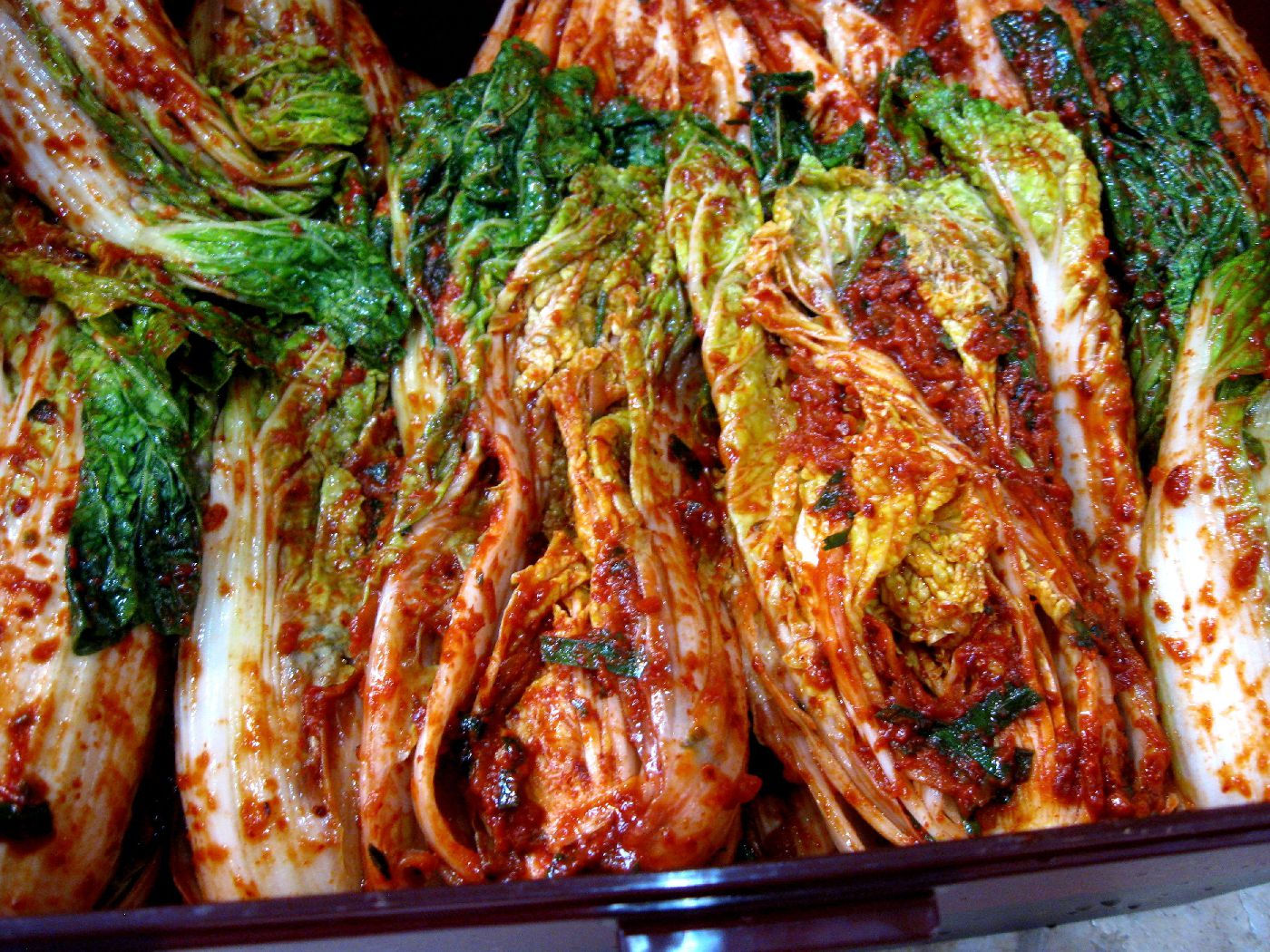
Baechu Kimchi (Cabbage Kimchi)
This is the most familiar type. Napa cabbage is salted, rinsed, and coated with a seasoning mixture that usually includes garlic, ginger, chili flakes, and fish sauce. It ferments for days or weeks depending on temperature and preference. The result is crisp, tangy, and adaptable to many dishes.
Kkakdugi (Cubed Radish Kimchi)
Made from diced Korean radish, kkakdugi has a firm crunch and a clean, sharp flavor. It’s commonly served with soups and stews because the radish holds its texture well.
Mul Kimchi (Water Kimchi)
Mul kimchi is a lighter, milder style. Vegetables like radish, cucumber, or young radish greens ferment in a lightly seasoned brine. The liquid becomes slightly tangy and is often enjoyed as a refreshing drink.
- Dongchimi is a winter version with a clearer, more sour brine.
- Yeolmu mul kimchi uses young summer radishes and is popular in hot weather.
Oi Kimchi (Cucumber Kimchi)
Cucumber kimchi is crisp and quick‑fermenting. It’s often eaten in summer and pairs well with grilled foods or rice dishes. The seasoning is similar to cabbage kimchi but lighter.
Other Regional and Ingredient Variations
Korea has hundreds of kimchi types. A few examples:
- Gat kimchi (mustard leaf kimchi) has a peppery, slightly bitter flavor.
- Chonggak kimchi uses whole young radishes with their stems attached.
- Kongnamul kimchi uses soybean sprouts instead of cabbage or radish.
- Northern regions tend to use less chili and salt; southern regions often use more seafood‑based seasonings.
Health and Nutrition
Kimchi is a fermented food, so it contains beneficial bacteria that support digestion. It’s generally low in calories and provides fiber, vitamins A and C, and minerals from the vegetables and seasonings. The fermentation process also increases certain nutrients and produces organic acids that contribute to its flavor and preservation.
Making Kimchi at Home
Homemade kimchi follows a straightforward process:
- Salt the vegetables to draw out moisture and improve texture.
- Rinse and drain.
- Mix a seasoning paste (typically chili flakes, garlic, ginger, and fish sauce or a plant‑based alternative).
- Coat the vegetables thoroughly.
- Pack into a container and let it ferment at room temperature before refrigerating.
Fermentation time varies with temperature and personal preference. Warmer temperatures speed up the process; cooler temperatures slow it down.
Using Kimchi in Cooking
Kimchi works well beyond being a side dish. Common uses include:
- Kimchi fried rice
- Kimchi jjigae (kimchi stew)
- Kimchi pancakes
- Toppings for noodles or rice bowls
- Add‑ins for grilled cheese, omelets, or stir‑fries
Older, more sour kimchi is especially good for cooked dishes because its deeper acidity balances heat and richness.
Article by Gil "hannaone" © Copyright 2025-2026. All rights reserved.
Image by hannaone: Baechu kimchi
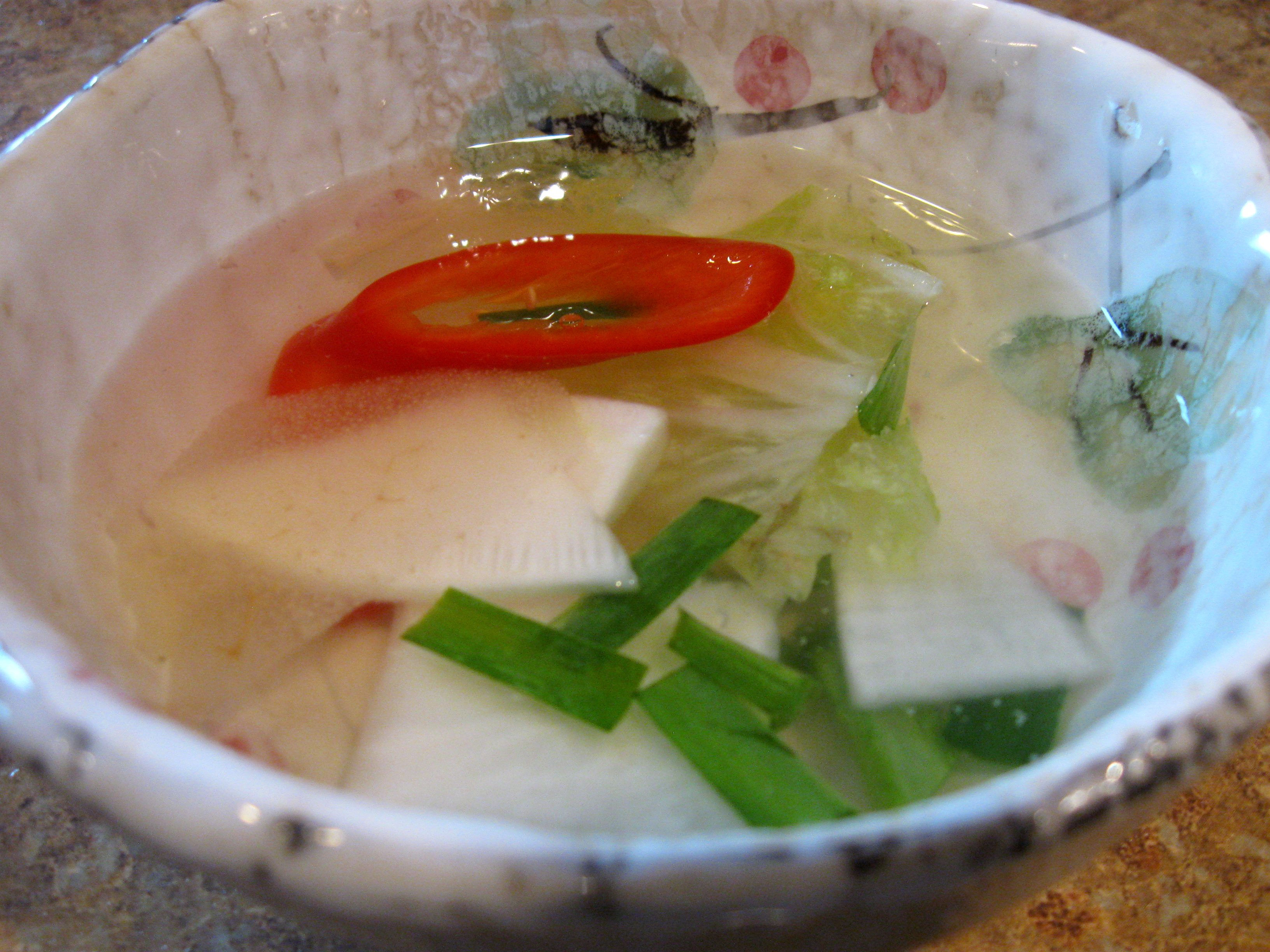
Image by hannaone: Mul-kimchi
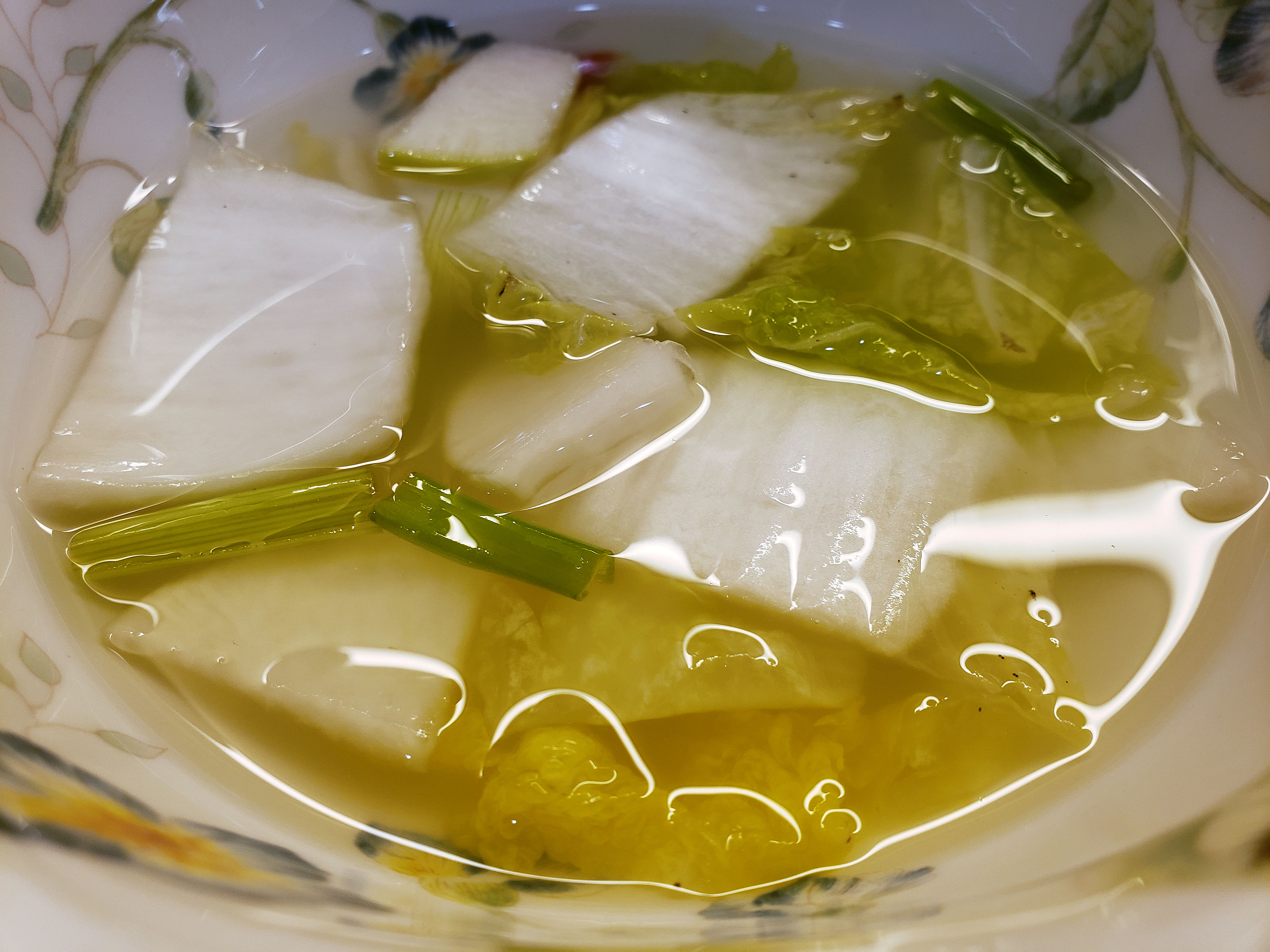
Image by hannaone: Mul-kimchi
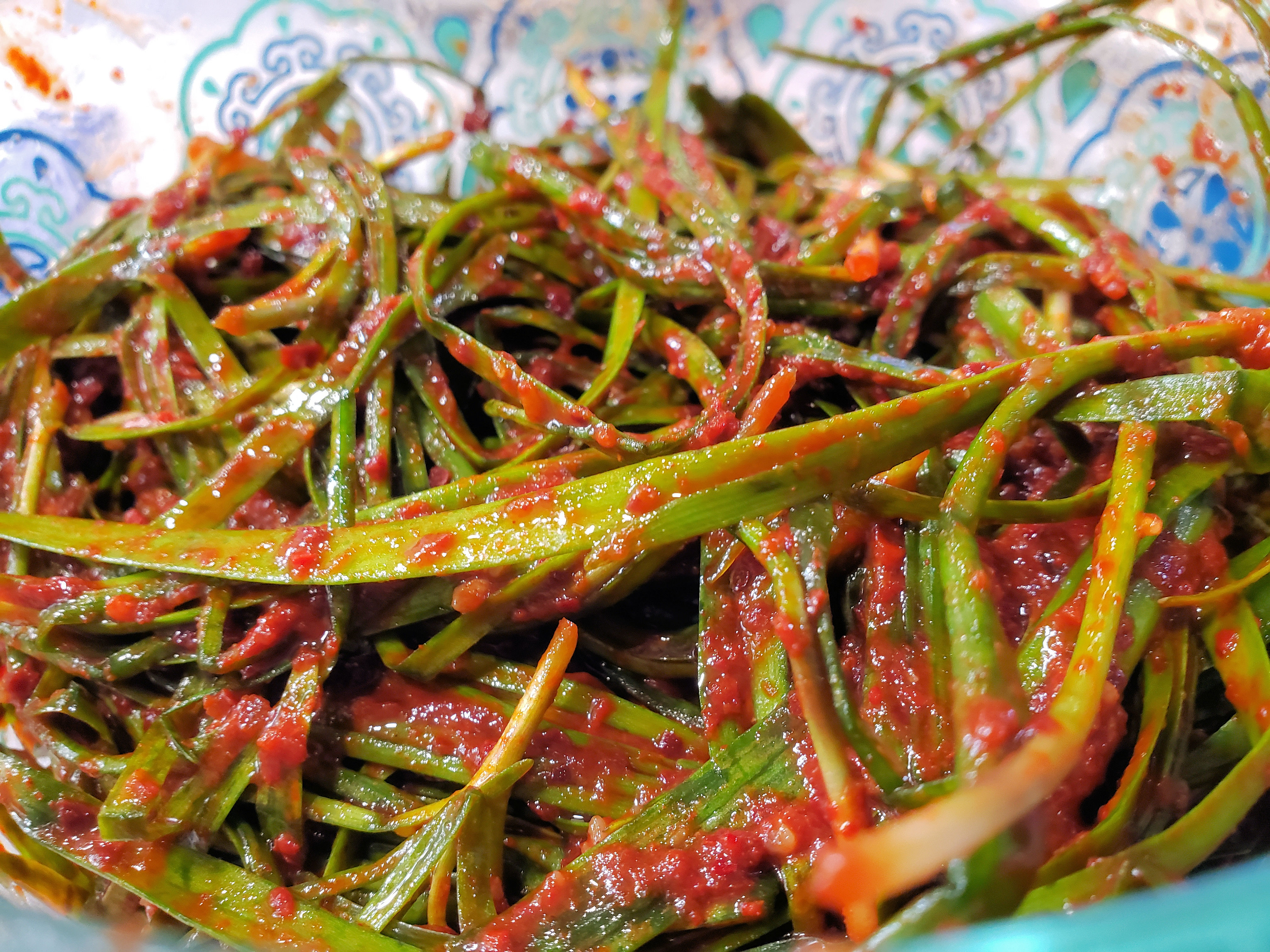
Image by hannaone: Buchu-kimchi
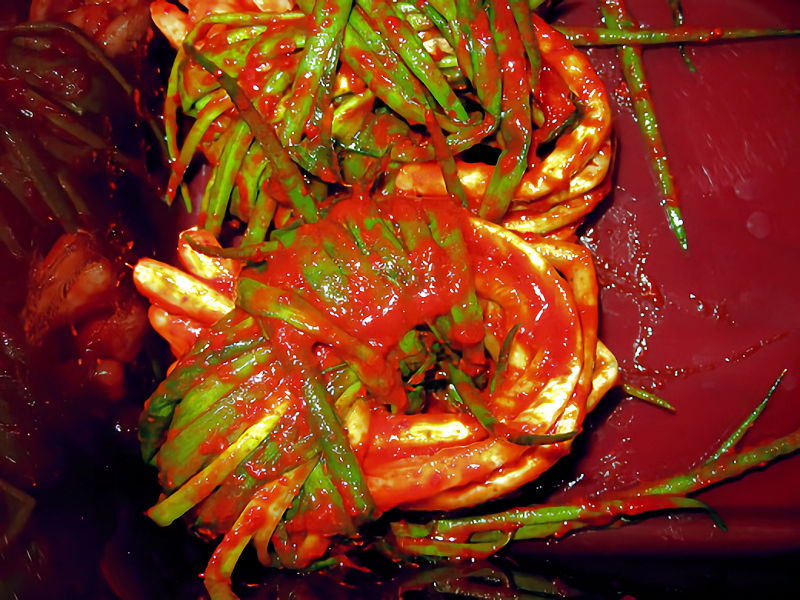
Image by hannaone: Making pa-kimchi

Comment?