Articles
Article: Korean Jjigae (Stews) and Their Place in Everyday Cooking
찌개 | jjigae
Jjigae (찌개) is one of the cornerstones of Korean home cooking. It’s a hearty, flavorful stew built around vegetables, tofu, seafood, or meat simmered in a seasoned broth. Nearly every Korean meal includes some form of soup or stew, and jjigae is the version that leans the most toward bold seasoning and substantial ingredients.
How Jjigae Differs from Guk and Tang
Korean soups and stews fall into three broad categories—guk, jjigae, and tang—each with its own role at the table.
Guk (국)
- Definition: The everyday Korean word for soup.
- Consistency: Light and broth‑forward, with more liquid than solids.
- Serving style: Served individually alongside rice.
- Seasoning: Adjusted at the end of cooking.
- Examples: Miyeok‑guk (seaweed soup), taro‑guk, janchi‑guksu.
Jjigae (찌개)
- Definition: A thicker, saltier stew.
- Consistency: More solids than broth.
- Serving style: Often shared from a single pot at the table.
- Seasoning: Added during cooking, not after.
- Examples: Kimchi jjigae, sundubu jjigae, dwaeji bulgogi jjigae.
Tang (탕)
- Definition: A formal term for soup, derived from Chinese characters.
- Consistency: Broth‑centered like guk, but usually simmered longer.
- Serving style: Sometimes shared, sometimes individual.
- Examples: Maeun‑tang (spicy fish stew), galbi‑tang, seolleong‑tang.
Understanding these categories helps explain why jjigae tastes the way it does: it’s meant to be robust, concentrated, and full of ingredients.
Popular Types of Jjigae
Jjigae comes in many varieties, each shaped by its main seasoning or ingredient:
- Kimchi jjigae: Aged kimchi simmered with pork, tofu, and aromatics.
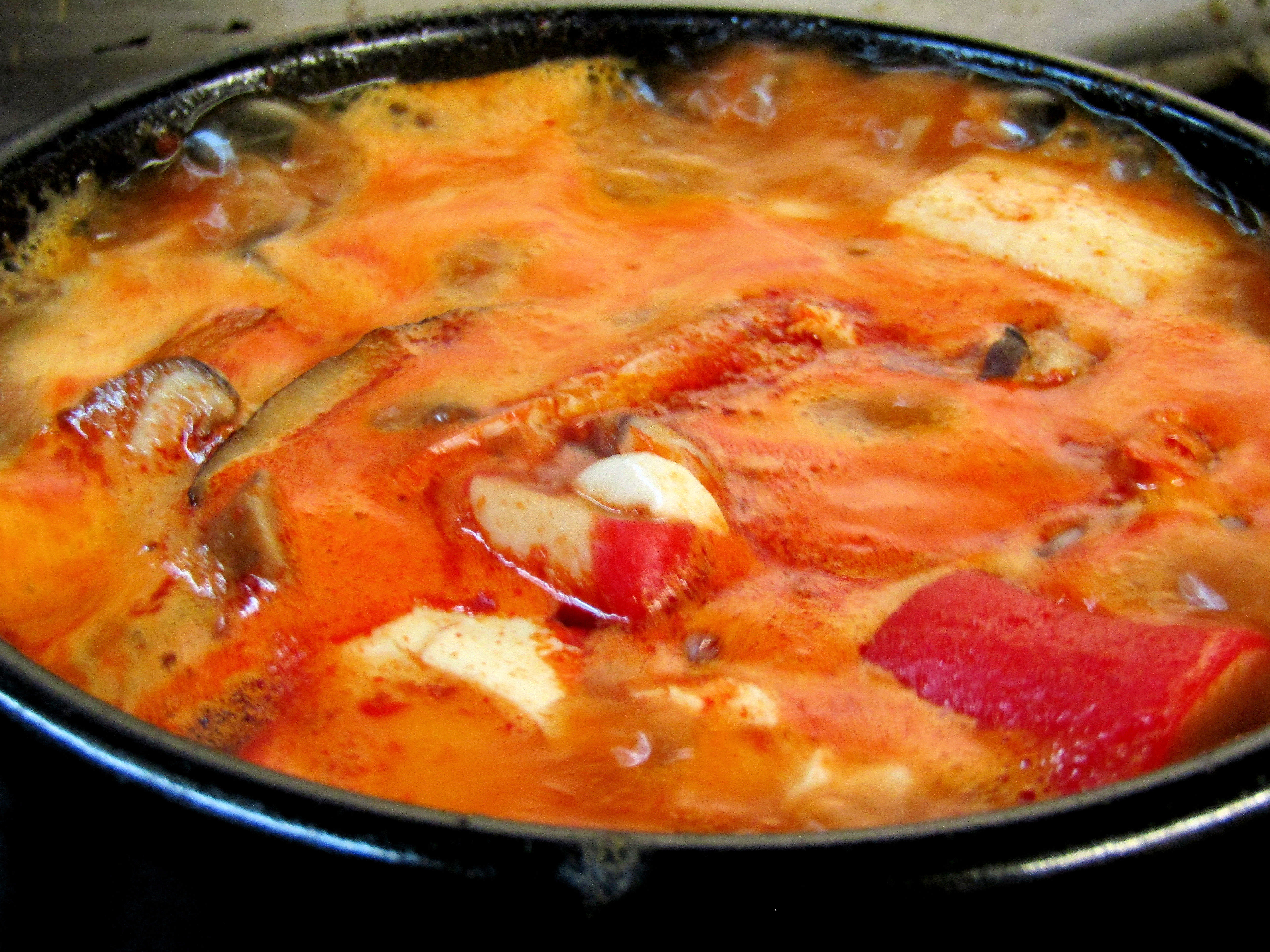
- Sundubu jjigae: Soft tofu stew with pork, seafood, or vegetables.
- Doenjang jjigae: Soybean paste stew with tofu, potatoes, zucchini, and anchovy stock.
- Budae jjigae: A modern stew combining kimchi, spam, sausage, and ramen noodles.
- Saengseon jjigae: Fish‑based stews using cod, mackerel, or pollock.
Despite their differences, all jjigae rely on the same idea: a seasoned broth that carries a generous amount of solid ingredients.
Making Jjigae at Home
Most jjigae follow a simple pattern:
- Choose the type of stew.
- Kimchi jjigae: aged kimchi, pork, tofu, green onion.
- Doenjang jjigae: soybean paste, anchovy stock, tofu, vegetables.
- Sundubu jjigae: soft tofu, pork or seafood, aromatics.
- Start with a stock.
Anchovy‑kelp stock is the most common, but beef or seafood stock works too.
- Sauté the base ingredients.
Kimchi, pork, garlic, or doenjang are often briefly stir‑fried to deepen flavor.
- Add stock and vegetables.
Zucchini, onions, mushrooms, potatoes, and tofu are typical additions.
- Season during cooking.
Gochugaru, gochujang, soy sauce, or extra doenjang adjust the flavor.
- Simmer until everything is tender.
Jjigae is served bubbling hot, usually with rice and a few banchan.
The method is flexible, which is why nearly every household has its own version.
Nutritional Notes
Jjigae tends to be nutritionally balanced because it combines protein, vegetables, and broth in one pot. Depending on the type:
- Kimchi jjigae offers probiotics and vitamins from fermented kimchi.
- Seafood‑based jjigae provides omega‑3s and lean protein.
- Tofu‑based jjigae is lower in calories and rich in plant protein.
- Vegetable‑heavy jjigae adds fiber and minerals.
The seasoning—whether doenjang, gochugaru, or gochujang—also contributes antioxidants and depth of flavor without relying on heavy fats.
Jjigae in Korean Daily Life
Jjigae is woven into everyday Korean eating habits. It’s a common lunch option, a quick dinner, and a dish that families often share from the same pot. Regional and family variations are common, and many households have a “house jjigae” that reflects their taste—saltier, spicier, lighter, or richer.
It also appears during gatherings and holidays, not as a ceremonial dish but as something warm and familiar that brings people together.
Where People Typically Eat Jjigae
You’ll find jjigae in a wide range of settings:
- Korean restaurants: Most offer at least two or three types.
- Home kitchens: The most traditional and varied versions come from home cooking.
- Markets and festivals: Vendors often serve regional jjigae styles.
Because the ingredients are accessible and the method is straightforward, jjigae is one of the most common home‑cooked dishes in Korea.
Why Jjigae Endures
Jjigae remains essential in Korean cuisine because it’s adaptable, economical, and deeply comforting. It can be made with pantry staples or fresh ingredients, adjusted to personal taste, and served in any season. Its combination of broth, vegetables, and protein reflects the balance at the heart of Korean cooking
.
Article by Gil "hannaone" © Copyright 2025-2026. All rights reserved.
Image by hannaone: Boiling Soon-dubu jjigae
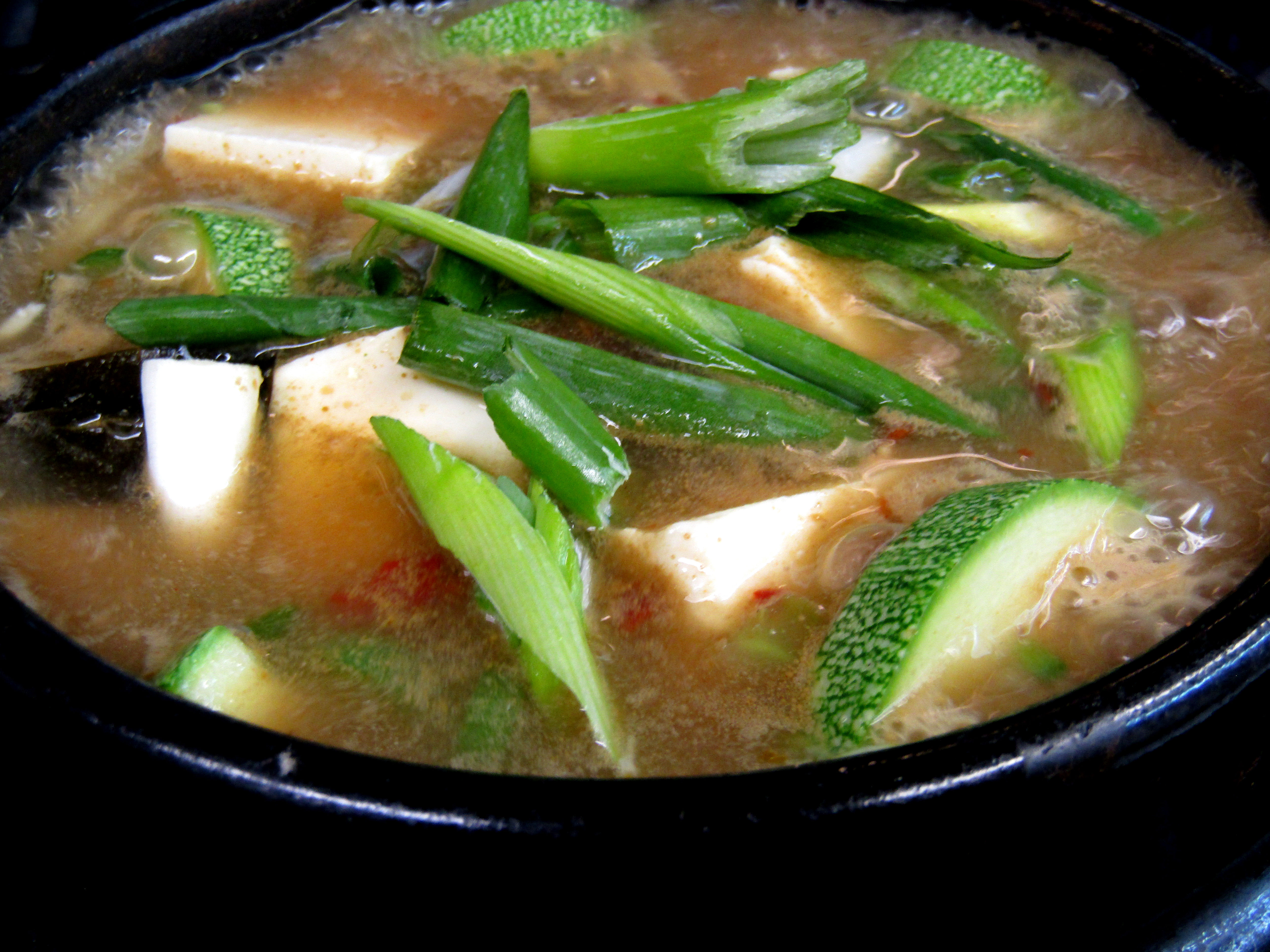
Image by hannaone: Doenjang-jjigae
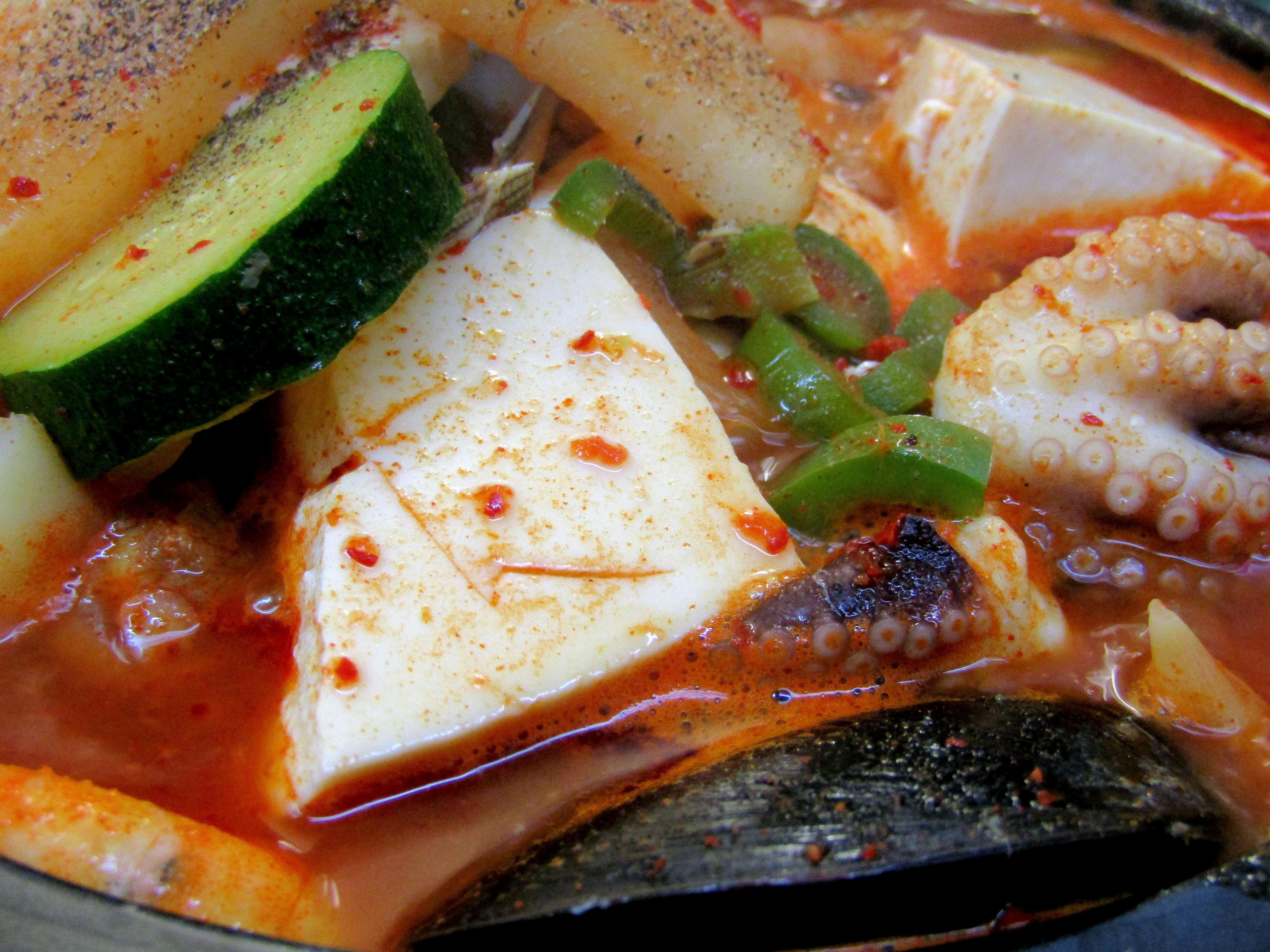
Image by hannaone: Haemul-jjigae
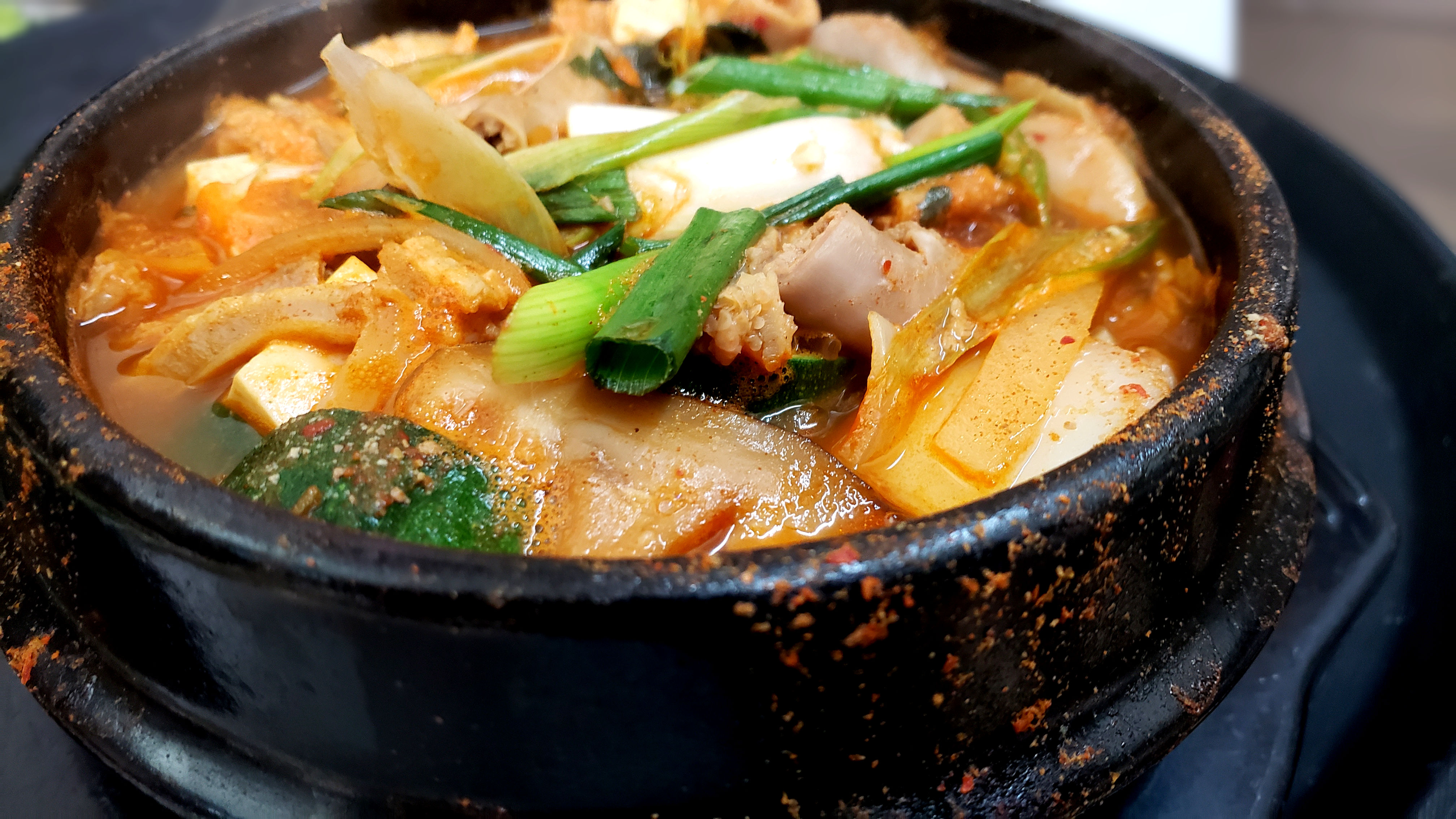
Image by hannaone: gopjon-jjigae
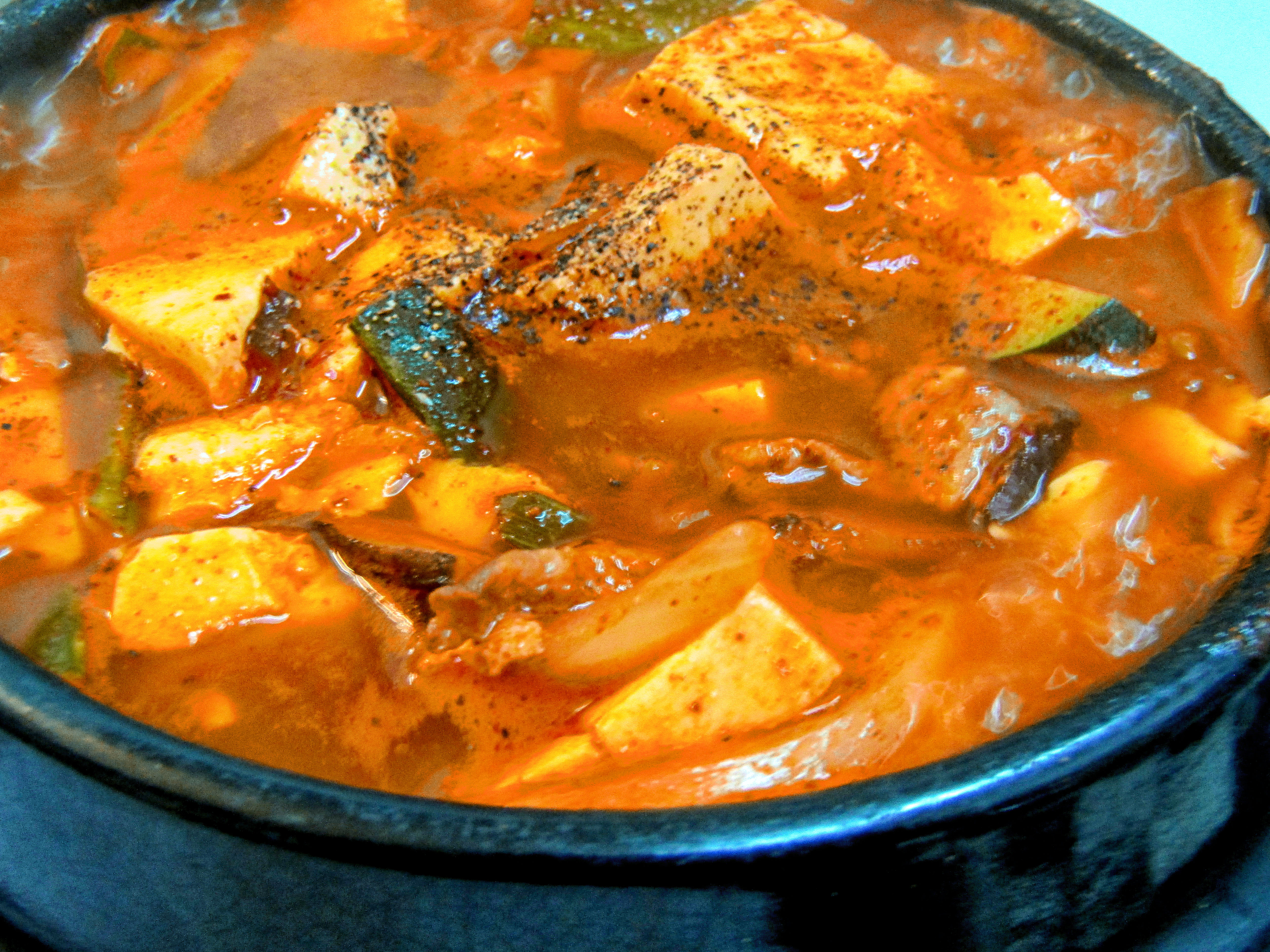
Image by hannaone: Dubu-jjigae

Comment?