Articles
Bibimbap: A Mixed-up Dish
비빔밥 | bibim-bap
Introduction
Bibimbap—literally “mixed rice”—is one of Korea’s most recognizable dishes. It’s built from simple components: warm rice, seasoned vegetables, a protein, and a spoonful of gochujang. But when everything is mixed together, the dish becomes far more than the sum of its parts. It’s colorful, customizable, and deeply tied to Korean food culture.
Origin and History
The idea behind bibimbap is straightforward: combine rice with a variety of prepared ingredients. But the dish has a long history. Written references appear during the late Joseon Dynasty (1392–1910), where versions of bibimbap were served in the royal court. Over time, the dish moved from elite dining to everyday meals, eventually becoming a common offering at home, in markets, and later in restaurants.
Bibimbap’s appeal comes from its balance. Each component—vegetables, meat, gochujang, and egg—contributes a different flavor and texture. When mixed, the dish reflects a broader Korean culinary principle: harmony created through contrast.
Today, bibimbap remains a staple of Korean cuisine, valued both for its tradition and its adaptability.
Contemporary Bibimbap
As Korean food has gained global attention, bibimbap has become one of its most accessible ambassadors. Its format—rice plus toppings—invites variation, and chefs around the world have adapted it using local ingredients or fusion techniques.
Some versions stay close to tradition, while others experiment with new proteins, grains, or sauces. Regardless of the approach, the core idea remains the same: a bowl built around balance, color, and texture.
Ingredients
Bibimbap starts with warm rice, usually short-grain white rice. From there, each topping is prepared separately to highlight its own flavor and texture.
Korean cuisine places importance on visual contrast, so bibimbap typically includes ingredients representing several colors—greens, reds, yellows, whites, and browns. Common vegetables include spinach, bean sprouts, carrots, mushrooms, and zucchini. Each is lightly seasoned, often with salt, sesame oil, or soy sauce.
Protein varies by region and preference. Beef bulgogi is classic, but pork, tofu, and seafood are all common. A fried or raw egg adds richness.
Gochujang is essential. Its heat, sweetness, and fermented depth tie the bowl together. A drizzle of sesame oil and a sprinkle of sesame seeds or green onions finish the dish.
Variations
Bibimbap has many regional and stylistic variations:
- Traditional Bibimbap: Rice topped with namul (seasoned vegetables), sliced beef, gochujang, and an egg. Everything is mixed before eating.
- Jeonju Bibimbap: Perhaps the most famous regional version, known for its wide range of vegetables, including gosari (bracken fern), doraji (bellflower root), and kongnamul (soybean sprouts).
- Jinju Bibimbap: Features fresh and blanched vegetables mixed with a savory sauce.
- Tongyeong Bibimbap: A coastal variation that incorporates seafood such as squid, shrimp, clams, mussels, or oysters.
- Haemul Bibimbap: A general seafood version using a mix of shellfish and fish.
- Sanche Bibimbap: Built around mountain vegetables (san namul), highlighting regional foraged greens.
- Vegetarian or Vegan Bibimbap: Uses a variety of vegetables and plant-based proteins, omitting meat and sometimes the egg.
- Dolsot Bibimbap: Served in a scorching-hot stone bowl (ddukbaegi). The heat creates a crispy rice crust along the bottom, and the raw egg cooks as it touches the sides.
Modern interpretations sometimes incorporate ingredients from other cuisines—anything from roasted vegetables to non-Korean sauces—showing how flexible the bibimbap format can be.
Serving Bibimbap
Presentation matters. The ingredients are arranged neatly on top of the rice, each in its own section, before being mixed at the table. Some people prefer to mix everything thoroughly; others combine ingredients gradually as they eat.
Bibimbap is often served with banchan such as kimchi, rolled omelet (gyeran-mari), or lightly seasoned vegetables. These side dishes add variety and complement the main bowl.
Whether traditional or modern, bibimbap offers a satisfying mix of textures and flavors, making it a dish that’s easy to return to again and again.
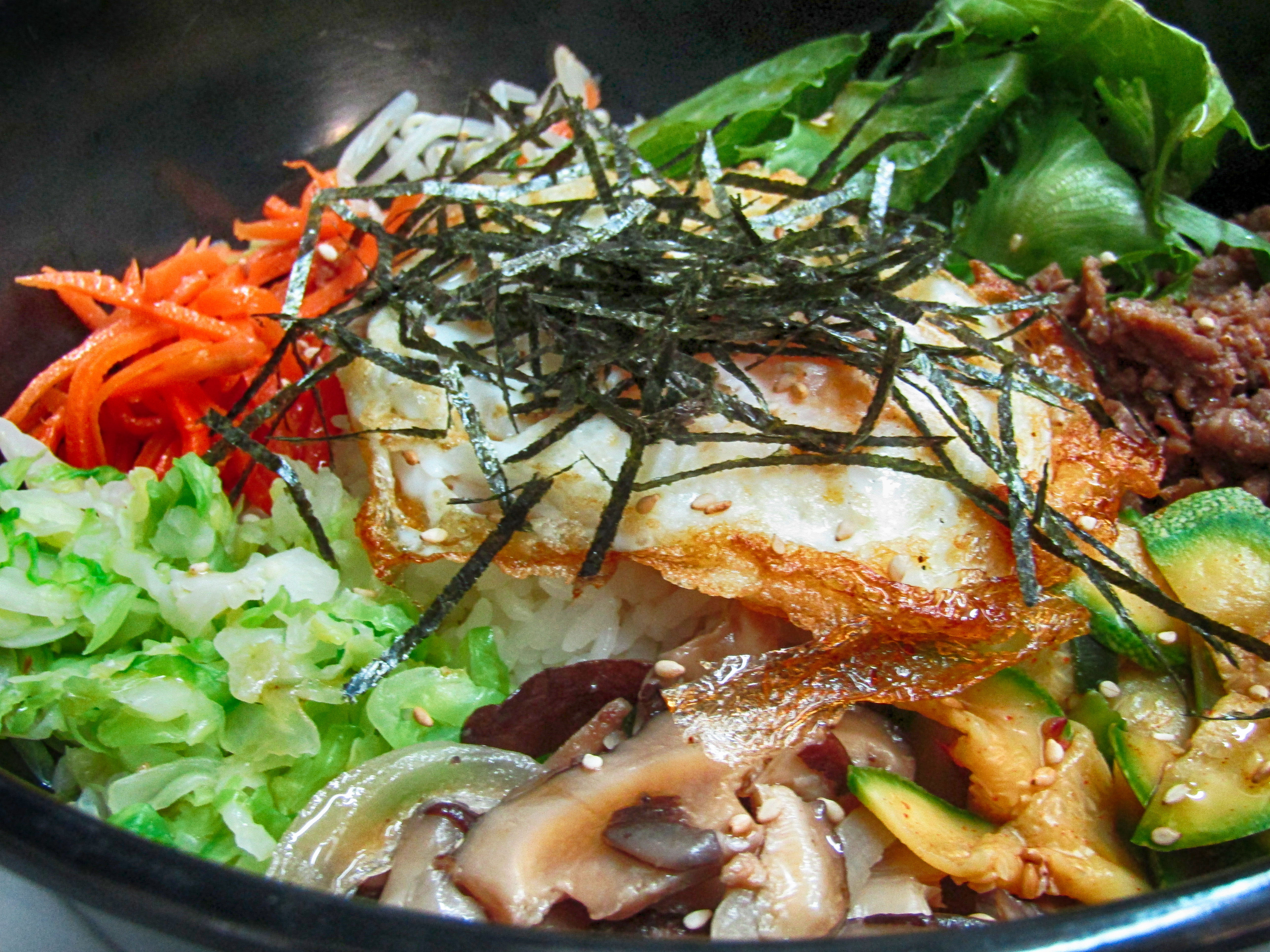
Article by Gil "hannaone" © Copyright 2025-2026. All rights reserved.
Bibimbap
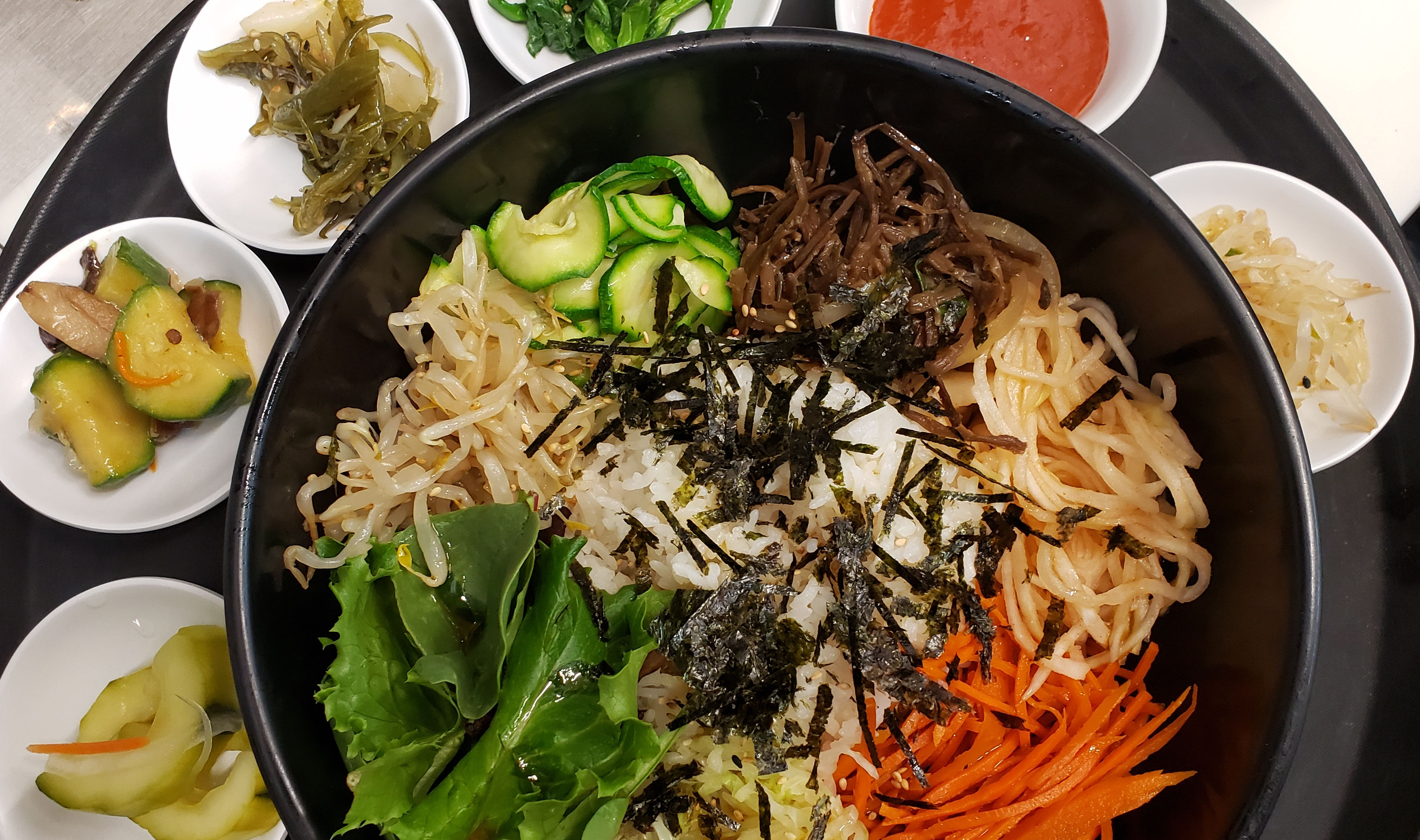
Image by hannaone: Bibimbap
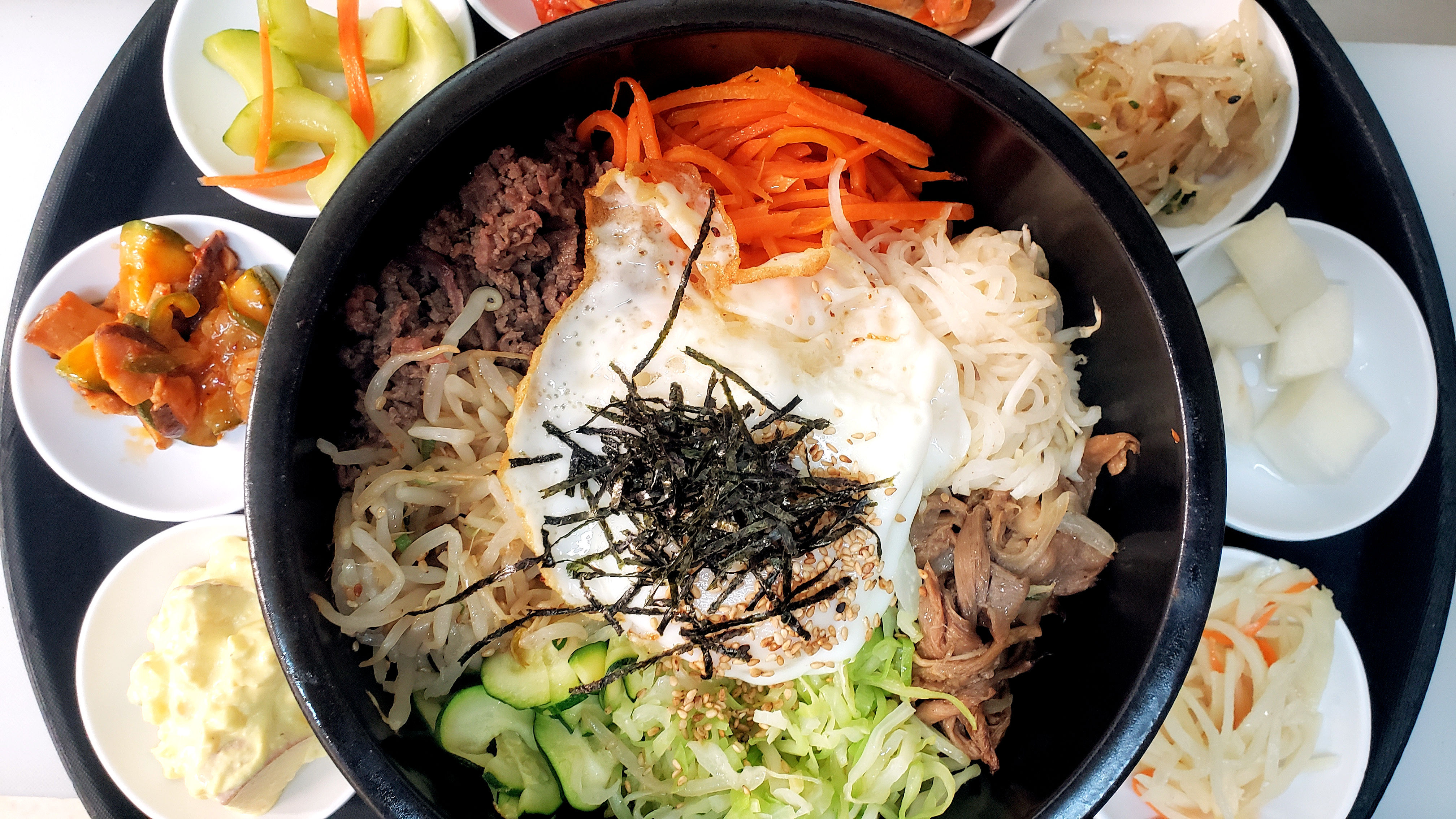
Image by hannaone: Dolsot Bibimbap
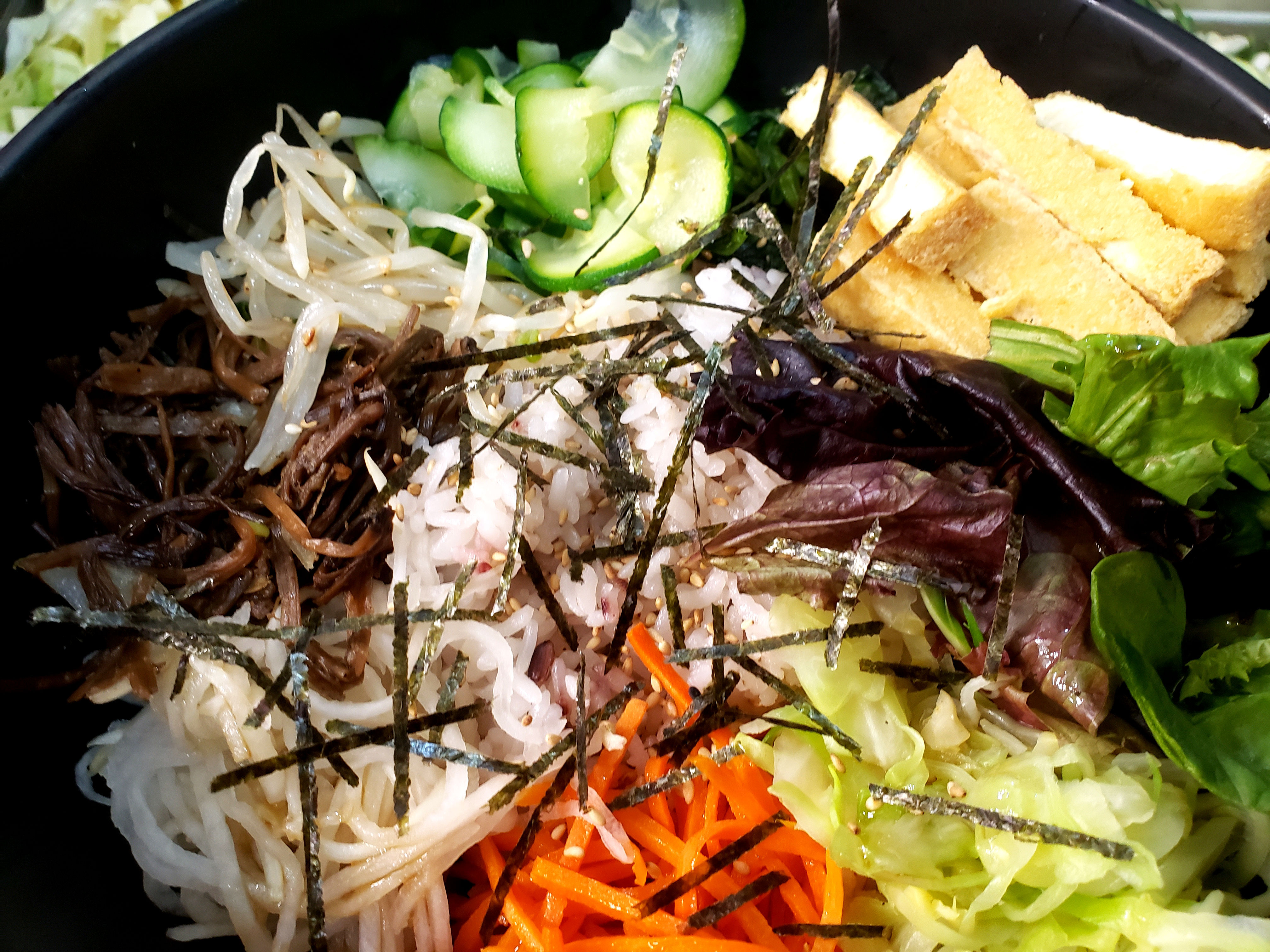
Image by hannaone: Dubu Dolsot Bibimbap
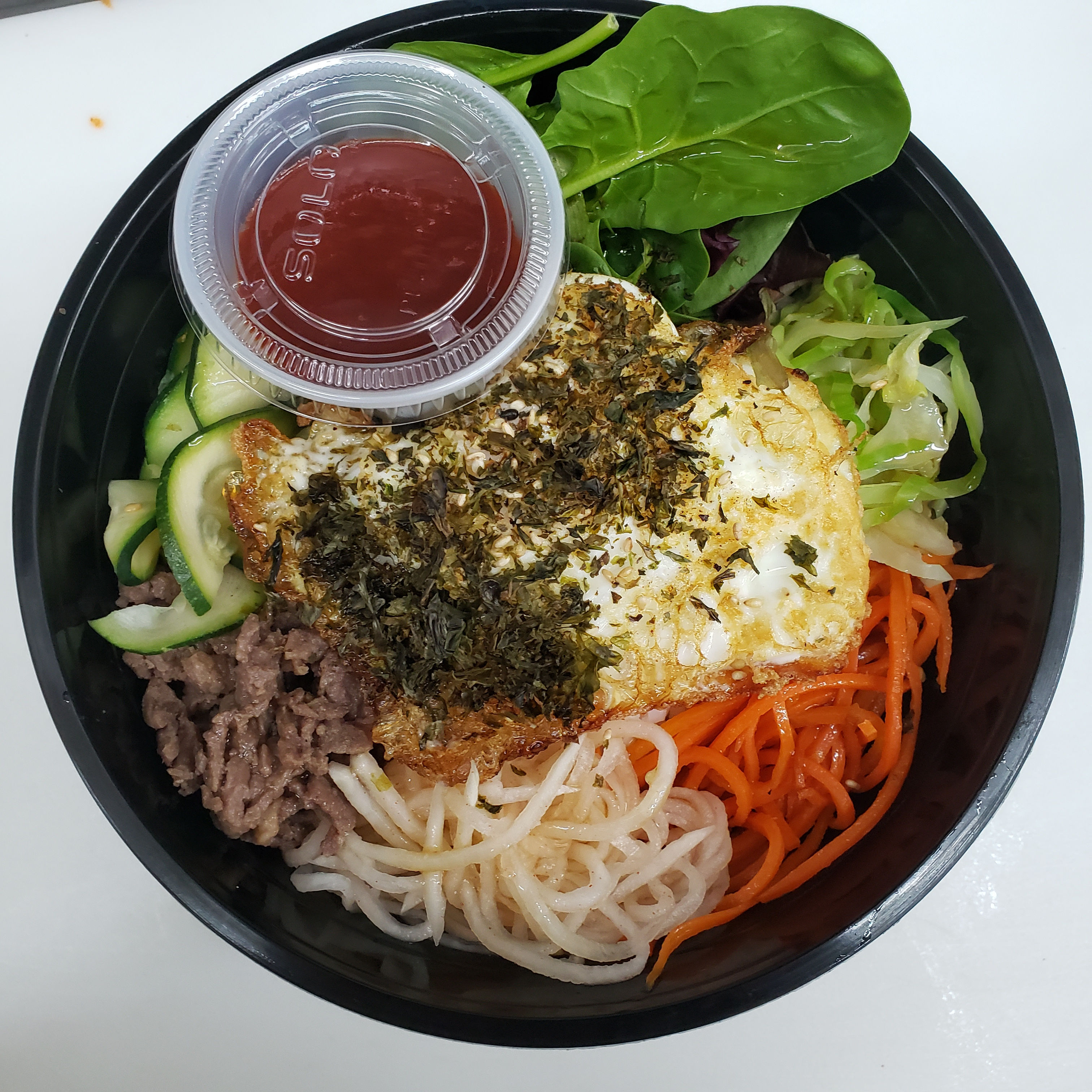
Image by hannaone: Bibimbap 2 Go

Comment?